
Pruning
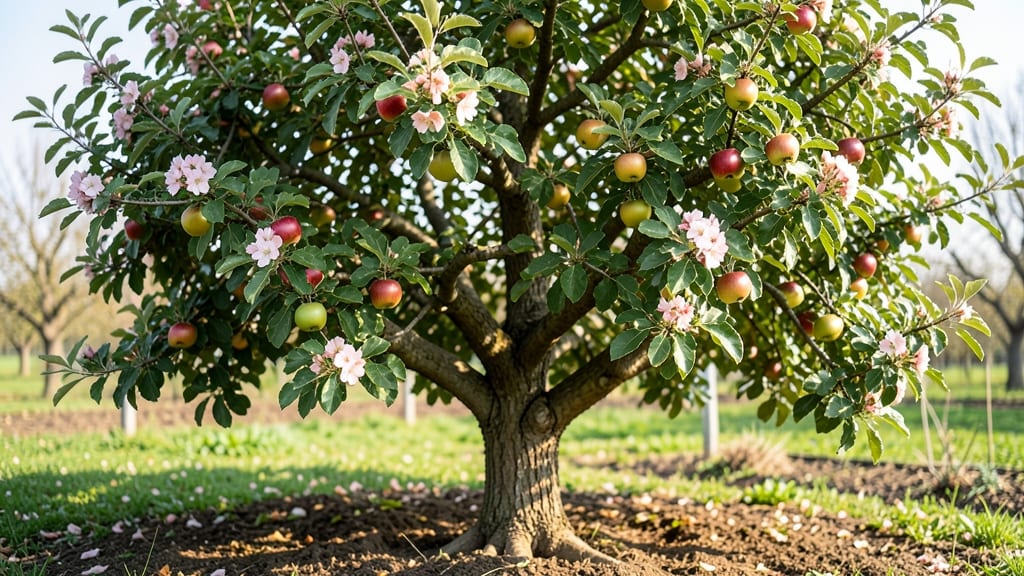
Tracking your apple tree’s growth with an apple tree growth chart turns guesswork into a predictable harvest. 🌳 I’ve watched mine climb from a 3-foot sapling to a 15-foot fruit-bearing giant—each stage has its own care needs, and knowing what to expect makes all the difference.
The first three years focus on height, while years 4-6 shift to flower development, and by year 7, you’re pruning for fruit production, not just structure.
Dwarf varieties hit 6-10 feet by maturity, while standard trees can reach 20+ feet—but their early growth is slow. That’s why pruning in the first year isn’t about shaping; it’s about removing competing branches so the tree directs energy upward.
Most varieties flower for the first time between years 3-5, though some like ‘Honeycrisp’ take longer. The key is patience: rushing pruning or fertilizing too early can delay fruiting.
By year 5, you’ll see first harvests—though expect uneven yields as the tree adjusts. Biennial bearing (alternating heavy/light fruit years) is normal, but thinning flowers early prevents overloaded branches. My ‘Granny Smith’ now produces 50+ pounds of fruit annually, but it took 6 years to get there.
The chart breaks down these milestones so you can plan pruning, fertilizing, and pest control at the right times.
Works for backyard orchards, containers, or even urban patios (with dwarf varieties). The same principles apply whether you’re growing from seed, a whips, or a bare-root sapling—just adjust timelines. Here’s how to use the chart to keep your tree on track for a lifetime of harvests.
📚 In This Guide
- What you need
- Instructions
- Tips and common mistakes
- Wrapping up and next steps
What you need
- ● Apple tree sapling or bare-root tree: Choose a variety suited to your climate (e.g., Honeycrisp, Granny Smith, or Fuji). Ensure it’s disease-resistant and purchased from a reputable nursery.
- ● Planting hole: Dig a hole twice as wide as the root ball and as deep as the container (or root length for bare-root trees).
- ● High-quality potting soil or native soil mix: Amend with compost (5–10 gallons) for nutrients. Avoid heavy clay or sandy soil without amendments.
- ● Organic mulch: 3–4 inches of wood chips, straw, or shredded leaves to retain moisture and regulate temperature.
- ● Fertilizer: Balanced fertilizer (10-10-10 or 5-10-10): Apply ½ cup per year of tree age (e.g., ½ cup for a 1-year-old tree) in early spring.
- ● Slow-release organic options: Compost tea, worm castings, or bone meal (follow package rates).
- ● Watering can or hose with a gentle spray nozzle: Aim for 1–2 gallons of water per tree, 2–3 times per week (adjust for drought).
- ● Pruning tools: Bypass pruners: For cuts up to ½-inch diameter.
- ● Loppers: For branches ½–1½ inches thick.
- ● Pruning saw: For thicker branches (1½+ inches).
- ● Disinfectant (70% isopropyl alcohol or bleach solution): Clean tools between cuts to prevent disease spread.
- ● Tree ties or soft garden twine: Secure young trees to stakes if needed (avoid plastic ties that can girdle the trunk).
- ○ Stakes (optional): 2–3 wooden or metal stakes (5–6 feet tall) for support in windy areas.
- ● Measuring tape or ruler: Record trunk diameter and height annually (aim for accuracy to the nearest inch).
- ● Growth chart or notebook: Log height, branch spread, and flowering/fruiting stages. Download a free template (link placeholder).
- ● Camera or smartphone: Take monthly photos to compare seasonal changes.
- ● pH test kit: Ensure soil pH is 6.0–7.0 (apple trees prefer slightly acidic to neutral soil).
- ● Sunlight: 6–8 hours of full sun daily (partial shade may reduce fruit quality).
- ● Hardiness zone: Match your tree’s variety to your USDA zone (e.g., Honeycrisp thrives in zones 3–7).
- ● Space: Dwarf varieties: 6–10 feet apart (mature height: 8–12 feet).
- ● Standard varieties: 15–20 feet apart (mature height: 20–30 feet).
- ● Pollination partners: Plant two compatible varieties if your tree isn’t self-pollinating (check variety tags).
- ● Drip irrigation system: Automates watering and reduces stress.
- ● Tree guard or protective fence: Shields young trees from deer or rabbits.
- ● Fruit thinning shears: For managing excess fruit to improve size/quality.
- ● Soil moisture meter: Avoid over/under-watering by monitoring root-zone moisture.
- ● Pest/disease control: Neem oil or horticultural oil: For aphids or mites.
- ● Copper fungicide: Prevents apple scab or black rot.
Understanding your apple tree's growth timeline
Here's how to track your tree's development by variety and year—no guesswork involved.
🌱 Step 1: First Year Growth (Seedling to Sapling)
In their first year, apple trees focus entirely on root development rather than height. Most standard varieties grow just 6-12 inches above ground, while dwarf varieties may reach 12-18 inches. You'll notice the strongest growth in late spring through summer when days lengthen.
Watch for the first true leaves—these are the second set after the initial cotyledons (seed leaves). By autumn, your tree will have a single main trunk with no branches. This foundational growth ensures the tree's stability for future fruiting. If your tree shows no growth after 4-6 weeks, check for proper watering (1 inch per week) and sunlight (6+ hours daily).
☀️ Step 2: Second Year Growth (Scaffold Branching)
This is when your tree's framework forms. Standard varieties may grow 2-4 feet in height while developing their first scaffold branches—these are the main limbs that will support future fruit. Dwarf varieties typically reach 18-24 inches and begin branching at 12-18 inches above the ground.
You'll see the first signs of branching in late spring when buds swell along the main trunk. Prune any branches growing downward or crossing others—these compete for energy. The tree's growth rate slows in late summer as it prepares for dormancy. By winter, you should have 3-5 well-spaced scaffold branches forming a natural vase shape.
🌿 Step 3: Third Year Growth (Fruiting Wood Formation)
Now your tree enters its productive phase. Standard varieties grow 3-5 feet annually while developing fruiting spurs (short branches where apples form). Dwarf varieties add 12-18 inches per year. Look for clusters of small buds along last year's growth—these will become your first fruit in 2-3 years.
This year's growth is critical for future production. Thin out any weak, crowded branches to improve air circulation. You'll notice new growth appears in late spring, with the most vigorous shoots emerging from the upper portions of scaffold branches. By autumn, these new shoots will have formed their own buds for next year's fruit and branches.
⏰ Step 4: Fourth Year and Beyond (Full Production)
Most apple trees reach full production by their fourth year. Standard varieties grow 12-24 inches annually while bearing fruit, while dwarf varieties add 6-12 inches. Growth slows as the tree matures, with most height gain occurring in early spring before flowering. You'll see fruit clusters developing on spurs from previous years.
Watch for biennial bearing patterns—some varieties alternate between heavy and light fruit years. To prevent this, thin fruit clusters to 6-8 inches apart and fertilize annually in early spring. Mature trees may grow 1-2 feet per year during peak production, with most growth occurring on water sprouts (vigorous shoots that need pruning to redirect energy to fruit production).
📏 Step 5: Variety-Specific Growth Patterns
Dwarf varieties like 'Columnar' or 'Spindle' apple trees grow 12-18 inches annually and reach mature height (6-10 feet) in 5-7 years. Standard varieties grow 2-4 feet per year and may reach 20-30 feet at maturity. Semi-dwarf varieties fall between these extremes, growing 1-2 feet annually to 12-16 feet tall.
Cold-hardy varieties like 'McIntosh' or 'Granny Smith' grow more aggressively in northern climates, while heat-tolerant varieties like 'Anna' or 'Dorsett Golden' may show slower early growth in hotter regions. Always check your specific variety's expected growth rate—some dwarf varieties like 'Patriot' grow just 12 inches per year while others like 'Red Delicious' dwarf may grow 24 inches annually.
Tips & tricks for tracking your apple tree's growth
Real talk: Understanding these growth patterns transforms guesswork into precision orcharding. Here's what nobody tells you about nurturing your tree through each critical stage.
First-Year Foundation: That 4-6 week growth window in Step 1 is your tree's most vulnerable period. The roots establish the framework for everything above ground, so never skip the 1 inch per week watering requirement—even if it doesn't rain. I've seen first-year trees wither when owners assumed "watering when it looks dry" was enough. Use a rain gauge to track moisture precisely, especially in containers where roots can dry out faster.
Scaffold Branch Strategy: During Step 2's branching phase, focus on creating that natural vase shape mentioned in the instructions. The 3-5 scaffold branches should be spaced 12-18 inches apart—this spacing prevents future crowding. I always mark these positions with stakes before pruning to ensure even distribution. Remember, these branches will support your tree's entire fruit load for decades, so get them positioned correctly now.
Productive Phase Preparation: In Step 3, when you're thinning weak branches for air circulation, pay special attention to water sprouts—the vigorous vertical shoots growing from the trunk or scaffold branches. These compete with fruit production and should be pruned back to a bud or removed entirely. The 12-18 inch annual growth for dwarf varieties during this phase is actually a red flag if you're not seeing vigorous new shoots—it means your tree might need more sunlight or nutrients.
Variety-Specific Adjustments: That 12-24 inch range for standard varieties in Step 4 isn't just random numbers—it reflects the tree's energy allocation between growth and fruit production. For example, 'Granny Smith' trees in cooler climates will often hit the higher end of that range because they prioritize vertical growth to escape frost. Meanwhile, heat-loving varieties like 'Anna' might stay closer to 12 inches if summer temperatures exceed 90°F consistently. Always factor in your local climate when interpreting these growth ranges.
Pro Tips for Apple Tree Growth Chart
- Real talk: Understanding these growth patterns transforms guesswork into precision orcharding.
- First-Year Foundation: That 4-6 week growth window in Step 1 is your tree's most vulnerable period.
- Scaffold Branch Strategy: During Step 2's branching phase, focus on creating that natural vase shape mentioned in the instructions.
Frequently asked questions
Got questions about tracking your apple tree’s growth? Here are answers to the most common ones—whether you’re a first-time grower or a seasoned orchard keeper!
How do I know if my apple tree is growing at the right pace?
Compare your tree’s height and trunk thickness to a variety-specific growth chart (e.g., ‘Honeycrisp’ grows faster than ‘Granny Smith’). If it’s significantly slower, check soil nutrients, sunlight, and watering. Dwarf varieties (like ‘Columnar’ types) may stay under 8 feet, while standard trees can reach 20+ feet in 5–10 years.
When can I expect my apple tree to bear fruit?
Most apple trees take 3–5 years to produce fruit, but some dwarf varieties (like ‘Liberty’) may fruit in 2 years. Young trees focus on root/leaf growth first—patience pays off! Prune lightly to encourage branching, which speeds up fruiting. Pro tip: Plant two compatible varieties for cross-pollination (e.g., ‘Fuji’ + ‘Gala’).
Should I prune my apple tree every year, even if it’s young?
Yes! Prune annually to shape the tree, remove dead wood, and improve airflow. For young trees (1–3 years), focus on open-center shaping—cut back 1/3 of the tallest branches to encourage a sturdy structure. Avoid heavy pruning in late summer/fall, as it can stimulate late-season growth vulnerable to frost.
What if my apple tree isn’t growing at all? Troubleshooting tips?
- Check the roots: Gently loosen soil around the base to ensure roots aren’t girdling or rotting.
- Test the soil: pH should be 6.0–7.0. Amend with compost or lime if needed.
- Pest/disease scan: Look for aphids, borers, or fungal spots on leaves. Treat early with neem oil or copper fungicide.
- Water deeply: 1–2 inches per week (more in drought). Mulch retains moisture.
Can I grow an apple tree in a container? What’s the best variety?
Choose dwarf or semi-dwarf varieties like ‘Boston Crab’ (pollinator), ‘Columnar’ types, or ‘Patriot.’ Use a 15–25 gallon pot with drainage holes and well-draining soil. Repot every 2–3 years. Pro tip: Move containers indoors (unheated garage) in winter if temps drop below 10°F.
Wrapping up and next steps
Understanding your apple tree’s growth stages—from a tiny sapling to a fruit-bearing giant—helps you nurture it with confidence! 🌱 Whether you’re growing a Granny Smith, Honeycrisp, or Fuji, tracking height and milestones ensures healthy development.
With the right pruning, soil care, and patience, your tree will thrive and reward you with bountiful harvests for decades.
Ready to take the next step? Start by sketching your tree’s current stage on our growth chart, then plan your first pruning session in early spring. Happy growing—your orchard awaits! 🍏✨