
Pests and Diseases
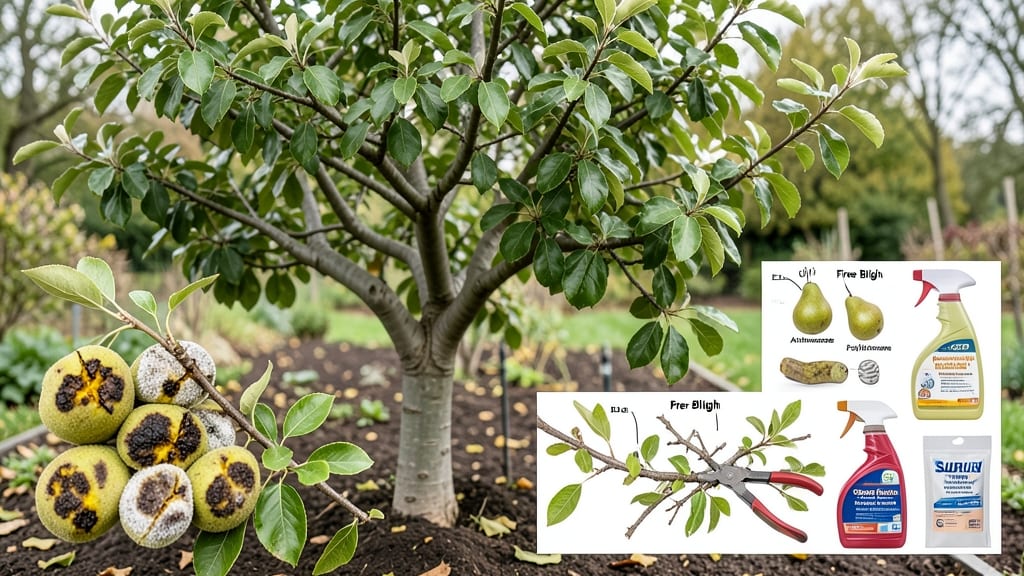
Pear tree diseases and treatment can turn your thriving pear tree into a sad, wilted mess overnight. 🌿 I’ve watched my own trees go from lush and productive to blackened branches in just a few weeks—until I learned the early warning signs and how to stop the spread. The key is acting fast before the disease moves from leaves to fruit to the tree’s core.
These diseases love warm, wet springs—exactly when pears are blooming. Fire blight starts with blackened, oozing cankers on branches, while bacterial spot shows up as tiny brown spots on leaves that multiply like wildfire.
The worst part? Both spread through rain, tools, and even bees carrying infected pollen. My first mistake was ignoring the early leaf spots until my entire harvest was ruined.
You can save your tree with copper fungicide sprays (applied before blooms), pruning infected branches 6 inches below the damage, and sterilizing tools with rubbing alcohol.
For prevention, plant resistant varieties like ‘Moonglow’ or ‘Seckel’ and avoid overhead watering. I’ve brought trees back from the brink using these methods—even when they looked hopeless.
Once you spot the first signs, time is your enemy. The treatments work best when you catch the disease early, before it reaches the bark. With the right approach, you’ll protect this year’s crop and save your tree for seasons to come. Let’s get your pears back on track.
Root Causes Of Tree Stress
Pear trees, like all fruit-bearing trees, are vulnerable to diseases when their natural defenses weaken. Understanding why these issues arise helps you take preventive action before problems escalate. Below are the key factors that create the perfect storm for fungal blights, bacterial spots, and other common pear tree ailments.
Fungal diseases thrive when conditions are just right—think of them as opportunistic invaders waiting for a weak moment. Here’s how they exploit your pear tree:
- Moisture Overload 🌧️ Fungi love dampness, and pear trees often get too much of it. Heavy rainfall, poor drainage, or overhead watering (especially in the evening) keeps leaves and bark soggy for extended periods.
Fungal spores germinate in these wet conditions, penetrating the tree’s tissue through natural openings like lenticels (tiny pores on stems/branches) or wounds.
- Poor Air Circulation 🌬️ Dense canopies or crowded planting trap humidity near the foliage. Without airflow, spores linger, and fungal hyphae (thread-like structures) spread unchecked. Diseases like fire blight (Erwinia amylovora) and powdery mildew (Podosphaera leucotricha) exploit this stagnant environment.
- Stressed Tree Tissue 🌡️ Weakened trees—due to drought, nutrient deficiencies, or physical damage—produce less phenolic compounds (natural fungicides). Fungi like Venturia (cause of scab disease) detect these chemical signals and attack more aggressively.
- Inoculum Buildup 🔄 Fungal spores persist in old leaves, bark crevices, or fallen fruit. If not cleaned up, they reinfect the tree year after year. For example, black spot (Alternaria) overwinters in infected debris, ready to pounce when spring arrives.
Bacteria are different from fungi—they multiply rapidly and often enter through wounds. Here’s how they gain a foothold:
- Physical Injuries ⚔️ Pruning cuts, hail damage, or even insect bites create entry points. Bacteria like Pseudomonas syringae (causative agent of bacterial spot) seep into these openings, multiplying in the tree’s vascular system. Always use sterilized pruners and seal cuts with pruning sealant to minimize risk.
- Splashing Water 💦 Rain or irrigation splashing from the ground can carry bacterial cells from infected leaves or soil onto healthy branches. This is why fire blight spreads so quickly—bacteria hitchhike on water droplets during storms.
- Over-Fertilization 🌱 Excess nitrogen promotes lush, tender growth that’s more susceptible to bacterial infections. A balanced fertilizer (with micronutrients like zinc and boron) strengthens cell walls, making them harder for pathogens to breach.
- Warm, Wet Springs ☀️🌧️ Bacteria thrive in temperatures between 60–80°F (15–27°C) with high humidity. Early-season rains followed by warm days create ideal conditions for outbreaks. Monitor weather forecasts and apply copper-based bactericides proactively during these windows.
Sometimes, the problem isn’t the pathogen itself—it’s the human habits that make trees vulnerable:
- Ignoring Pruning Best Practices ❌ Poor pruning (cutting too late in the season, leaving stubs, or using dirty tools) invites disease. Fire blight, for instance, spreads via pruning tools contaminated with bacterial ooze. Always prune in dry weather and sterilize tools with 70% isopropyl alcohol.
- Planting In Low Spots 🌊 Pear trees in depressions or near drainage ditches suffer from waterlogging, which rots roots and stresses the tree. Ensure proper soil drainage (amend clay soil with compost or sand) and avoid planting where water pools.
- Neglecting Sanitation 🧹 Leaving fallen leaves, mummified fruit, or infected branches on the ground creates a disease reservoir. Remove and destroy (do not compost) debris after harvest to break the infection cycle.
- Using Contaminated Mulch 🪵 Wood chips or mulch from untreated sources may harbor fungal spores. Opt for sterilized or fresh mulch and keep it 3–4 inches away from the trunk to prevent moisture buildup.
Pear trees have natural defenses, but these can falter due to:
- Nutrient Deficiencies 🍃 Lack of potassium (K) or calcium (Ca) weakens cell walls, making them easier targets. Conduct a soil test and amend with kelp meal (for potassium) or lime (for calcium) as needed.
- Pest Damage 🐜 Sap-sucking insects (like aphids or scale) create wounds and excrete honeydew, which fosters sooty mold—a secondary fungal issue. Use horticultural oil or neem oil to control pests before they stress the tree.
- Improper Watering 💧 Both overwatering (leading to root rot) and underwatering (causing drought stress) compromise the tree’s ability to fight disease. Water deeply but infrequently, aiming for 1–1.5 inches per week (adjust for climate).
Disease timing isn’t random—it’s tied to phenological stages (growth phases) of the pear tree:
| Disease | Peak Risk Period | Why It Happens |
|---|---|---|
| Fire Blight | Late spring to early summer | Blooming flowers attract pollinators (and bacteria). Warm nights + rain = rapid spread. |
| Pear Scab | Early spring (bud swell to petal fall) | Cool, wet conditions (50–65°F) trigger spore release from overwintering lesions. |
| Bacterial Spot | Late spring to summer | High humidity + leaf wetness >12 hours = bacterial growth explosions. |
| Powdery Mildew | Summer (dry heat + high humidity) | Fungal spores germinate when temps hit 60–85°F with poor airflow. |
The best defense is prevention. Once a disease takes hold, treatment becomes reactive.
Instead: - Monitor weather forecasts for extended wet periods. - Apply preventive fungicides (like copper fungicide or neem oil) before symptoms appear. - Prune strategically—remove infected branches 6 inches below the lesion to starve the pathogen.
By addressing these root causes, you’ll give your pear tree the best shot at staying healthy—and your fruit the chance to thrive! 🍐💪
How to Fix It Naturally
Pear trees may face fungal blights, bacterial spots, or other diseases, but with the right care, you can restore their health—and prevent future outbreaks. Below are targeted, step-by-step solutions for common pear tree ailments, paired with prevention tips to keep your tree thriving.
🔥 Cause: Fungal spores thrive in damp, warm conditions, spreading through wounds or infected leaves.
🍳 Step 1: Prune Infected Branches Immediately
- Use sterilized pruning shears (wipe with rubbing alcohol between cuts).
- Remove all infected branches (blackened, oozing, or wilted) 6–12 inches below the damage to prevent spread.
- Bag and dispose of pruned material in the trash (do not compost).
👨🍳 Step 2: Apply Fungicidal Sprays
- Copper-based fungicides (e.g., Bordeaux mixture) work well for fire blight and anthracnose.
- Sulfur or neem oil sprays help control powdery mildew (apply early morning to avoid leaf burn).
- Reapply every 7–14 days during wet seasons or after heavy rain.
🌡️ Step 3: Improve Air Circulation & Drainage
- Thin out dense foliage to reduce humidity near the tree.
- Mulch properly (2–4 inches of organic mulch, keeping it away from the trunk).
- Water at the base (avoid overhead sprinkling, which spreads spores).
💡 Prevention Tips:
✅ Plant resistant varieties (e.g., ‘Moonglow’ or ‘Seckel’ pears tolerate diseases better). ✅ Clean up fallen leaves/debris in autumn to remove fungal overwintering sites. ✅ Avoid overhead irrigation—use drip systems instead.
🔥 Cause: Bacteria enter through wounds (pruning cuts, hail damage) and spread rapidly in warm, wet weather.
🔪 Step 1: Sterilize Tools & Wounds
- Disinfect pruners with 10% bleach solution (1 part bleach, 9 parts water) before and after cuts.
- Seal pruning wounds with pruning paint (optional but helps prevent bacterial entry).
⏰ Step 2: Remove & Destroy Infected Tissue
- Cut out all infected branches (brown, oozing, or curled leaves) down to healthy wood.
- Burn or trash infected material—do not compost.
🥗 Step 3: Use Bacterial Control Sprays
- Copper fungicide sprays (e.g., Copper Sulfate) are effective against bacterial spot.
- Apply in early spring (before blooms) and after rain for best results.
- Avoid antibiotics (they don’t work on plants).
🎯 Prevention Tips:
✅ Prune during dry weather (bacteria spread faster when it’s damp). ✅ Space trees properly (3–4 feet apart) for better airflow. ✅ Monitor for early signs (tiny water-soaked spots on leaves) and act fast.
Even after treating diseases, boost your pear tree’s immunity with these long-term fixes:
💪 Nutrient Boost
- Test soil pH (ideal: 6.0–7.0 for pears). Amend with lime (to raise pH) or sulfur (to lower pH) if needed.
- Fertilize in early spring with a balanced 10-10-10 or 6-6-6 formula.
- Avoid over-fertilizing with nitrogen (weakens disease resistance).
🌞 Sunlight & Watering
- Ensure 6+ hours of sunlight daily (weak, shaded trees are more susceptible).
- Water deeply but infrequently (1–1.5 inches per week; never let soil stay soggy).
🌡️ Seasonal Care Checklist
| Season | Task |
|---|---|
| Spring | Prune dormant branches, apply fungicide before buds swell. |
| Summer | Monitor for new infections; remove affected leaves immediately. |
| Fall | Rake up all debris; apply winter mulch (4–6 inches). |
| Winter | Inspect bark for cracks (seal with pruning paint if needed). |
Final Tip: 🌟 Act fast! The sooner you treat infections, the easier it is to save your pear tree. Prevention is key—healthy trees resist diseases better than stressed ones. With consistent care, your tree can bounce back stronger than ever!
Frequently asked questions
How do I tell if my pear tree has fire blight vs. bacterial spot?
Fire blight shows as blackened, oozing cankers on branches and shepherd's crook (curled, wilted leaves). Bacterial spot appears as tiny brown spots with yellow halos on leaves that multiply rapidly. Fire blight spreads through water splashing, while bacterial spot thrives in warm, wet conditions.
Can I use household items like vinegar or baking soda to treat pear tree diseases?
While baking soda (1 tbsp per gallon of water + a drop of dish soap) can help with fungal issues like powdery mildew, it won't stop bacterial diseases like fire blight. Vinegar is too harsh and can damage leaves. Stick to copper fungicides or neem oil for organic options, or use bactericides for bacterial infections.
Is it too late to save my pear tree if the trunk has cankers?
Not necessarily! If the canker is less than 1/3 of the trunk's circumference, you can prune it out 6 inches below the damage and treat with copper fungicide. For larger cankers, consult an arborist—some trees can recover if the root system is still healthy. Always sterilize tools to prevent spread.
How often should I spray fungicide on my pear tree?
Apply preventive sprays every 7–14 days during high-risk periods (spring blooms, wet summers). For active infections, spray every 5–7 days until symptoms disappear. Always spray early morning to avoid leaf burn, and cover the undersides of leaves where spores hide.
Will my pears still be safe to eat if the tree has disease?
Not always. Fruits from trees with fire blight or bacterial spot may be contaminated. When in doubt, discard infected fruit—better safe than sorry! Healthy-looking fruit from treated trees is usually fine, but wash thoroughly before eating.