
Pruning
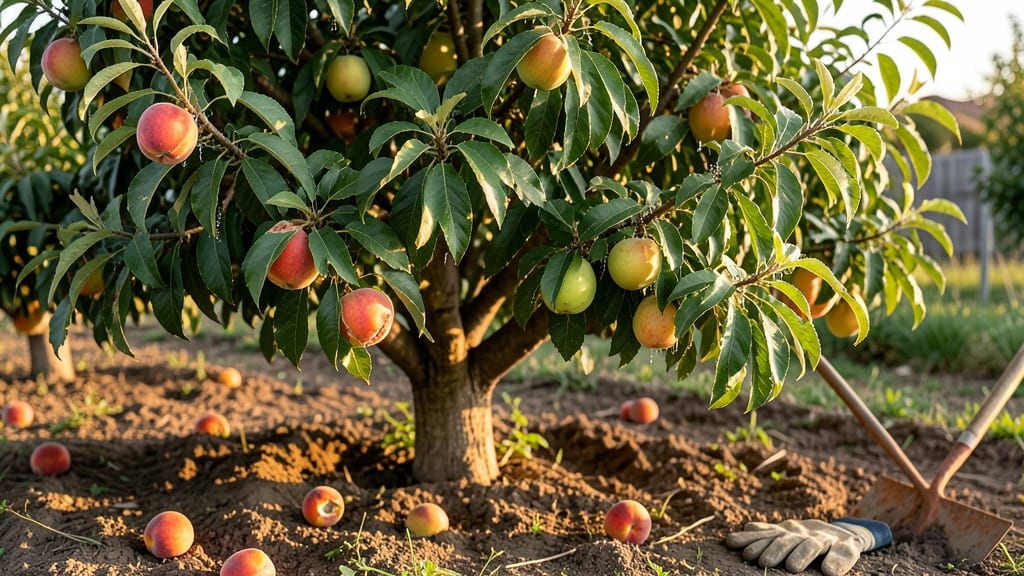
Your peach tree dropping fruit before it ripens is one of the most frustrating gardening problems—especially when you’ve waited all season for juicy summer peaches. 🌿 I’ve seen this happen after years of heavy pruning, drought stress, or even overwatering, and the good news is most cases aren’t permanent.
The key is identifying why it’s happening and adjusting care before next year’s harvest.
Common culprits include overcrowded branches (too much fruit on weak limbs), late-season drought, or nutrient imbalances (like too much nitrogen). Even pests like peach tree borers or diseases like brown rot can trigger premature fruit drop.
The fix often starts with selective pruning—thinning out overloaded branches in early summer to redirect energy toward fewer, healthier fruits.
What you’ll achieve is a tree that holds onto fruit longer, with sweeter, larger peaches by harvest time. Start by checking for pests (look for sawdust-like frass near the trunk) and adjusting watering to 1–1.5 inches per week.
A balanced fertilizer in late winter can also prevent early stress. Small changes now mean a full basket of ripe peaches next July.
This works for both young trees and mature ones—just scale the pruning and watering to your tree’s size. The goal is consistency: peach trees reward patience with bountiful harvests. Let’s get your tree back on track!
Root Causes Behind Fruit Drop
Peach trees are prolific fruit producers, but when they prematurely drop fruit, it’s often a sign of stress or imbalance. Understanding the why behind this issue is the first step to restoring your tree’s health.
Below, we break down the most common reasons—each with a clear scientific explanation and actionable insights.
Peach trees thrive in moderate climates (USDA Zones 5–9), but sudden shifts—whether heatwaves, late frosts, or cold snaps—can trigger fruit drop. Here’s how it happens:
- Late Frosts: Peach blossoms are highly sensitive to frost (below 28°F).
Damage to flowers or young fruit disrupts pollination, leading to premature abscission (natural fruit shedding). - Heat Stress: Temperatures above 95°F can cause fruit scald (browning) or sunburn, signaling the tree to drop underripe fruit to conserve energy. - Rapid Temperature Changes: A sudden drop after a heatwave can confuse the tree’s hormonal balance, causing ethylene gas buildup—a plant hormone that triggers fruit detachment.
💡 Pro Tip: Monitor your local frost dates and use row covers or sprinklers (running overnight) to protect blossoms during late frosts. Mulch the base of the tree to moderate soil temps during heatwaves.
Peach trees are drought-tolerant but hate soggy roots. Water stress—whether from underwatering or overwatering—disrupts nutrient uptake and fruit retention.
- Drought Stress:
- Symptoms: Wilting leaves, small fruit, or fruit dropping before ripening.
- Why? The tree prioritizes leaf survival over fruit growth when water is scarce. Abscisic acid (a stress hormone) signals the tree to shed fruit to conserve moisture.
- Fix: Water deeply 1–2 times per week (1–1.5 inches per session) during dry spells. Drip irrigation is ideal to avoid wetting foliage (which spreads disease).
- Overwatering: - Symptoms: Yellowing leaves, root rot, or fruit splitting (from uneven water absorption). - Why? Poor drainage leads to anaerobic soil, suffocating roots and starving the tree of oxygen.
This triggers ethylene production, causing fruit drop. - Fix: Improve drainage with gravel or sand amendments, and ensure the tree has a well-draining soil mix (peach trees hate clay).
Unseen invaders can sap your tree’s energy, leading to premature fruit loss. The most common culprits:
| Pest/Disease | How It Causes Drop | Signs to Watch For | Solution |
|---|---|---|---|
| Peach Tree Borer | Larvae burrow into bark, disrupting nutrient flow. | Sawdust-like frass, oozing sap, wilting branches. | Prune infested branches in late winter; apply beneficial nematodes. |
| Aphids/Scale Insects | Sap-sucking pests weaken the tree, reducing fruit set. | Sticky honeydew, curled leaves, sooty mold. | Spray neem oil or introduce ladybugs. |
| Brown Rot (Fungus) | Fungal spores infect blossoms/fruit, causing mummified fruit that drops. | Dark, mushy spots on fruit; blossom blight. | Remove infected fruit; apply copper fungicide at bud break. |
| Nematodes | Microscopic worms damage roots, limiting water/nutrient uptake. | Stunted growth, yellowing leaves, poor fruit set. | Plant marigolds as a cover crop; use nematicides in severe cases. |
✨ Prevention Tip: Sanitize pruning tools with rubbing alcohol to avoid spreading disease. Thin fruit early (remove 50% of young fruit) to reduce competition for resources.
Peach trees are heavy feeders, and a lack of key nutrients can lead to poor fruit development and early drop. The most critical deficiencies:
- Nitrogen (N) Deficiency:
- Why? Leads to small, sparse fruit and weak branches.
- Signs: Yellowing lower leaves (older growth first).
- Fix: Apply balanced fertilizer (10-10-10) in early spring. Compost or aged manure works too.
- Potassium (K) Deficiency:
- Why? Weakens cell structure, causing fruit to split or drop.
- Signs: Brown scorch marks on leaf edges.
- Fix: Use potassium sulfate or wood ash in late summer.
- Boron Deficiency: - Why? Boron is crucial for cell wall strength and pollination.
A lack of it leads to blossom drop and poor fruit set. - Signs: Cracked or deformed fruit, dieback of blossom clusters. - Fix: Apply borax (sodium borate) at 1/4 lb per 100 sq ft in early spring.
📊 Soil Test Tip: Before fertilizing, test your soil’s pH (ideal: 6.0–6.5) and nutrient levels. Many deficiencies go unnoticed until it’s too late!
Peach trees produce more fruit than they can support. When branches are overburdened, the tree sheds excess fruit to survive.
- Why It Happens:
- Each peach requires significant energy (water, nutrients, sunlight).
- If the tree sets too many blossoms (due to ideal weather), it can’t sustain all fruit, leading to June drop (natural thinning) or late-season loss.
- How to Fix It:
- Thin fruit manually when they’re golf-ball sized (remove 50% of the smallest/weakest fruit).
- Prune in late winter to open the canopy for better airflow and sunlight penetration.
- Avoid over-fertilizing with nitrogen—this encourages excessive blossoming but weakens fruit retention.
🎯 Pro Tip: Space trees 15–20 ft apart to reduce competition and improve air circulation. Dwarf varieties handle fruit loads better than standard trees.
External forces can damage fruit directly or stress the tree, leading to drop.
- Wind Damage:
- Why? Strong winds disrupt pollination (shaking off pollen) and physically bruise fruit.
- Fix: Stake young trees in windy areas. Plant windbreaks (like tall shrubs) to reduce exposure.
- Hail:
- Why? Hail punches holes in fruit, causing rot and drop.
- Fix: Netting over the tree during hail season can prevent damage.
- Poor Pruning Structure:
- Why? Overcrowded branches or weak crotches can’t support fruit weight, leading to snap-off points.
- Fix: Prune for an open-center shape (like an umbrella) to distribute weight evenly. Remove water sprouts (vertical shoots) that weaken the tree.
Peach trees rely on plant hormones to retain fruit. When these hormones are disrupted, fruit drop occurs.
- Ethylene Gas:
- Why? Produced during stress (drought, heat, injury), ethylene triggers abscission (fruit detachment).
- Fix: Reduce stress factors (water consistently, mulch, avoid physical damage).
- Auxin Deficiency:
- Why? Auxin (a growth hormone) anchors fruit to the tree. If the tree is nutrient-deficient or diseased, auxin levels drop, leading to premature shedding.
- Fix: Ensure balanced fertilization and disease management to support hormone production.
🔥 Quick Fix: Apply a seaweed extract (rich in natural auxins) during fruit set to
Revive Your Tree With Targeted Fixes
If your peach tree is prematurely dropping fruit, don’t panic—there’s almost always a way to turn things around. Below, we’ll break down the most common causes of fruit drop and provide practical, step-by-step solutions to save your harvest.
Whether it’s environmental stress, improper care, or pest pressure, these fixes will help your tree regain its strength and productivity.
Cause: Overwatering, underwatering, or poor drainage can shock the tree, leading to fruit drop.
How to Fix It:
- 💧 Adjust Your Watering Routine
- Peach trees need deep, infrequent watering (1–2 inches per week, more in extreme heat).
- Water at the base (not the leaves) to prevent fungal diseases.
- Use a soaker hose or drip irrigation for even moisture distribution.
- 🏗️ Improve Soil Drainage
- If your soil is clay-heavy, amend it with compost or sand to prevent waterlogging.
- Mulch around the tree (2–3 inches deep) with wood chips or straw to retain moisture and regulate temperature.
- 🌡️ Monitor Soil Temperature
- Peach trees struggle in extreme heat or cold. If nights dip below 50°F (10°C), cover young fruit with frost cloth if needed.
💡 Prevention Tip: Test your soil’s pH (ideal: 6.0–6.5) and adjust with lime (to raise pH) or sulfur (to lower pH) if necessary.
Cause: Overcrowded branches or improper pruning can lead to poor pollination, disease, and fruit drop.
How to Fix It:
- 🔥 Thin Out Overlapping Branches
- Remove suckers (shoots at the base) and dead/diseased wood first.
- Prune in late winter or early spring (before blooming) to shape the tree and improve airflow.
- 🍑 Thin Fruit for Healthier Growth
- After blooming, remove excess fruit (leave 6–8 inches between peaches on branches).
- Use sterilized pruners to avoid spreading disease.
- 🌿 Encourage Strong Branch Structure
- Train young trees with a central leader (main upright trunk) and scaffold branches for support.
💡 Prevention Tip: Prune only when necessary—over-pruning stresses the tree. Aim for no more than 25% of the canopy in one session.
Cause: Insects (like peach tree borers, aphids, or stink bugs) or fungal diseases (brown rot, leaf curl) weaken the tree, causing fruit to drop.
How to Fix It:
- 🐜 Identify & Treat Pests
- Aphids/Scale: Spray with neem oil or insecticidal soap.
- Peach Tree Borers: Apply boron-based treatments or beneficial nematodes to the soil.
- Birds/Squirrels: Use netting to protect ripe fruit.
- 🍄 Prevent & Treat Fungal Diseases
- Brown Rot: Remove infected fruit immediately and apply copper fungicide before blooming.
- Leaf Curl: Prune infected leaves and spray with baking soda mix (1 tbsp baking soda + 1 gallon water + a drop of dish soap).
💡 Prevention Tip: Monitor your tree weekly for early signs of pests/disease. Catching issues early saves your harvest!
Cause: Poor pollination (due to lack of bees, weak blooms, or nutrient deficiencies) leads to fruit drop.
How to Fix It:
- 🐝 Boost Pollination
- Plant bee-friendly flowers (like lavender or sunflowers) near your tree.
- If bees are scarce, hand-pollinate with a small brush in the morning when flowers are open.
- 🌿 Fertilize Correctly
- Spring: Apply balanced fertilizer (10-10-10) to encourage blooms.
- Summer: Switch to low-nitrogen, high-potassium (5-10-10) to support fruit development.
- Avoid over-fertilizing—too much nitrogen = more leaves, fewer peaches!
💡 Prevention Tip: Test soil annually—peach trees need magnesium (Epsom salt spray) and zinc for strong fruit set.
Cause: Young trees or harvesting too early can cause stress-related fruit drop.
How to Fix It:
- 🍑 Wait for Full Ripeness
- Peaches should easily detach from the tree when gently twisted.
- Use a fruit maturity chart (color, size, and blush are key indicators).
- 🌳 Be Patient with Young Trees
- Peach trees take 3–5 years to fully mature. If dropping fruit in the first few years, reduce thinning and focus on root development.
💡 Prevention Tip: If your tree is overloaded, remove every other peach to let the remaining fruit grow larger and sweeter.
Final Thought: A peach tree dropping fruit is often a sign of stress—but with the right care, it can bounce back stronger than ever. Start with water, prune smart, and keep pests at bay, and you’ll be enjoying a bountiful harvest in no time! 🍑✨
Frequently asked questions
Why does my peach tree drop fruit even when it looks healthy?
Even healthy trees drop fruit due to natural thinning processes like June drop (when the tree sheds excess fruit to focus energy on fewer, larger peaches). However, if you notice fruit falling before June drop season or in large quantities, check for hidden stress factors like nutrient deficiencies (especially boron or potassium) or root competition from nearby plants.
Can I save peaches that are already falling? Or should I focus on prevention?
Once fruit starts dropping, you can't reverse it—but you can save next year's harvest by addressing the root cause. Focus on consistent watering (1-1.5 inches per week), thinning overloaded branches (remove 50% of fruit when golf-ball sized), and soil testing to rule out deficiencies. For current season, pick up fallen peaches immediately to prevent rot and attract pests.
How do I tell if my peach tree is dropping fruit because of pests vs. environmental stress?
Look for these clues: Pests leave visible damage like holes in fruit (stink bugs), sticky residue (aphids), or sawdust-like frass near the trunk (peach tree borers). Environmental stress shows as uniform fruit drop, wilting leaves, or uneven ripening. Start with a thorough inspection of leaves, bark, and soil—pests often have distinct signs while stress-related drop is more widespread.
Is it too late to fix my peach tree if it's already dropped most of its fruit?
Never! Even if this season's harvest is lost, you can revive the tree for next year. Focus on deep root feeding (compost or balanced fertilizer), pruning to improve airflow, and soil amendments (like sand for clay soil). The tree will redirect energy to root and branch growth, setting you up for a better harvest in 12-18 months.
What's the best time of year to prune my peach tree to prevent future fruit drop?
Prune during late winter or early spring (just before buds swell) to remove dead wood, thin crowded branches, and shape the tree. Avoid pruning during active fruit set (April-May), as this stresses the tree. For heavy fruit loads, do a light summer pruning (June-July) to reduce weight on branches and improve air circulation.