
Flowers
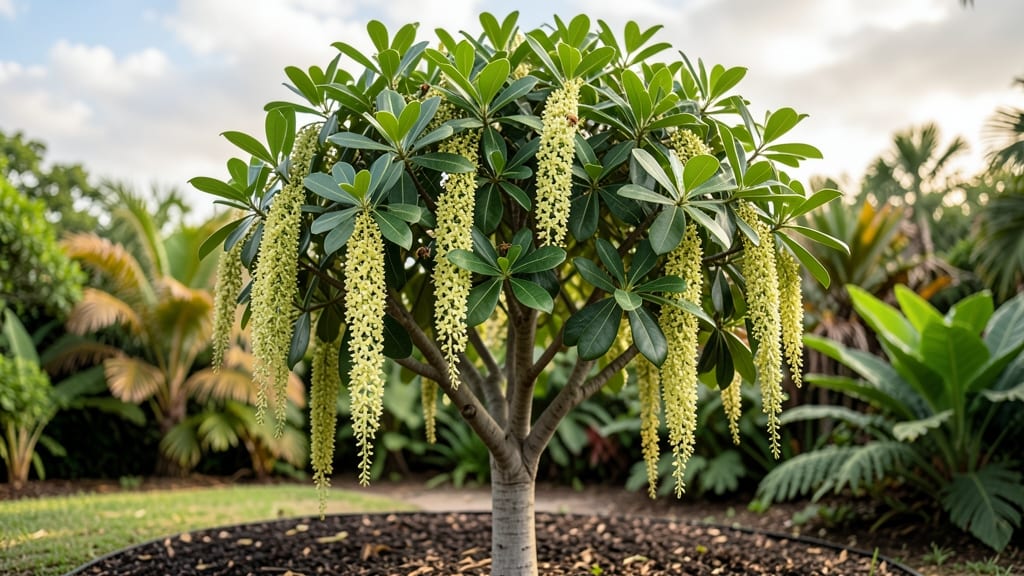
Nothing says "tropical escape" like a paradise tree in full bloom, its delicate white flowers cascading like snowflakes on a summer day. 🌸 I've seen these stunning trees transform even modest backyards into lush oases—imagine the drama of their 12-inch-wide blossoms against a blue sky or dark foliage.
The secret lies in their year-round potential, though they peak in spring and fall when conditions are perfect.
These flowers aren't just pretty—they're architectural stars. Their unique saucer shape and subtle fragrance make them perfect for focal points in subtropical gardens. Pair them with deep-green shrubs like coontie palms or fiery red cannas to create a striking contrast that draws the eye.
The tree's glossy, evergreen leaves add texture year-round, ensuring your garden always has something special to offer.
What truly sets paradise trees apart is their ability to bloom even in partial shade, though they shine brightest in full sun. You'll find them gracing everything from formal gardens to casual beachside landscapes—wherever you plant them, they become the centerpiece.
The flowers attract hummingbirds, adding another layer of movement and life to your space.
For best results, plant them where their branches can spread without competition, giving those blossoms room to truly shine. In cooler climates, treat them as container plants you can bring indoors during winter. The payoff? A garden that feels like a vacation, no matter where you live.
📚 In This Guide
- What you need
- Instructions
- Tips and common mistakes
- Wrapping up and next steps
What you need
- ● Paradise tree seeds or saplings: 1–3 (ensure they’re disease-free and from a trusted nursery).
- ● Well-draining potting mix: 2–3 bags (look for a blend with perlite or sand for aeration).
- ○ Large containers (optional but recommended): 15–20 gallon pots (if growing in containers).
- ● Fabric grow bags (alternative for better root health).
- ● Slow-release fertilizer: 1–2 tablets or granules (14-14-14 NPK ratio works well).
- ● Pruning shears: 1 pair (sterilized with rubbing alcohol).
- ○ Mulch (optional): Pine bark or coconut coir (2–3 inches thick to retain moisture).
- ● Gloves: 1 pair (to protect hands from sap and thorns).
- ● Watering can or hose with a gentle spray nozzle.
- ● Sunlight access: Full sun (6+ hours daily) or bright indirect light (for indoor setups).
- ○ pH test kit (optional): To check soil pH (ideal range: 6.0–7.5).
- ● Rooting hormone (for cuttings): 1 small bottle (if propagating).
How to grow and maintain a stunning paradise tree flower display
Transform your sunny patio or garden into a tropical oasis with these vibrant bloomers!
🌱 Step 1: Select the Perfect Planting Location
Paradise trees (Simarouba glauca) thrive in full sun to partial shade, needing at least 6 hours of direct sunlight daily. I always pick the warmest, most sheltered spot in my yard—these trees hate cold drafts or sudden temperature drops. If you're in a cooler climate, plant near a south-facing wall where afternoon sun lingers longest.
Check the soil pH before planting—paradise trees prefer slightly acidic to neutral soil (6.1-7.5). Dig a hole twice as wide as the root ball but only as deep. The top of the root ball should sit 1-2 inches above ground level to prevent waterlogging. I like to loosen the sides of the hole with a shovel to encourage root spread.
☀️ Step 2: Plant with Proper Spacing and Mulching
Space your paradise trees 15-20 feet apart—they grow 20-40 feet tall with a 15-25 foot spread at maturity. If you're planting multiple trees, arrange them in a loose cluster for a natural, tropical canopy effect. The roots are deep but not invasive, so they won’t compete aggressively with other plants.
Backfill the hole with native soil mixed with 2-3 inches of compost to boost fertility. Water deeply to settle the soil around the roots, then add a 3-inch layer of mulch (like pine bark or wood chips) to retain moisture and regulate temperature. Keep mulch 6 inches away from the trunk to prevent rot. This step is crucial—mulch keeps roots cool in summer and insulated in winter.
💧 Step 3: Water Deeply and Establish a Routine
Newly planted paradise trees need 1-2 inches of water per week during the first year. Water deeply 2-3 times per week until the soil is 6 inches deep and evenly moist. You’ll know it’s right when water drains through the bottom of the hole—no puddling! After the first year, they’re drought-tolerant but still appreciate deep watering every 10-14 days in dry spells.
Here’s the thing—I avoid overhead watering after planting because wet foliage invites fungal diseases. Instead, I use a soaker hose or drip irrigation at the base. If you must water from above, do it early in the morning so leaves dry quickly. Once established, paradise trees can handle brief dry periods, but their flowers will be more vibrant with consistent moisture.
✂️ Step 4: Prune for Shape and Encourage Blooms
Prune paradise trees late winter or early spring before new growth starts. Remove any dead, diseased, or crossing branches first—these trees grow fast, and weak wood can weigh down the canopy. I like to shape them into a broad, rounded form by cutting back 1/3 of the longest branches to encourage bushier growth.
Never prune in fall—it stimulates new growth that won’t harden off before winter. If you notice leggy growth, it’s a sign of too little light. Thin out the center to improve airflow, which reduces humidity-related issues like powdery mildew. With proper pruning, you’ll see more abundant flowers in late spring to early summer, followed by their signature orange-red berries that birds adore.
🌿 Step 5: Fertilize and Protect for Year-Round Beauty
Feed your paradise tree once in early spring with a balanced, slow-release fertilizer (10-10-10). Sprinkle it evenly over the root zone and water deeply to activate it. Avoid high-nitrogen fertilizers—they promote leafy growth at the expense of flowers. I also add a handful of compost around the base every fall to replenish nutrients naturally.
Watch for pests like aphids or scale, which love the sap of young paradise trees. Spray with neem oil if you spot sticky residue (honeydew) on leaves. These trees are generally pest-resistant, but their glossy foliage can attract spider mites in dry conditions. Mist the leaves occasionally during heatwaves to keep them happy and hydrated.
Tips & tricks for perfect paradise tree flower displays
These game-changing insights will help you cultivate a lush, blooming paradise tree that steals the show year after year!
Location is Everything: I can't stress this enough—paradise trees absolutely thrive in that 6 hours of direct sunlight minimum. If your yard has afternoon shade, position your tree near a south-facing wall to capture those golden hours. Trust me, the difference in bloom abundance is staggering! I've seen trees in partial shade produce half as many flowers as their sun-soaked siblings.
Root Ball Placement Matters: When planting, make sure that 1-2 inches of the root ball sit above ground level—this prevents waterlogging that can rot the roots. I learned this the hard way after losing a young tree to soggy soil. Also, those loose sides of the hole? They're not just for show—they encourage roots to spread outward instead of circling, which gives your tree a stronger foundation for years to come.
Watering Wisdom: The 2-3 times per week watering routine during the first year is non-negotiable, but here's the secret: water until it drains through the bottom of the hole. You want that soil 6 inches deep to be evenly moist, not just damp at the surface. I use a moisture meter now, but in a pinch, you can dig down a few inches after watering to check—if it's dry, water again. This deep watering encourages those strong roots that will support your tree's tropical beauty.
Pruning Payoff: That 1/3 cut back on longest branches during late winter pruning might seem drastic, but it's what transforms your tree from leggy to lush. I always prune just outside a bud or branch junction to encourage new growth from the right spot. And remember—never prune in fall! You'll regret it when those tender new shoots freeze before winter's over. The reward? More abundant flowers and that perfect rounded shape that makes your tree look like it belongs in a tropical paradise.
Pro Tips for Paradise Tree Flowers
- These game-changing insights will help you cultivate a lush, blooming paradise tree that steals the show year after year!
- Location is Everything: I can't stress this enough—paradise trees absolutely thrive in that 6 hours of direct sunlight minimum.
- Root Ball Placement Matters: When planting, make sure that 1-2 inches of the root ball sit above ground level—this prevents waterlogging that can rot the roots.
Frequently asked questions
Got questions about keeping your paradise tree flowers (Thespesia populnea) thriving? You’re not alone! Here are answers to the most common queries—from care tips to troubleshooting—so you can enjoy those stunning blooms year-round.
How often do paradise tree flowers bloom, and when can I expect them?
Paradise trees bloom year-round in tropical climates but peak in late spring to early summer. In cooler zones, expect sporadic blooms from spring through fall. Young trees may take 2–3 years to flower, while mature specimens can produce bright yellow-orange blooms every few weeks with proper care.
Why aren’t my paradise tree flowers opening, or are they dropping early?
Early drop or unopened buds often signal stress. Check for:
- Underwatering: Soil should stay evenly moist (not soggy).
- Overcrowding: Prune nearby plants for airflow.
- Temperature shock: Keep them above 50°F (10°C).
- Nutrient deficiency: Fertilize monthly with a balanced, tropical blend.
If the issue persists, inspect for pests like aphids or fungal spots on leaves.
Can paradise trees grow indoors, or are they strictly outdoor plants?
While they thrive outdoors in USDA zones 10–12, you can grow them indoors near south-facing windows with:
- Bright, indirect light (supplement with grow lights in winter).
- A large container (minimum 20 gallons) with drainage.
- Humidity trays or misting to mimic tropical conditions.
Pro tip: Expect slower growth indoors—outdoor trees grow 10–20 feet tall!
What are some low-maintenance alternatives to paradise trees for tropical blooms?
If paradise trees seem high-maintenance, try these hardy, flowering tropicals:
Plant
Bloom Color
Care Level
Plumeria (Frangipani)
White, pink, yellow
Moderate (drought-tolerant, needs full sun)
Ixora
Red, orange, purple
Easy (thrives in heat, loves moisture)
Bougainvillea
Magenta, pink, purple
Low (drought-resistant, fast-growing)
All three tolerate heat and humidity like paradise trees but with less fuss.
How do I protect paradise tree flowers from heavy rain or wind damage?
Tropical blooms are delicate! Use these tricks to safeguard your tree:
- Stake young trees in windy areas to prevent uprooting.
- Prune lightly before storms to reduce wind resistance.
- Shelter potted trees under a carport or patio during downpours.
- Avoid overhead watering—use drip irrigation to keep petals dry.
Rain can bruise petals, but the tree will rebound quickly with proper care!
Wrapping up and next steps
The paradise tree flower is a stunning addition to any sunlit space, offering year-round tropical beauty with minimal fuss. Whether you’re a seasoned gardener or a beginner, its vibrant blooms and easy care make it a dream plant to grow.
Now that you’re armed with the right knowledge, why not bring a piece of paradise home?
🌿 Next steps:
- Visit your local nursery to pick out your own paradise tree sapling.
- Share your new green friend with fellow plant lovers—spread the joy!
- Stay tuned for tips on pruning and seasonal care to keep those blooms thriving!