
Pruning
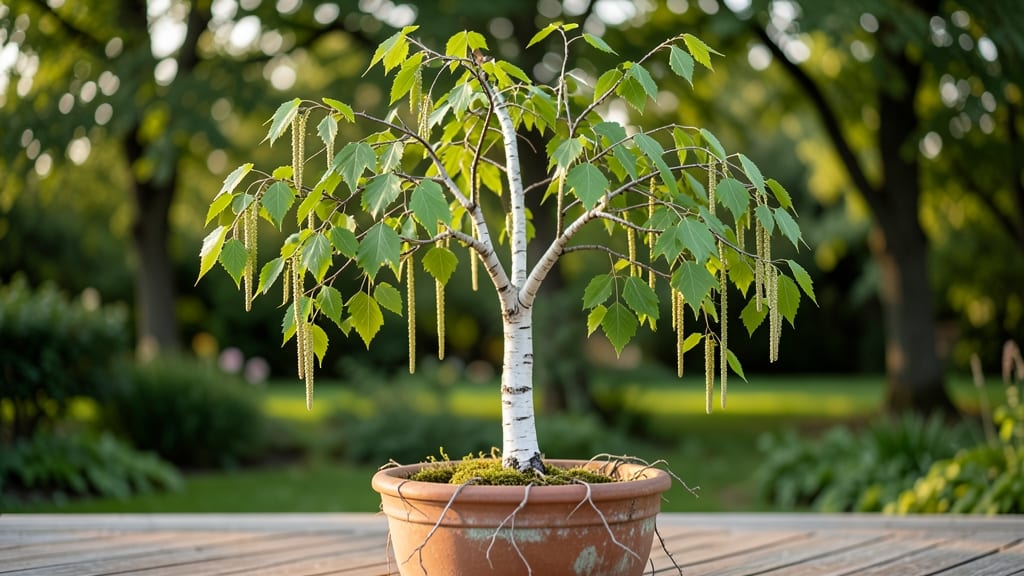
A birch tree in a pot adds ethereal elegance to small spaces, but it demands a different approach than its woodland cousins. 🌿 The trick isn’t just choosing the right container—it’s mastering the balance of root space, drainage, and pruning to keep it thriving for decades.
My dwarf birch has been the centerpiece of my patio for five years now, and the secret lies in understanding how these trees adapt (or don’t) to confinement.
Start with a 15- to 20-gallon container for dwarf varieties like 'Youngii', using a mix of 60% potting soil, 30% perlite, and 10% compost to prevent compaction.
Root-bound trees show their frustration with yellowing leaves or stunted growth—so upgrade pots every 2-3 years and prune roots gently if they circle the container. Winter care is critical: wrap the pot in burlap and move it to a sheltered spot to protect roots from freezing.
With the right care, your potted birch will reward you with delicate, peeling bark and fine foliage year-round. The key is light pruning in late winter to shape the tree and remove dead branches—never more than 25% of the canopy at once.
I’ve learned that patience pays off: my tree now stands 8 feet tall (dwarf by nature, but still impressive) and handles summer heat better than I expected.
This method works for patios, balconies, or even large indoor spaces with proper light. The trade-off? You’ll need to water deeply 2-3 times a week in summer and monitor for pests like spider mites.
But the payoff—a tree that looks like it belongs in a forest, thriving in a pot—is worth every extra step.
📚 In This Guide
- What you need
- Instructions
- Tips and common mistakes
- Wrapping up and next steps
What you need
- ● Birch Tree Sapling: Choose a Betula pendula (Silver Birch) or Betula papyrifera (Paper Birch) in a 3–5 gallon container (1–3 years old). Ensure it’s healthy with no signs of disease.
- ● Pot: A 15–20 gallon container with drainage holes (terracotta or resin with a saucer). For dwarf varieties, a 7–10 gallon pot works.
- ● High-Quality Potting Soil: A well-draining mix (60% organic matter like peat moss or coconut coir, 30% perlite/pumice, 10% compost). Avoid garden soil—it compacts and suffocates roots!
- ● Pruning Tools: Bypass pruners (for cuts <½ inch thick)
- ● Loppers (for thicker branches, ½–1½ inches)
- ● Sharp pruning saw (for stubborn growth)
- ● Mulch: 2–3 inches of organic mulch (pine bark, wood chips, or straw) to retain moisture and regulate temperature.
- ● Root stimulator (like Mycorrhizal fungi) to boost root health during repotting.
- ● Slow-release fertilizer (10-10-10 or 14-14-14) for nutrient-dense soil.
- ● Pot feet or casters (to protect floors and move the tree easily).
- ● Glove spray or disinfectant (to sterilize tools between cuts and prevent disease).
- ● Support stakes or a small trellis (if training the tree for a specific shape).
- ● A sunny spot with at least 6 hours of direct sunlight daily (partial shade in hot climates).
- ● Access to water (birch trees hate soggy roots but need consistent moisture).
- ● Patience! Birch trees grow slowly—pruning for shape takes time and practice.
Instructions for cultivating a birch tree in a container
Here's how to keep your birch tree thriving in a pot—with pruning techniques that maintain its elegant form year-round.
🪴 Step 1: Select the Right Container and Soil Mix
Choose a container at least 18 inches deep with drainage holes—birch trees have extensive root systems that need room to spread. I opt for unglazed clay pots because they allow excess moisture to evaporate, preventing root rot. The soil mix should be 60% high-quality potting soil, 30% perlite, and 10% compost to ensure proper aeration and drainage.
Fill the pot to 2 inches below the rim, leaving space for watering. Tap the container gently to settle the mix without compacting it. The goal is a loose, airy medium that mimics the birch's natural forest floor habitat. Avoid garden soil—it compacts in containers and suffocates roots.
🌱 Step 2: Plant and Water for Initial Establishment
Remove the birch from its nursery pot and loosen the roots gently with your fingers. Place it in the center of the container, ensuring the root flare (where roots meet the trunk) sits 1 inch above the soil line. This prevents soil from burying the trunk, which can cause disease.
Backfill with the prepared mix, pressing lightly to eliminate air pockets. Water deeply until moisture runs from the drainage holes, then let it drain completely. Birch trees hate soggy roots, so never let the pot sit in standing water. After planting, place the container in partial shade for the first 7-10 days to reduce transplant shock.
✂️ Step 3: Prune Strategically for Year-Round Form
Prune in early spring before new growth begins to encourage healthy branching. Use clean, sharp pruners to make cuts just outside the branch collar—the swollen area where the branch meets the trunk. Remove dead, crossing, or inward-growing branches first to improve airflow and sunlight penetration.
For birch trees, focus on selective thinning rather than heavy pruning. Aim to maintain an open canopy by removing no more than 25% of the foliage in a single session. This preserves the tree's natural grace while preventing stress. After pruning, apply a balanced fertilizer (10-10-10) to support new growth.
☀️ Step 4: Manage Light and Water for Seasonal Health
Birch trees tolerate full sun to partial shade, but container-grown specimens need morning sun and afternoon shade in hot climates to prevent leaf scorch. Rotate the pot quarter-turn weekly so the tree grows evenly. In winter, move the container to a protected location (like a garage or under an eave) if temperatures drop below 10°F—birch trees are hardy but can suffer cold damage in pots.
Water when the top 2 inches of soil feel dry—typically every 5-7 days in summer, less in winter. Overwatering is the biggest threat, so always check moisture before adding more. Mulch the soil surface with 1-2 inches of bark chips to retain moisture and regulate temperature.
⏰ Step 5: Monitor and Adjust for Long-Term Success
Inspect the tree monthly for signs of stress—yellowing leaves, stunted growth, or fungal spots on bark. Birch trees in pots are prone to root binding, so repot every 2-3 years in spring using a container 2-3 inches larger than the current one. This gives roots space to grow without overwhelming the tree.
If the tree outgrows its pot, prune roots gently by trimming 10-15% of the longest roots before repotting. This encourages a stronger root system. With proper care, your container birch will reward you with year-round elegance and minimal maintenance—just watch it flourish.
Tips & tricks for cultivating a birch tree in a pot
Between us, these little details make all the difference when growing a birch tree in containers. I've learned the hard way that skipping them leads to stressed trees and sad results.
Container Depth Matters: That 18-inch minimum depth isn't arbitrary—birch roots grow aggressively downward. If you're tempted to use a shallower pot to save space, think again. Shallow containers cause root binding within 1-2 years, stunting growth. I've seen birch trees in 12-inch pots struggle to thrive, even with perfect care. If you must use a smaller pot, prune roots by 20% during repotting to encourage outward growth instead of downward pressure.
Root Flare Position is Critical: The instructions mention placing the root flare 1 inch above soil level, but here's what nobody tells you—this isn't just about aesthetics. Burying the flare smothers the trunk's base, creating perfect conditions for fungal diseases. I once lost a container birch to root rot because I ignored this detail. After that, I marked the flare with a permanent marker before planting to ensure perfect positioning every time. The tree's health depends on this single detail.
Winter Protection Strategy: Moving your pot to a protected location when temperatures drop below 10°F is essential, but don't stop there. Wrap the pot in bubble wrap or burlap to create an insulating barrier. I've had pots crack in freezing temperatures because the water inside expanded—this simple step prevents that. Also, avoid placing the wrapped pot directly against exterior walls, as temperature fluctuations can still stress the tree. A sheltered porch or garage with indirect light works best.
Pro Tips for Birch Tree In Pot
- Between us, these little details make all the difference when growing a birch tree in containers.
- Container Depth Matters: That 18-inch minimum depth isn't arbitrary—birch roots grow aggressively downward.
- Root Flare Position is Critical: The instructions mention placing the root flare 1 inch above soil level, but here's what nobody tells you—this isn't just about aesthetics.
Frequently asked questions
Got questions about keeping a birch tree thriving in a pot?
You’re not alone! Here are answers to the most common concerns—from pruning to placement—to help you nurture your Betula with confidence.
How often should I prune a birch tree in a pot?
Prune your potted birch tree once a year in late winter or early spring (before new growth starts). Remove dead, crossing, or weak branches first, then thin out up to 25% of the canopy for airflow. Avoid heavy pruning—birches are sensitive! For container-grown trees, light trimming after summer growth is also helpful to encourage bushiness.
Can a birch tree survive long-term in a pot?
Yes, but with care! Birches thrive in pots for 3–5 years if you:
- Use a large, deep container (at least 18–24 inches wide/deep) with drainage holes.
- Repot every 2–3 years in fresh, well-draining soil (mix potting soil with perlite or sand).
- Fertilize lightly in spring/summer (avoid over-fertilizing—birches hate soggy roots!).
How do I protect a potted birch tree in winter?
Birches are hardy but need winter prep in pots:
- Move the pot to a sheltered spot (e.g., against a north-facing wall) before frost.
- Wrap the container and root ball in burlap or tree wrap to insulate roots.
- Avoid mulching the soil—keep it dry to prevent rot.
- Water sparingly (only if soil is bone-dry) and never let ice form on the pot.
What’s the best soil mix for a potted birch tree?
Birches prefer well-draining, slightly acidic soil (pH 4.5–7.0). Use a mix of:
- 60% high-quality potting soil (e.g., peat-based or coconut coir).
- 20% perlite or pumice (for aeration).
- 20% compost or worm castings (for nutrients).
Why are my birch tree’s leaves turning yellow or brown?
Yellow/brown leaves usually signal overwatering, underwatering, or nutrient issues. Check these first:
- Yellow leaves with brown edges = overwatering or poor drainage. Let soil dry between waterings.
- Crispy, dry leaves = underwatering or low humidity. Water deeply and move to a shadier spot.
- Uniform yellowing = nutrient deficiency (e.g., iron or nitrogen). Fertilize lightly with a balanced 10-10-10 formula in spring.
- Black spots or wilting = fungal disease (common in pots). Prune affected branches and treat with neem oil.
Wrapping up and next steps
Growing a birch tree in a pot brings a touch of nature’s elegance to any space, and with the right pruning techniques, you’ll keep it thriving year-round! 🌿 Whether you’re trimming for shape, health, or seasonal renewal, remember that patience and precision go a long way.
Start small, observe your tree’s growth, and soon, you’ll have a stunning, well-maintained centerpiece that’s the envy of every garden.
Ready to take the next step? Experiment with different styles—like espalier or topiary—and document your progress. Share your birch tree in pot journey with fellow plant lovers or even consider gifting a pruned sapling to a friend! The possibilities are as endless as your green thumb.