
Pruning
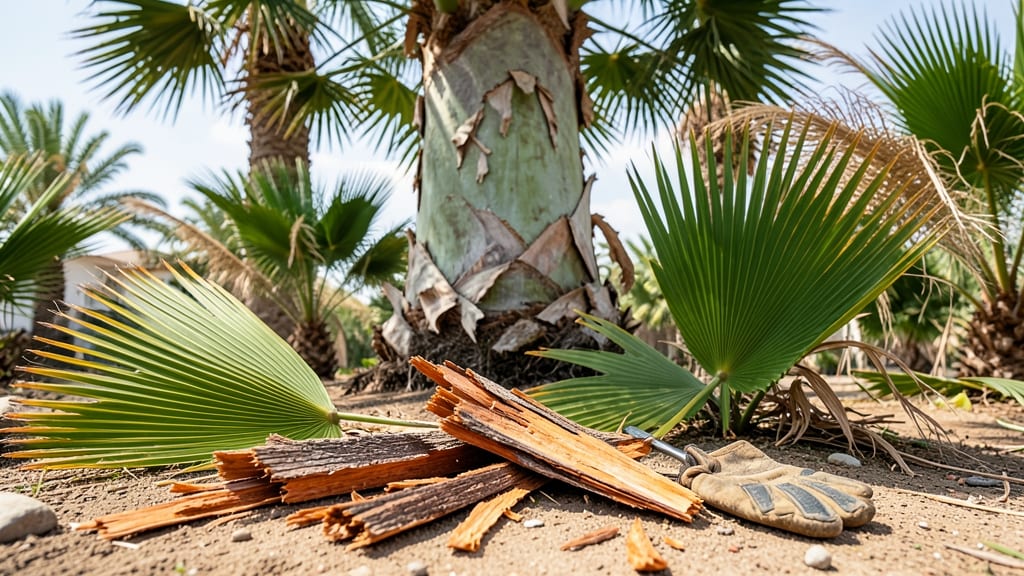
Your palm tree’s bark falling off like old wallpaper isn’t just unsightly—it’s a cry for help. 🌴 I’ve seen healthy palms turn into sad, bare stalks when homeowners ignore the warning signs, but the good news is most cases can be reversed with simple fixes.
The key is acting fast before rot or pests take over.
Most bark loss stems from three culprits: fungal infections (like Ganoderma), environmental stress (too much water or poor drainage), or pests chewing through the trunk. The first step is identifying the damage—look for discolored patches, soft spots when pressed, or tiny holes where insects might be hiding.
Once you know the cause, you can treat it before it spreads.
Reviving your palm starts with pruning away dead fronds and improving airflow around the trunk. For fungal issues, a copper-based fungicide applied in early morning (when humidity is high) works wonders. Drainage fixes—like amending soil with sand or creating a slight slope—keep roots happy and prevent future stress.
With the right care, your palm can bounce back stronger than ever. The trick is consistency—check the trunk monthly for new damage, keep watering even, and watch as fresh green fronds push out from the crown. Healthy bark means a thriving tree for years to come.
Root Causes of Bark Shedding
Understanding why your palm tree’s bark is peeling or falling off starts with identifying the underlying stress factors. While some shedding is natural, excessive or irregular bark loss often signals deeper issues. Here’s a breakdown of the most common culprits—and what they reveal about your tree’s health.
Palm trees are tropical plants at heart, and sudden environmental changes can trigger bark sloughing as a survival response. Here’s how climate plays a role:
- Extreme Heat or Cold Snaps 🔥❄️ - Rapid temperature swings (especially below 30°F or above 100°F) can cause the outer bark to dry out and crack, leading to peeling.
This is common in palms like the Mexican Fan Palm or Canary Island Date Palm, which are less cold-hardy. - Actionable fix: Mulch the root zone to regulate soil temperature and provide shade during heatwaves. Use frost cloths in winter if your palm is borderline hardy.
- Sun Scald (Insolation Injury) - Intense midday sun on the trunk’s east or west side (where bark is thinnest) can cook the outer layers, causing them to blister and peel.
This is especially true for young palms or those newly transplanted. - Pro tip: 💡 Apply a lightweight white latex paint (like Tree Guard) to the trunk to reflect sunlight and prevent damage.
- Wind and Physical Abrasion - Constant wind or nearby structures (like fences or other trees) can sandblast the bark, weakening its structure.
Over time, this leads to flaking or large patches falling off. - Solution: Plant windbreaks (e.g., bamboo or ornamental grasses) or install a tree wrap to protect vulnerable trunks.
Water is both a lifeline and a threat to palm bark health. Too much or too little can disrupt the tree’s natural protective layers.
- Overwatering and Root Rot - Soggy soil deprives roots of oxygen, forcing the palm to shed bark prematurely as a way to conserve energy.
Look for blackened, mushy bark or a foul odor at the base. - Warning signs: Yellowing fronds, oozing trunk sap, or mushrooms growing at the base. - Fix: Improve drainage with sand or gravel amendments and avoid watering until the top 2–3 inches of soil are dry.
- Underwatering and Drought Stress - Chronic dryness causes the bark to contract and split, making it susceptible to pests or disease.
Palms like the Pindo Palm or Sago Palm are particularly sensitive. - Recovery tip: 🌱 Deep-water once a week (1–2 inches per session) during dry spells, and mulch with wood chips to retain moisture.
- Salt or Chemical Burn
- Over-fertilizing (especially with high-salt fertilizers) or using road salt near urban palms can create a chemical burn, causing bark to blister and peel.
- Prevention: Flush the soil with water after fertilizing and use organic, slow-release options like compost or fish emulsion.
Not all bark loss is environmental—some of the worst damage comes from hidden invaders that weaken the trunk from within.
- Palm Weevil Larvae (The Silent Killer) - These beetle larvae tunnel into the trunk, creating galleries that disrupt the vascular system.
Infested palms often show oozing sap, wilting fronds, and bark peeling in irregular patches. - Emergency action: 🔪 If you spot sawdust-like frass or holes in the trunk, prune and burn infected fronds immediately and treat with neem oil or systemic insecticides (like imidacloprid).
- Fungal Infections (e.g., Ganoderma or Phytophthora) - Fungi thrive in moist, damaged bark, causing conks (shelf fungi) to grow and bark to slough off.
The Canary Date Palm is particularly vulnerable to Ganoderma butt rot. - Treatment: Remove infected bark with a sterilized pruning tool, apply copper fungicide, and improve air circulation around the trunk.
- Scale Insects and Mealybugs
- These sap-sucking pests weaken the bark’s integrity, leading to peeling and honeydew buildup (which attracts sooty mold). Check for cottony white clusters or blackened bark.
- Solution: Spray with horticultural oil or insecticidal soap during the pupal stage (when they’re most vulnerable).
Even well-meaning maintenance can harm your palm’s bark if done incorrectly.
- Mechanical Injury from Tools - Using metal pruners, chainsaws, or even lawnmowers against the trunk can strip bark and create entry points for pathogens.
Palms like the Coconut Palm have thin bark and are especially prone to scarring. - Best practice: Always use clean, sharp pruning shears and sterilize tools with rubbing alcohol between cuts.
- Over-Pruning or Topping
- Removing too many fronds at once (especially the older, lower ones) disrupts the palm’s energy flow, leading to stress-induced bark shedding.
- Rule of thumb: Never remove more than 1/3 of the fronds in a single session, and avoid "topping" (cutting the crown off).
- Transplant Shock - Moving a mature palm without proper root care can cause the bark to crack or peel as the tree struggles to adapt.
This is common in California Fan Palms or Mediterranean Dwarf Palms. - Recovery steps: 🌿 Water deeply for 2 weeks post-transplant, stake the tree for support, and avoid fertilizing for 3 months.
Not all bark loss is a cause for alarm—some palms shed naturally as they mature. Recognizing the difference is key:
- Normal Sloughing in Mature Palms - Healthy palms like the Kentia Palm or Majesty Palm may peel in thin, papery layers as they grow.
This is not harmful and indicates the tree is replacing old bark. - How to tell: The shedding is uniform, not patchy, and the new bark underneath is smooth and greenish.
- Seasonal Adjustments
- Some palms (e.g., Pygmy Date Palm) shed more bark in spring or fall as they prepare for new growth. This is normal if the tree is otherwise vibrant.
If your palm’s bark is peeling unevenly, oozing sap, or accompanied by these symptoms, act fast:
- Blackened or sunken patches (fungal rot)
- Holes or frass (insect debris) (weevils or borers)
- Wilting fronds despite watering (vascular damage)
- Mushrooms at the base (root rot)
Revive Your Palm Tree’s Bark
Now that you understand why your palm tree’s bark is peeling or falling off, it’s time to take action! The right approach depends on the root cause—whether it’s environmental stress, pests, disease, or natural aging.
Below are practical, step-by-step solutions to restore your palm’s health, plus prevention tips to keep it thriving long-term.
Problem: Sun scorch or wind damage causes bark to dry out and flake.
How to Fix It: 🔥 🌞 Provide Shade (Temporarily)
- If your palm is in full sun, especially during scorching summers, give it partial shade for a few weeks.
- Use lightweight shade cloth (30-50% coverage) or a temporary umbrella to reduce direct sunlight.
- Avoid plastic sheets—they trap heat and can worsen the issue.
🌬️ 🌪️ Protect from Harsh Winds
- If winds are stripping bark, plant nearby windbreaks (like bamboo or shrubs) or install a windscreen (a mesh barrier).
- Stake young palms to prevent excessive swaying, which can crack the trunk.
💧 💦 Deep Watering & Mulching
- Water deeply 2-3 times per week (check soil moisture—top 2 inches should be dry before watering).
- Apply 2-3 inches of organic mulch (wood chips or bark) around the base (but keep it 6 inches away from the trunk to prevent rot).
💡 Pro Tip: If bark is already peeling, don’t forcefully remove it—let it fall naturally. Gently brush off loose pieces with a soft brush to avoid damaging healthy tissue.
Problem: Insects weaken the tree, causing bark to split or fall.
How to Fix It: 🔍 🐜 Identify the Pest First
- Scale insects (tiny bumps on bark) → Neem oil spray (mix 2 tbsp neem oil + 1 tsp dish soap + 1 gallon water).
- Mealybugs (white cottony clusters) → Rubbing alcohol spray (70% isopropyl alcohol + water, apply at night).
- Palm weevils (holes in trunk, frass sawdust) → Contact a professional immediately—these are fatal if untreated.
🍳 👨🍳 DIY Pest Control Sprays
| Pest | Solution | Frequency |
|---|---|---|
| Scale/Mealybug | Neem oil + soap spray | Every 5-7 days (3 weeks) |
| Soft-bodied bugs | Horticultural oil spray (late evening) | Weekly for 2 weeks |
| Ants (harbor pests) | Diatomaceous earth (food-grade) around base | Monthly |
⏰ 🕒 Timing Matters
- Spray in the early morning or late evening to avoid burning insects (and your palms!).
- Reapply after rain—water washes off treatments.
💡 Pro Tip: Prune infested fronds and dispose of them in sealed bags (not compost) to stop pest spread.
Problem: Dark spots, oozing sap, or soft rot signal a serious infection.
How to Fix It: 🔪 🌡️ Prune Infected Areas Aggressively
- Cut out dead or diseased fronds using sterilized pruners (wipe with rubbing alcohol between cuts).
- Remove all infected bark—don’t leave it behind, or the fungus will return.
💊 💊 Apply Fungicide or Antibacterial Treatment
- For fungal issues (like Ganoderma butt rot):
- Copper fungicide (follow label instructions).
- Baking soda spray (1 tbsp baking soda + 1 quart water + a few drops of soap).
- For bacterial infections (oozing sap):
- Hydrogen peroxide (3%) spray (dilute 1:1 with water) to disinfect.
🌡️ 🌡️ Monitor & Repeat
- Reapply treatments every 7-10 days until new growth appears.
- Avoid overwatering—fungi thrive in wet conditions.
💡 Pro Tip: If the trunk is already hollow or mushy, the palm may be beyond saving. Consider replacing it to prevent the disease from spreading to other plants.
Problem: Older palms shed bark as part of their life cycle.
How to Manage It: ✨ 🌟 Accept & Maintain
- Don’t panic—this is normal for mature palms like Coconut, Date, or Royal palms.
- Focus on overall health:
- Fertilize annually (slow-release palm fertilizer in spring).
- Keep soil well-draining (amend with sand or perlite if clay-heavy).
- Prune dead fronds to redirect energy to new growth.
🌱 🌱 Encourage New Growth
- Apply a balanced fertilizer (16-4-8 or 8-2-12) in early spring.
- Avoid over-pruning—remove only dead or brown fronds (never more than ⅓ at a time).
💡 Pro Tip: If your palm is otherwise healthy, shedding bark is just its way of renewing itself—like a snake shedding skin!
Once your palm is back on track, keep it thriving with these easy maintenance habits:
📊 📊 Soil & Watering Checklist
- Test soil pH (palms prefer 6.1-7.5). Adjust with lime (to raise) or sulfur (to lower).
- Avoid soggy roots—ensure proper drainage (raise beds if needed).
- Water at the base, not overhead (prevents fungal growth).
🎯 🎯 Pest & Disease Defense
- Inspect monthly for early signs of pests or discoloration.
- Keep the base clean—remove weeds and debris where pests hide.
- Use reflective mulch (like aluminum foil) around the trunk to deter weevils.
✨ 🌟 Seasonal Care Calendar
| Season | Task |
|---|---|
| Spring | Fertilize, prune dead fronds, check for pests |
| Summer | Monitor for sun stress, deep water weekly |
| Fall | Reduce watering, apply fungicide if needed |
| Winter | Protect from frost (cover young palms), trim dead growth |
Final Thought: Most palm bark issues are fixable with the right care—whether it’s shade, pest control, or proper pruning. The key is acting early and staying consistent. Your palm will reward you with lush, vibrant fronds and strong, healthy bark in no time! 🌴✨
Frequently asked questions
Is it normal for palm tree bark to peel occasionally?
Yes! Many healthy palms naturally shed thin layers of bark as they mature, especially species like Kentia or Majesty Palms. Look for uniform peeling in smooth layers—this is completely normal. The concern comes when peeling becomes patchy, irregular, or accompanied by oozing sap, which signals stress or disease.
How can I tell if my palm's bark loss is from pests vs. disease?
Check for these clues: Pests often leave tiny holes in the trunk (palm weevils) or white cottony clusters (mealybugs/scale). Disease typically shows as dark, sunken patches (fungal rot) or oozing sap (bacterial infections). For weevils, you might also spot sawdust-like frass near entry points.
Can I save a palm tree with severe bark damage?
It depends! If the damage is superficial (just outer bark) and you catch it early, most palms recover with proper care. However, if the trunk is hollow, mushy, or oozing heavily, the tree may be beyond saving. In these cases, remove it immediately to prevent disease spread to other plants. For moderate damage, focus on fungicide treatments and improved drainage.
What's the fastest way to prevent bark from peeling further?
Start with these 3 immediate fixes:
- Stop watering until the top 2-3 inches of soil are dry (overwatering causes rot),
- Apply a copper fungicide to prevent infections, and
- Prune away all dead fronds to reduce stress. For wind/sun damage, add shade cloth temporarily. Consistency is key—check the trunk monthly for new issues.
Will painting the trunk help protect my palm from bark loss?
Yes, but use the right product! A lightweight latex paint (like Tree Guard) reflects sunlight and protects against sun scald and wind abrasion. Avoid thick paints or sealants—they can trap moisture and worsen rot. Reapply every 2-3 years or when peeling starts. Just remember: paint won't fix internal issues like pests or disease.