
Watering
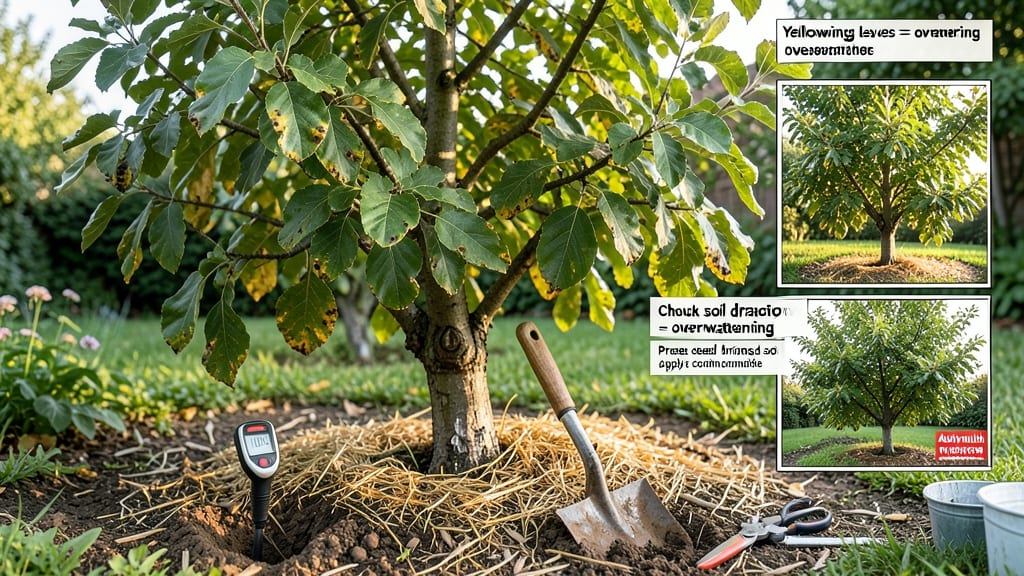
Your overwatered tree recovery starts with cutting back the water—immediately. 🌳 I've seen overwatered trees go from drooping to thriving in just weeks when we tackle the right fixes first: air pruning the roots and fixing drainage. The key is stopping the suffocation before the fungus spreads deeper.
Most gardeners overdo it by watering on a schedule, but trees tell us when they're drowning—yellowing leaves, mushrooms at the base, or that sickly sweet smell. The good news? Even mature trees recover when we adjust their environment.
Start by letting the top 6 inches of soil dry completely between waterings, and consider adding 1-2 inches of organic mulch to regulate moisture.
Within 4-6 weeks, you'll see new growth pushing through as roots breathe again. The leaves will turn a vibrant green, and that musty odor fades. We've nursed back maples, oaks, and even struggling fruit trees using this method—it's all about giving roots the space they need to heal.
For heavy clay soils, mix in compost or sand to break up compaction. Shallow-rooted trees like willows need frequent checks, while deep-rooted oaks can handle longer dry spells. The secret? Patience and consistent care—your tree's comeback starts with these simple adjustments.
The Hidden Causes of Tree Drowning
When your tree starts gasping for air—literally—it’s often because its roots are smothered in excess moisture. Overwatering isn’t just about giving a tree "too much love"; it’s a silent killer that disrupts critical biological processes.
Let’s break down the science behind why this happens and what’s really choking your tree’s roots.
Most gardeners assume "more water = healthier tree," but roots need oxygen as much as they need hydration. When soil stays soggy for days, water fills the pore spaces between soil particles, displacing the air roots rely on for respiration. Without oxygen, roots suffocate, leading to:
- Anaerobic conditions: Soil bacteria switch from aerobic (oxygen-using) to anaerobic (oxygen-free) metabolism, producing toxic byproducts like ethanol and methane—yes, your tree is essentially getting drunk on its own soil.
- Nutrient lockout: Excess water washes away essential minerals (nitrogen, phosphorus, potassium) that roots can’t absorb, starving the tree even as it drowns.
- Root asphyxiation: Fine root hairs—responsible for 90% of water uptake—die off within 24–48 hours of waterlogging, triggering a domino effect of decline.
Actionable insight: Check your watering schedule. Most trees only need 1–1.5 inches of water per week (including rainfall). If your soil stays damp for more than 3 days, you’re overdoing it.
Not all soils are created equal—and neither are their drainage capabilities. Compacted, clay-heavy, or poorly amended soil acts like a sponge that never squeezes out water. Here’s how it backfires:
| Soil Type | Drainage Risk | Why It’s Dangerous |
|---|---|---|
| Clay | ❌ Very slow | Particles pack tightly, trapping water like a brick wall. Roots can’t expand, and oxygen exchange grinds to a halt. |
| Sandy | ⚠️ Fast but inconsistent | Water drains too quickly, but heavy rains or overwatering can still create temporary "puddles" in root zones. |
| Loamy (ideal) | ✅ Balanced | Even distribution of sand, silt, and clay allows excess water to drain while retaining moisture. |
Pro tip: If your soil feels like wet cement when squeezed, it’s time to amend it. Mix in compost, perlite, or coarse sand to improve aeration. For container trees, ensure pots have drainage holes—no exceptions!
Potted trees are especially vulnerable because their root systems are physically restricted. Without proper drainage, water pools at the bottom, creating a death zone for roots. Key red flags:
- Root-bound stress: Circling roots strangle themselves, reducing oxygen flow even further.
- Salt buildup: Over time, minerals from tap water or fertilizers accumulate, creating a hyper-saline environment that burns roots.
- Fungal feasts: Stagnant water invites Phytophthora and other pathogens that consume living roots.
Quick fix: Repot overwatered container trees into a larger pot with fresh, well-draining soil. If roots are mushy or black, trim the damaged sections with sterilized shears before replanting.
Sometimes, overwatering is a victim of circumstance—not just your watering can. Watch for these sneaky culprits:
- Heavy rainfall + no runoff: If your yard slopes toward the tree, water pools around the trunk like a moat.
- Mulch volcanoes: A thick mulch layer (over 3–4 inches) can suffocate roots by trapping moisture.
- Shallow planting: Burying the root flare (the bulge at the tree’s base) forces roots to grow upward into waterlogged surface soil.
💡 Smart move: Install a swale (a shallow trench) around the tree’s drip line to divert excess water away from the root zone. For clay soil, consider a French drain system.
Revive Your Tree Step by Step
Overwatering can feel like a death sentence for your tree, but with the right approach, recovery is absolutely possible. The key is identifying the root cause (literally and figuratively) and taking targeted action.
Below, we’ve mapped out practical fixes for common overwatering issues, paired with prevention tips to keep your tree thriving long-term.
Cause: Soggy soil from poor drainage or excessive watering leads to fungal root rot. Solution:
- 🔥 Stop Watering Immediately – Let the soil dry out completely before watering again.
- 🍳 Improve Drainage – Amend the soil with sand, perlite, or compost to break up compacted earth. For container trees, ensure pots have drainage holes and elevate them slightly.
- 👨🍳 Prune Affected Roots (Carefully!) – If roots are mushy or black, trim them with sterilized pruners (cut healthy white tissue only). Avoid over-pruning—focus on removing only the damaged sections.
- ⏰ Monitor Soil Moisture – Stick your finger 2-3 inches deep—if it’s damp, wait before watering.
💡 Pro Tip: If your tree is in a heavy clay soil, consider raising the planting bed slightly to encourage runoff.
Cause: Overwatering stresses the tree, causing nutrient uptake issues. Solution:
- 🌡️ Adjust Watering Schedule – Water deeply but infrequently (e.g., once a week instead of daily). Early morning is best to reduce evaporation and fungal risks.
- 🥗 Fertilize Lightly – Use a balanced, slow-release fertilizer (like 10-10-10) to help recovery. Avoid heavy nitrogen—it can worsen rot.
- 🎯 Mulch Properly – Apply 2-3 inches of organic mulch (wood chips, straw) away from the trunk to retain moisture without suffocating roots.
✨ Prevention: Test your soil’s drainage by digging a hole, filling it with water, and timing how long it takes to drain. If it’s slower than 4 hours, amend the soil.
Cause: Ignoring soil conditions or relying on rigid schedules. Solution:
- 📊 Use a Moisture Meter – These inexpensive tools tell you exactly when to water (aim for 40-60% moisture at root level).
- 💪 Choose the Right Tree – If your yard floods easily, opt for drought-tolerant species like oak, pine, or crepe myrtle.
- 🍎 Adjust for Season – Trees need less water in winter (when growth slows) and more in extreme heat.
🔥 Quick Fix Table:
| Problem | Quick Action | Prevention |
|---|---|---|
| Soggy soil | Dig a trench around the base to redirect water | Install French drains if needed |
| Mushy roots | Prune damaged roots, repot if in container | Use raised beds for heavy clay soil |
| Yellow leaves | Reduce water, fertilize lightly | Mulch 2-3" away from trunk |
Final Thought: Recovery takes time—patience and proper care are your best tools. With these steps, your tree can bounce back stronger than ever! 🌿💪
Frequently asked questions
How quickly can a tree recover from overwatering?
Recovery depends on the tree species and how long it's been overwatered. With immediate drainage fixes and proper care, you'll often see new growth in 4-6 weeks. For severe cases, it may take 2-3 months before leaves regain their vibrant green color. Shallow-rooted trees like willows recover faster than deep-rooted oaks.
What are the first signs my tree is overwatered?
Watch for these red flags: yellowing leaves that stay soft (not crisp), mushrooms growing at the base, or a musty smell from the soil. The earliest sign is often wilting despite wet soil—roots can't absorb water when they're suffocating. Check the soil 2-3 inches deep—if it's damp, you're overwatering.
Can I save a tree with root rot from overwatering?
Yes, but you must act fast! Prune any black/mushy roots immediately with sterilized tools, improve drainage, and let the soil dry completely. For advanced cases, consult an arborist about mycorrhizal fungi treatments that can help healthy roots recover. The key is stopping the rot before it spreads beyond the root zone.
How do I know if my container tree has drainage issues?
Look for water pooling at the bottom of the pot after watering, or roots growing out of drainage holes. If the soil stays soggy for more than 24 hours, your tree needs better drainage. Repot with fresh, well-draining soil and ensure the pot has holes—never skip this for potted trees!
Will mulch help or hurt an overwatered tree?
Used correctly, mulch helps! Apply 2-3 inches of organic mulch away from the trunk to regulate moisture. Avoid "mulch volcanoes" (piles against the trunk) that trap moisture. For recovery, focus first on drainage before adding mulch to prevent further soil saturation.