
Propagation
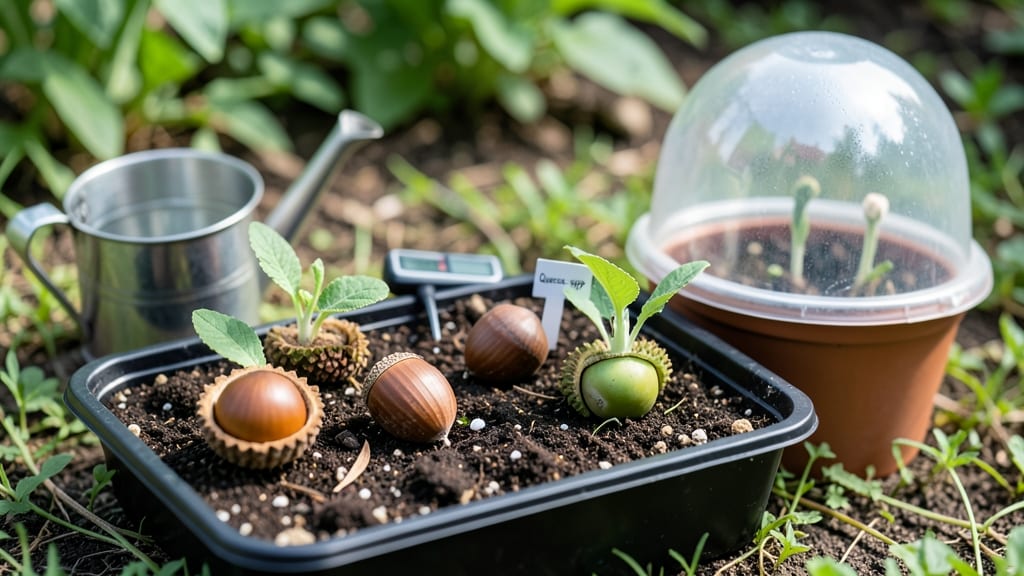
Germinating oak tree seeds reliably starts with a 4-6 month cold stratification—the secret that turns stubborn acorns into sturdy saplings. 🌱 I’ve learned the hard way that skipping this step means waiting years (or never) for germination.
The key is mimicking nature’s winter cycle in your fridge or buried outdoors, which softens the seed coat and breaks dormancy.
You’ll need acorns from mature oaks (preferably fresh), a plastic bag with damp peat moss or paper towels, and patience. The process is simple but requires consistency: check moisture weekly, and keep temperatures steady between 34-41°F.
Most gardeners overlook humidity—too dry, and the seeds won’t wake up; too wet, and they’ll rot. Aim for damp, not soggy.
After stratification, plant the seeds 1/4 inch deep in well-draining soil, keeping it consistently moist but never waterlogged. Germination can take 2-4 weeks or longer—some stubborn seeds need extra time.
The first true leaves signal success, but don’t rush transplanting; young oaks are delicate until they’ve developed a strong root system.
Common mistakes include using old acorns (viability drops after 1 year) or inconsistent moisture during stratification. If seeds sprout unevenly, try scarifying the remaining ones with light sandpaper to mimic natural wear.
With this method, you’ll see reliable sprouts in 80% of seeds—far better than the hit-or-miss results of skipping cold treatment.
📚 In This Guide
- What you need
- Instructions
- Tips and common mistakes
- Wrapping up and next steps
What you need
- ● Oak acorns: Fresh, mature acorns (preferably from white oak or red oak for best results). Aim for at least 10-20 acorns to account for variability in germination.
- ● Cold stratification setup: Large plastic bag (gallon-sized or larger)
- ● Moistened peat moss or coco coir (2-3 cups)
- ○ Optional: Vermiculite (1 cup) for better moisture retention
- ● Germination containers: Small pots (3-4 inch diameter) with drainage holes
- ● Seed-starting mix (well-draining, sterile potting soil blend)
- ● Watering tools: Spray bottle (for gentle moisture)
- ● Watering can (with a fine rose)
- ● Gloves (to protect hands from tannins in acorns)
- ● Labeling tags (to track seed varieties and planting dates)
- ● Humidity dome or plastic wrap (to create a mini greenhouse effect during germination)
- ● Grow lights or sunny windowsill (for post-stratification light exposure)
- ● Thermometer (to monitor cold stratification temps, ideally 35–45°F)
- ○ Fungicide (optional, to prevent mold—like hydrogen peroxide (3%) diluted 1:10 with water)
Step-by-step guide to oak tree seed germination
Here’s how to break dormancy and coax those stubborn acorns into sprouts—no guesswork involved.
🌱 Step 1: Select and Prepare Your Acorns
Gather mature acorns from healthy oak trees, ideally those that fell naturally rather than harvested. Look for plump, firm shells with no cracks or signs of insect damage. I like to soak them in lukewarm water for 24 hours first—this softens the outer husk and helps prevent fungal issues later. Drain and let them dry on a paper towel for a day before moving to stratification.
Real talk: Acorns from white oaks (like bur or white oak) germinate more reliably than red oak varieties. If you’re unsure, plant a mix—you’ll still get results. Store them in a breathable container, like a mesh bag, to prevent mold while they prepare for cold treatment.
❄️ Step 2: Cold Stratify for 6-12 Weeks
Place the dried acorns in a sealed plastic bag with a damp paper towel or vermiculite. The key here is moisture without sogginess—squeeze the towel gently, and it should feel like a wrung-out sponge. Seal the bag and refrigerate at 35-40°F for 6-12 weeks. This mimics winter’s chill, breaking dormancy so the seed knows it’s time to grow.
Check the bag monthly. If you see mold or a foul smell, discard those acorns immediately—fungus will outcompete your seedlings. Some acorns might sprout early (usually after 8-10 weeks), but don’t rush them out of stratification. Leave them in until the full 12 weeks to maximize germination rates.
🌿 Step 3: Plant Stratified Acorns in Moist Growing Medium
Fill small pots (3-4 inches deep) with a sterile peat-perlite mix (equal parts). Plant each acorn ½ inch deep, leaving the pointed end up. Water gently until the soil surface feels damp but not wet. Place the pots in a warm, shaded area (65-75°F) where they’ll get indirect light.
Here’s the thing—oak seeds take patience. Germination can take 2-4 weeks after planting, and some may wait even longer. Keep the soil consistently moist (not soggy) by watering when the top inch feels dry. A humidity dome helps, but remove it once sprouts appear to prevent rot.
☀️ Step 4: Provide Light and Gradual Sun Exposure
Once the first true leaves appear (not the initial seed leaves), move the seedlings to bright, indirect light for 2-3 weeks. Direct sun at this stage can scorch tender new growth. I use a grow light on a timer for 12-14 hours daily to simulate spring conditions.
You’ll notice the seedlings develop a thick, leathery first leaf—this is normal. Oak trees grow slowly, so don’t expect rapid progress. After 4-6 weeks of steady growth, you can gradually introduce 2-3 hours of morning sun daily, increasing exposure over 2 weeks to harden them off.
🪴 Step 5: Transplant Seedlings to Outdoor Nursery Beds
When seedlings reach 6-12 inches tall (usually after 6-12 months), transplant them to outdoor nursery beds or individual pots with well-draining soil. Choose a spot with partial shade and protect them from strong winds. Water deeply after transplanting to settle the roots.
Oak saplings are tough but need consistent moisture during their first year. Mulch with 2 inches of wood chips to retain soil moisture and suppress weeds. Avoid fertilizing—young oaks are sensitive to excess nutrients. Give them time to establish before expecting significant growth.
Tips & tricks for oak tree seed germination success
Patience and precision are your best tools when working with oak tree seeds—here's how to maximize your chances of success without common pitfalls.
Acorn Selection Wisdom: Beyond just looking for plump acorns, focus on those with a slight cap (the brown "hat") that doesn't easily detach—this indicates proper maturity. I've found that acorns with a 1-inch diameter or larger germinate most reliably. After your 24-hour soak, tap the dried acorns gently against a hard surface; those that make a hollow sound are likely empty shells and can be discarded immediately. This simple test saves hours of wasted effort later.
Stratification Setup: For the 6-12 week cold treatment, I recommend using two separate bags—one for white oak varieties and one for red oaks. This allows you to track each type's progress independently. Place a small air hole in each bag using a needle to prevent condensation buildup, which can lead to mold. The 35-40°F temperature range is critical; if your fridge runs warmer, consider using a dedicated seed stratification fridge or even a garage during winter months when temperatures naturally drop.
Germination Timing Secret: The 2-4 week germination window after planting can feel like an eternity, but there's a trick to spot early signs. Look for a tiny white root emerging from the bottom of the acorn—this appears before any visible shoot. Once you see this, your acorn is actively growing, and you can safely remove the humidity dome. I've had acorns sprout as early as 10 days after planting when conditions are perfect, so don't be discouraged if you don't see immediate results.
Light Transition Strategy: When moving seedlings to bright, indirect light after their first true leaves appear, position them about 12 inches from the light source. Gradually decrease this distance by 2 inches per week over the 2-3 week period to harden them off. This slow acclimation prevents the shock that often causes seedlings to wilt or develop yellow leaves. For indoor grow lights, I've found LED full-spectrum bulbs work best—they mimic natural sunlight without the heat that can stress young plants.
Pro Tips for Oak Tree Seed Germination
- Patience and precision are your best tools when working with oak tree seeds—here's how to maximize your chances of success without common pitfalls.
- Acorn Selection Wisdom: Beyond just looking for plump acorns, focus on those with a slight cap (the brown "hat") that doesn't easily detach—this indicates proper maturity.
- Stratification Setup: For the 6-12 week cold treatment, I recommend using two separate bags—one for white oak varieties and one for red oaks.
Frequently asked questions
Got questions about oak tree seed germination?
Here are some of the most common ones—and their answers—to help you grow strong, healthy saplings with confidence!
How long does oak seed cold stratification take?
Oak seeds typically need 3–4 months of cold stratification (40–50°F) to break dormancy. Some varieties may require up to 6 months—especially white oak. Start your stratification in late fall for spring planting, or mimic winter conditions indoors with a fridge setup.
Can I speed up oak seed germination?
While you can’t completely skip stratification, you can shorten the process by soaking seeds in warm water for 24–48 hours before chilling. Some gardeners also use a heat-stratification phase (alternating warm/cold cycles) for stubborn seeds, but oak seeds are best left to nature’s slow pace!
What’s the best soil mix for germinating oak seeds?
Use a light, well-draining mix like 50% perlite or sand + 50% peat moss or coco coir. Oak seeds rot easily in soggy soil, so avoid heavy garden soil. A seed-starting tray with drainage holes works best—keep moisture consistent but not waterlogged.
Why aren’t my oak seeds sprouting after stratification?
Oak seeds are slow—some take 6 months to 2 years to germinate! Check for rot (black/mushy seeds), dryness (shriveled seeds), or pests (mold or insects). If seeds are still firm, give them more time. White oak seeds often germinate slower than red oak—patience is key!
Can I plant oak seeds directly outside instead of indoors?
Yes! For hardiness, sow seeds outdoors in fall (after leaf drop) in a sheltered spot. They’ll naturally stratify over winter. Mark the area well—oak seedlings are tiny and easy to miss. Mulch lightly to protect from freezing/thawing cycles. Spring-planted seeds may need artificial stratification first.
Wrapping up and next steps
Growing oak trees from seed is a rewarding journey—one that patience and the right techniques can turn into a thriving forest. By mastering cold stratification, you’re giving your acorns the best chance to sprout strong roots and towering canopies.
Whether you’re a gardener, homesteader, or nature enthusiast, this process connects you to the cycle of life in a tangible way.
Now that you’re armed with the know-how, take the next step: grab those acorns, set up your stratification station, and watch the magic unfold. Every seed holds potential—yours could grow into the next great oak! 🌱✨