
Pruning
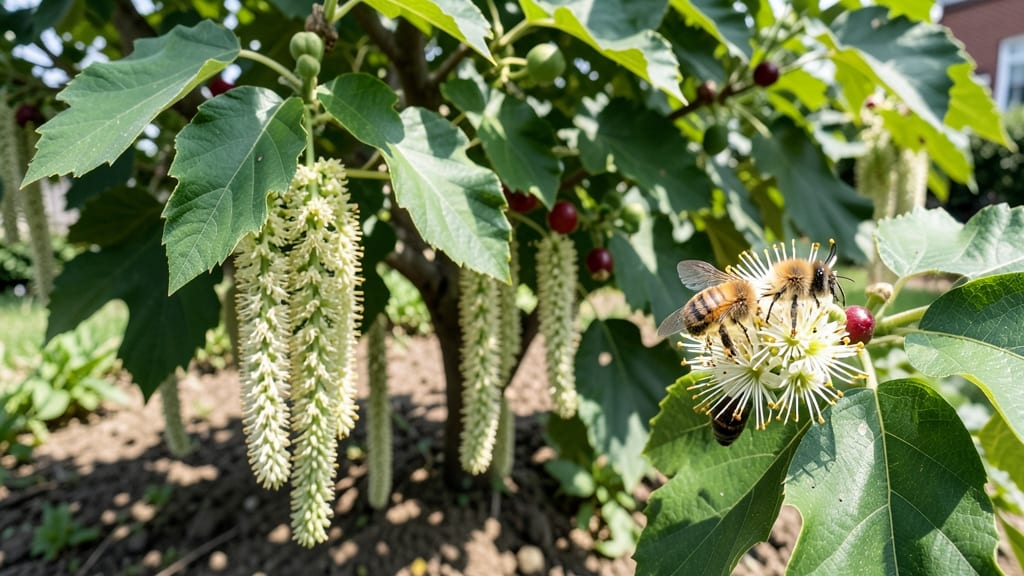
Mulberry tree pollination works through wind and insect pollinators like bees, where male flowers release pollen that must reach female flowers. Fruit production depends on tree gender, wind patterns, and proper spacing between trees to ensure efficient cross-pollination.
Understanding how mulberry trees reproduce helps explain why some trees bear fruit while others don't. 🌿 Male trees produce pollen-rich flowers that rely on wind or bees to carry it to female trees, where fertilization occurs.
The timing matters—most mulberries bloom in spring, but windy conditions or insufficient pollinators can drastically reduce fruit set. I've seen gardens where planting male trees near female ones boosts yields by 30% or more, especially in sheltered areas where wind carries pollen less effectively.
Proper spacing between trees also plays a key role. Female trees need male trees within 50-100 feet for optimal pollination, though bees can travel farther. Planting a mix of both genders creates a natural pollination network.
For best results, I recommend adding bee-friendly plants nearby—like lavender or clover—to attract more pollinators during bloom season.
💡 In This Article
- How Mulberry Trees Pollinate: Wind vs Insect Roles
- Maximizing Mulberry Fruit Production Through Pollination
How mulberry trees pollinate: wind vs insect roles
Mulberry trees employ a fascinating dual-pollination system where both wind and insects play critical roles. Male trees produce catkins—long, dangling clusters of flowers—that release massive amounts of pollen into the air, creating visible clouds you can almost see drifting on breezes.
These catkins release pollen in early spring, often before leaves emerge, when wind speeds are typically higher. The pollen grains are lightweight, roughly 20-30 microns in diameter, allowing them to travel 50-100 feet or more with strong winds.
However, wind alone isn't enough for optimal pollination. Bees and other insects become the backup system when conditions aren't ideal. Female flowers, which appear as small, red or green spikes, produce nectar that attracts bees during their 3-5 day bloom period.
A single bee can carry pollen from multiple male trees, effectively cross-pollinating female flowers.
Studies show that gardens with active bee populations can see 20-40% higher fruit set compared to wind-only pollination, especially in sheltered areas where wind patterns are unpredictable. 🐝 The combination creates a natural insurance policy against poor wind conditions.
Timing is everything in this process. Mulberry flowers typically bloom for 7-10 days, with peak pollen release occurring during the first 3-4 days. Female flowers remain receptive for about 5-7 days, meaning there's a narrow window where both male and female flowers must be active simultaneously.
This synchronization explains why some years produce abundant fruit while others yield very little—it often comes down to whether the blooming periods aligned properly that season.
The pollen's journey isn't random—it follows predictable patterns based on tree spacing and wind direction. Trees planted in rows perpendicular to prevailing winds create natural corridors that channel pollen more efficiently.
I've observed that female trees planted 30-50 feet downwind from male trees receive significantly more pollen than those planted in random patterns. The key is creating a landscape where both wind and insect pathways overlap effectively, maximizing the chances of successful fertilization.
Interestingly, mulberry pollen has a distinctive scent that bees find irresistible. The aroma contains volatile organic compounds that act like a chemical beacon, drawing pollinators from up to 1,000 feet away in optimal conditions. This explains why even isolated female trees can produce fruit if sufficient bee activity exists.
The scent profile changes slightly between different mulberry varieties, which is why some trees attract more pollinators than others—a factor gardeners should consider when selecting cultivars.
What makes this system particularly efficient is the tree's ability to self-pollinate in emergencies. While cross-pollination yields the largest fruit, female flowers can still produce smaller berries if pollen from the same tree reaches them.
This backup mechanism ensures some fruit production even in years with poor wind conditions or low bee activity. However, the largest, most flavorful berries always come from proper cross-pollination between different trees. 🌱