
Trees
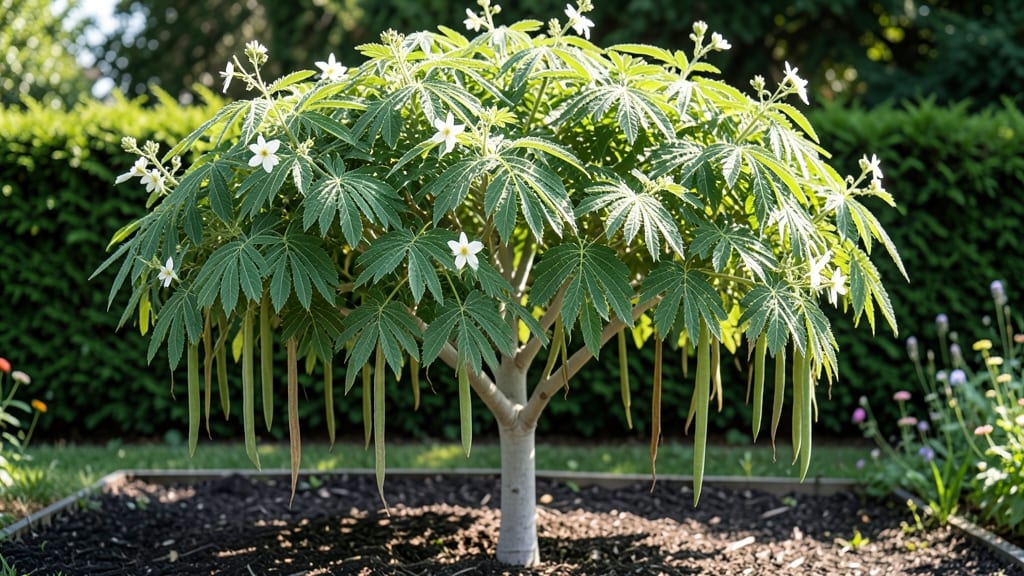
Moringa tree identification starts with those distinctive feathery leaves—each leaflet is long, narrow, and arranged like a lacy fringe. 🌿 I once mistook a young moringa for a fern until I spotted the telltale seed pods, which hang like long, slender beans from the branches. These pods are your best clue: they’re flat, triangular, and split open when mature, revealing seeds that look like tiny black beads.
The bark is another dead giveaway—smooth and pale green when young, maturing to a light gray with age. Unlike similar trees, moringa has a fast growth rate and a semi-evergreen habit, meaning it keeps some leaves year-round in warm climates.
If you’re comparing it to other fast-growing trees, look for the ferny leaves and unique seed pods—no other common tree combines both so perfectly.
Why this matters? Moringa is one of the most nutrient-dense plants on Earth, but misidentification can lead to toxic lookalikes in some regions. Once you recognize the leaf shape and pod structure, you’ll spot moringa trees in nurseries, wild landscapes, or even your neighbor’s yard.
The key is paying attention to those delicate leaflets and hanging pods—they’re the signature features that set moringa apart.
Pro tip: Snap a photo of the leaves and pods, then compare them to trusted sources. If the tree checks all these boxes—feathery leaves, bean-like pods, and fast growth—you’ve found a moringa.
Now you’re ready to tap into its incredible benefits, from medicine to nutrition. No more guessing games in the garden!
Mistakes in Moringa Tree Identification
Identifying a moringa tree can be tricky, especially if you’re unfamiliar with its key features. Misidentification often happens due to a mix of natural variations, environmental factors, and human error. Below, we break down the most common reasons why people struggle to recognize this nutrient-packed tree—and how to avoid them.
The moringa tree’s compound leaves are one of its most distinctive traits, yet many people misidentify it by focusing only on individual leaflets. Here’s why this happens:
- Confusing with similar trees: Some trees, like the neem or acacia, have compound leaves but lack the moringa’s fern-like arrangement and opposite branching. Without close inspection, the differences can be subtle.
- Ignoring leaflet shape: Moringa leaves have oval or elliptical leaflets with a slightly pointed tip. If you only glance at the edges (which can appear serrated or smooth depending on the variety), you might mistake them for other fast-growing trees.
- Seasonal changes: Young moringa leaves are softer and more delicate, while mature ones may appear darker or slightly curled. If you’re not familiar with its growth stages, you might dismiss it as a different species.
Pro Tip: 💡 Hold a leaf against sunlight—moringa leaves often have a slightly translucent quality when backlit, helping distinguish them from denser foliage.
The moringa tree’s long, slender seed pods are another key identifier, but they’re frequently overlooked or misinterpreted. Here’s why:
- Pods resemble other legumes: Young moringa pods look similar to those of carob or mesquite trees. However, moringa pods are straight, cylindrical, and can grow up to 3 feet long—much longer than most legume pods. If you’re only checking a small section, the difference may not be obvious.
- Color variations: Immature pods are green, while mature ones turn brown or even black. If you’re not familiar with the progression, you might assume the tree is diseased or a different species.
- Pod texture matters: Moringa pods have a slightly woody, segmented texture. If they appear smooth or overly fibrous, they’re likely not moringa.
Pro Tip: ✨ Split open a mature pod—moringa seeds are flat, winged, and arranged in a spiral, unlike the rounded seeds of other trees.
Moringa trees thrive in tropical and subtropical climates, but their appearance can shift based on where they’re grown. Here’s how location plays a role:
- Climate-induced variations: In drier regions, moringa trees may develop thicker, more waxy leaves to conserve water. In humid areas, they might grow larger and softer. These differences can make identification harder for those unfamiliar with regional variations.
- Hybridization or grafting: Some moringa trees are crossbred for specific traits (e.g., drought resistance or higher yield). These hybrids may have slightly altered leaf shapes or pod sizes, leading to confusion.
- Urban vs. rural growth: Moringa trees grown in contained urban settings (like pots or small gardens) may appear bushier and more compact than their wild counterparts, making them harder to recognize at a glance.
Pro Tip: 🌡️ Check the bark texture—mature moringa bark is grayish-brown and slightly rough, while younger bark is smoother. This can help confirm your ID even if leaves or pods are ambiguous.
Even with the right knowledge, people often make mistakes due to rushed judgments or lack of attention to detail. Here’s how:
- Focusing on one feature: Many assume that if a tree has any compound leaves, it’s moringa. But as mentioned, other trees share this trait. Always cross-check with at least two identifiers (e.g., leaves + pods + bark).
- Seasonal blindness: In dry seasons, moringa trees may drop leaves or pods, making them appear dead or barren. If you’re not familiar with their dormancy patterns, you might skip over them entirely.
- Digital vs. real-world confusion: Photos online often show idealized moringa trees, but real-world specimens can vary. Relying solely on images without physical inspection leads to errors.
Pro Tip: 🎯 When in doubt, take a sample (a leaf or small pod) and compare it side-by-side with a known moringa reference. A quick rubbing alcohol test (dabbing a leaf and checking for a slight yellow tint) can also help confirm authenticity.
By understanding these common pitfalls, you’ll sharpen your ability to spot a moringa tree—even when it doesn’t fit the "textbook" description. Next, we’ll cover actionable tips to confirm your ID with confidence.
Identify and Fix Common Moringa Confusions
Mistaking a moringa tree for another plant—or missing its unique features—can happen even to seasoned gardeners. But with the right approach, you can quickly confirm whether that leafy wonder in your yard (or a neighbor’s!) is truly Moringa oleifera.
Below, we break down the most common identification mix-ups and how to solve them, plus tips to prevent future confusion.
Problem: Moringa leaves resemble those of neem, mulberry, or even horse chestnut at first glance. Their fern-like, compound structure can be deceiving, especially if the tree is young or pruned.
How to Fix It:
-
🔍 Check the Leaflets:
Moringa leaves have 11–17 pairs of leaflets (sometimes up to 21) arranged in a pinnate pattern. Count them—if there are fewer than 7 pairs, it’s likely not moringa.
Pro Tip: 💡 Hold the leaf up to a bright light to see the vein structure. Moringa leaflets have prominent, parallel veins that run toward the edges.
- 🌱 Examine the Stem: Young moringa stems are hairy and slightly fuzzy. Compare this to smooth stems (like mulberry) or thorny branches (like neem).
- 🍃 Look for Seed Pods: If leaves alone aren’t convincing, wait for long, slender seed pods (3–6 inches) that hang like drumsticks. These are a dead giveaway!
Prevention Tip: 🌱 Grow a reference plant. If you’re unsure, propagate a cutting from a confirmed moringa tree and keep it nearby for comparison.
Problem: Moringa seed pods can be confused with carob, tamarind, or even mesquite pods. Their straight, cylindrical shape is distinctive, but if they’re dried or broken, the confusion grows.
How to Fix It:
- 📏 Measure the Pod: Moringa pods are 3–6 inches long and thin (under ½ inch wide). Carob pods are thicker and more curved, while tamarind pods are flat and winged.
- 🔦 Inspect the Seeds Inside: Split open a pod (if ethical in your area) to reveal flat, papery seeds with a triangular shape. Tamarind seeds are hard and kidney-shaped.
- 🌿 Check the Tree’s Bark: Moringa bark is grayish-brown and slightly rough, while carob trees have deep fissures and tamarind bark is smooth and orange-brown.
Prevention Tip: ✨ Take a photo of the whole tree. Capture the leaf arrangement, bark, and pods together—this composite view makes identification far easier later.
Problem: Some moringa look-alikes, like black locust or royal poinciana, are non-toxic but still not moringa. Others, like castor bean, are highly toxic and must be avoided.
How to Fix It:
Look-Alike Plant
Key Difference
Danger Level
Neem Tree
Leaves have 7–17 pairs of leaflets (similar count), but thorns and a bitter, medicinal smell when crushed.
⚠️ Non-toxic but not edible.
Castor Bean
Large, palmate leaves (like a hand) and spiky seed pods. Never ingest—seeds are deadly.
❌ Extremely toxic.
Horse Chestnut
Leaves are palmate (5–7 leaflets radiating from one point), not pinnate. Produces spiky seed cases, not long pods.
⚠️ Non-toxic but unrelated.
Prevention Tip: 🚨 When in doubt, don’t eat! Always cross-reference with a field guide or local botanist before consuming any plant part.
Problem: You’re out in the field, and you need instant confirmation—but you don’t have a botanical manual.
How to Fix It:
- 📸 Use Plant ID Apps: Apps like PlantNet, PictureThis, or Google Lens can analyze leaf/pod photos and suggest matches. Upload clear images of both leaves and pods for accuracy.
- 🌐 Check Local Databases: Websites like iNaturalist or USDA Plants let you search by region and upload images for expert verification.
- 📞 Ask a Local Expert: Post in Facebook gardening groups or Reddit’s r/whatsthisplant with photos. Include your location and tree height for faster responses.
Pro Tip: 🔥 Take notes on your phone. Jot down leaflet count, pod shape, and bark texture the first time you see a tree—this creates a personal reference for next time.
With these solutions, you’ll never second-guess whether that tree is moringa again. The key is combining visual clues (leaves, pods, bark) with practical tools (apps, experts, reference plants). Now go forth and identify like a pro! 🌿🔍
Frequently asked questions
What are the 3 key features that instantly confirm a moringa tree?
Look for feathery compound leaves with 11-17 pairs of oval leaflets, long slender seed pods (3-6 inches) that hang like drumsticks, and grayish-brown bark that becomes slightly rough with age. These three features together make identification foolproof!
Can I identify moringa just from the leaves, or do I need to see the pods?
While leaves are a great starting point, pods provide the most definitive confirmation. Young moringa trees may lack pods, but their hairy stems and parallel leaf veins can help distinguish them from similar trees. For absolute certainty, wait for pods or compare with a known moringa sample.
How do I tell moringa apart from neem or mulberry trees?
Neem trees have thorns and a bitter medicinal smell when crushed, while mulberry leaves are softer and more rounded. Moringa's opposite branching pattern and long slender pods are the giveaways—neem and mulberry don't produce these distinctive seed pods. Always check all three features!
What should I do if I think I've found a moringa tree but I'm not sure?
Use a plant identification app like PlantNet or Google Lens to upload photos of both leaves and pods. For instant verification, check the leaflet count (11-17 pairs) and pod shape. If you're still unsure, consult a local botanist or post in gardening forums with clear images and your location.
Are there any dangerous look-alikes I should avoid?
Yes! Castor bean trees have palmate leaves (like a hand) and spiky seed pods—their seeds are extremely toxic. Always verify by checking for moringa's pinnate leaf arrangement and smooth seed pods. When in doubt, never consume any plant part without professional confirmation!