
Pests and Diseases
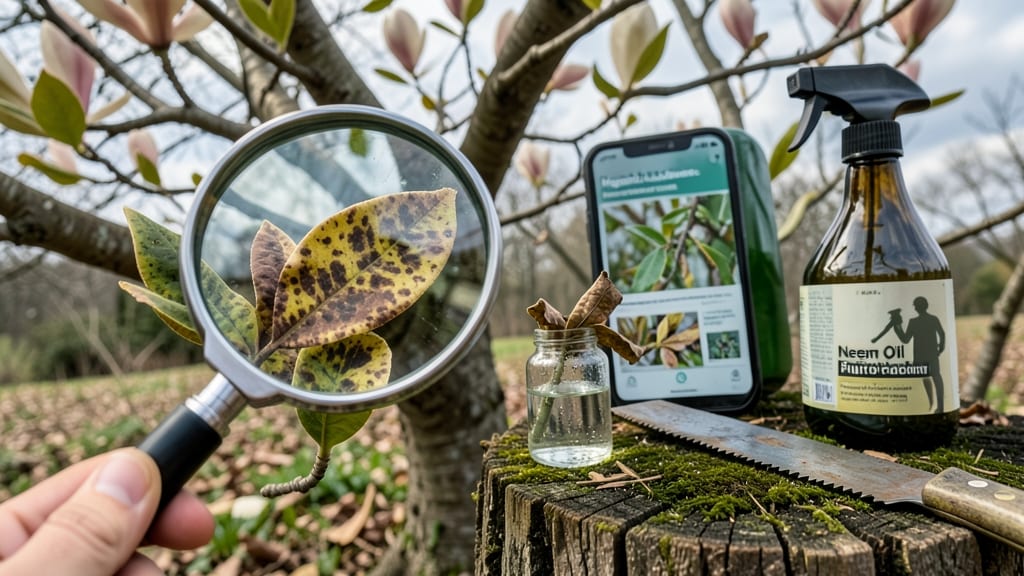
White spots on your magnolia leaves aren’t just unsightly—they’re a cry for help from your tree. 🌿 I’ve watched powdery mildew turn lush magnolia foliage into a ghostly white mess, but the good news is this: catching it early means saving your tree with simple, organic fixes.
The key is knowing whether those spots are fungal (like powdery mildew or anthracnose) or just environmental stress from too much shade or humidity.
Most white spots start as fuzzy white patches on the top of leaves—powdery mildew’s signature move—but check the undersides too. If the spots are greasy or sunken, it might be a fungal blight.
Overwatering or poor airflow between branches creates the perfect breeding ground, so don’t panic if your tree’s been looking a little crowded lately. The sooner you act, the easier it is to restore those deep green leaves you love.
You’ll fix this with a mix of pruning (cutting back crowded branches for better airflow), a homemade spray (1 tablespoon baking soda + 1 quart water + a drop of dish soap), and a little patience.
Within a few weeks, those white spots will shrink, and new growth will push through fresh and vibrant. The best part? These fixes work without harsh chemicals, so your tree—and your neighbors—will thank you.
If the spots spread faster than you can spray or your tree starts dropping leaves aggressively, it’s time to call in a pro.
But for now, grab those pruners and let’s get your magnolia back to its majestic self—because a healthy tree is one that thrives for decades, not just a season.
Understanding the Root Causes
White spots on magnolia leaves can turn a lush, vibrant tree into a concerning sight, but understanding the science behind these blemishes is the first step toward restoring its health.
Below, we break down the most common culprits—each with a unique trigger and a clear explanation of how they disrupt your magnolia’s well-being.
Fungal diseases are the #1 cause of white spots on magnolia leaves, thriving in warm, humid conditions. These microscopic organisms release spores that land on leaves, germinate, and create visible symptoms like powdery white patches or greasy, downy growths.
Powdery Mildew: The Fluffy Threat
- What it is: A fungal disease (Erysiphe or Sphaerotheca spp.) that coats leaves in a white, powdery film, resembling dust.
- How it spreads: Spores float through the air and land on susceptible leaves, especially in shady, poorly ventilated areas or when nights stay warm (above 60°F).
- Why it happens:
- High humidity + low airflow create the perfect breeding ground.
- Overhead watering keeps leaves damp, encouraging spore germination.
- Nitrogen-heavy fertilizers make magnolias grow lush but weak, making them more vulnerable.
- Key identifier: Spots start small, then spread, often leaving yellow patches beneath the white layer.
Anthracnose: The Leaf-Spot Saboteur
- What it is: A fungal disease (Colletotrichum or Gloeosporium spp.) that causes white, sunken spots with dark borders, sometimes oozing a pinkish gel.
- How it spreads: Spores splash from soil or infected leaves during rain or overhead irrigation.
- Why it happens:
- Wet foliage for prolonged periods (e.g., morning dew or poor drainage).
- Stressed trees (from drought, poor soil, or transplant shock) have weakened defenses.
- Cool, wet springs (ideal for spore germination).
- Key identifier: Spots may merge, causing leaves to yellow, curl, or drop prematurely.
Rust Fungi: The Two-Faced Menace
- What it is: Fungi like Puccinia spp. create white, pustule-like spots (often on the undersides of leaves) that later turn orange or brown as spores mature.
- How it spreads: Requires two host plants (magnolia + another, like holly or viburnum) to complete its life cycle.
- Why it happens:
- Alternating hosts in your yard provide a fungal "bridge."
- Mild, wet winters allow spores to survive and reinfect in spring.
- Key identifier: Pustules rupture, releasing spores that look like rust-colored dust.
While fungi get most of the blame, sap-sucking insects can also create white, waxy residue or stippled patterns on leaves.
Scale Insects: The Sticky Culprits
- What they are: Tiny, immobile insects that attach to leaves/stems and secrete honeydew (a sugary waste), which attracts sooty mold—a black, fuzzy fungus.
- Why it happens:
- Drought stress weakens magnolias, making them more attractive to scales.
- Overcrowded trees (lack of pruning) create microclimates where pests thrive.
- Key identifier: White, cottony tufts (especially on stems) + black sooty mold on leaves.
Whiteflies: The Floating Plague
- What they are: Tiny, white moth-like insects that cluster on leaf undersides, excreting honeydew and causing yellowing.
- Why it happens:
- Warm, humid summers trigger outbreaks.
- New growth (like fresh magnolia leaves) is their favorite snack.
- Key identifier: White, waxy residue on leaves when shaken + sticky honeydew on lower foliage.
Not all white spots are biological. Sometimes, physical damage or nutrient imbalances mimic disease symptoms.
Chlorosis: The Nutrient Deficiency
- What it is: White or yellow patches caused by a lack of magnesium, iron, or manganese—nutrients critical for chlorophyll production.
- Why it happens:
- Alkaline soil (pH > 7.0) locks out iron/manganese, even if they’re present.
- Over-fertilizing with nitrogen without micronutrients throws the balance off.
- Compacted or waterlogged soil restricts root uptake.
- Key identifier: Spots are interveinal (between veins) and often appear on younger leaves first.
Physical Damage: The "False Alarm" Spots
- What it is: White, irregular patches from hail, chemical burns (e.g., herbicide drift), or sunscald (when leaves get too much direct sun after shade stress).
- Why it happens:
- Sudden exposure (e.g., pruning nearby trees, moving the plant).
- Over-zealous pruning removes protective leaf layers.
- Key identifier: Spots are irregularly shaped, not powdery or pustule-like.
💡 Pro Tip: To diagnose accurately, examine the leaf undersides (many pests/fungi hide there) and check for patterns—powdery = mildew; sticky = scale/honeydew; sunken = anthracnose. When in doubt, scrape a spot onto a damp paper towel: fungal growth in 24 hours confirms a pathogen.
Quick Fixes for Leaf Spots
White spots on your magnolia leaves don’t have to mean the end of your tree’s beauty—with the right approach, you can restore its health and prevent further damage. Below are targeted solutions for the most common causes, from fungal infections to environmental stressors.
Each fix is designed to be practical, organic, and easy to implement, so you can get back to enjoying your lush, green magnolia in no time.
Fungal spores thrive in damp, shaded conditions, turning your magnolia’s leaves into a buffet. Here’s how to kick them out for good:
🔥 Step 1: Prune for Better Airflow
Fungi love stagnant air. Thin out dense branches to improve circulation, especially in shaded or humid areas. Aim for a 20-30% reduction in foliage density to let sunlight and air reach the inner leaves.
Pro Tip: Remove and dispose of infected leaves immediately—don’t compost them! 🗑️🔥
🍳 Step 2: Apply Organic Fungicides
Skip the harsh chemicals and go for natural alternatives:
- Neem Oil Spray: Mix 1 tbsp neem oil, 1 tsp mild soap, and 1 quart of water. Spray both sides of leaves every 7–10 days until spots disappear. 🌿✨
- Baking Soda Solution: Stir 1 tsp baking soda + 1 quart water + a few drops of soap. Spray on dry leaves in the morning to raise pH and inhibit fungal growth. 🧂💦
- Copper Fungicide: Use a ready-made organic copper spray (like Bonide Copper Fungicide) for stubborn infections. Follow label instructions carefully! 🛡️🔄
👨🍳 Step 3: Water Wisely
Fungi love moisture. Water your magnolia early in the day so leaves dry quickly. Avoid overhead watering—use a soaker hose or drip irrigation to keep the soil (not the leaves) hydrated. 💧🌱
⏰ Prevention for Next Season
Start a monthly maintenance routine in early spring:
- Apply a preventative neem oil spray every 4–6 weeks.
- Mulch around the base with 3–4 inches of organic mulch (like pine straw) to reduce soil splashing onto leaves. 🌳🍂
- Choose resistant magnolia varieties (like ‘Little Gem’ or ‘Ann’ for mildew tolerance) if replanting.
Tiny pests can weaken your magnolia, making it susceptible to white spots. Here’s how to evict them:
🔪 Step 1: Blast Them Off
Use a strong stream of water to dislodge mites and whiteflies from leaves. Do this early in the morning for best results. 💦🕷️
🌿 Step 2: Introduce Beneficial Insects
Ladybugs, lacewings, and predatory mites devour pests naturally. Purchase them from garden centers or attract them with:
- Plant dill, fennel, or yarrow nearby as a host plant.
- Avoid pesticides that kill beneficial insects! 🐞🛑
🎯 Step 3: Use Insecticidal Soap
Mix 1.5 tbsp castile soap + 1 quart water and spray directly on pests. Reapply every 5–7 days until they’re gone. Test on a small leaf first to avoid damage. 🧼🕸️
✨ Prevention Tips
Keep pests at bay with these habits:
- Install fine mesh netting over young trees to block infestations.
- Prune infested branches immediately and burn or bag them (don’t compost!).
- Encourage bird activity—they eat many pests! 🐦🌿
White spots from sunburn or poor nutrition are often fixable with simple adjustments:
🌡️ Step 1: Adjust Light Exposure
If your magnolia is in a hot, sunny spot with little shade, it may be getting sun scorch. Gradually acclimate it to more shade by pruning nearby trees or planting taller species to the south. 🌳🌞
💪 Step 2: Feed the Soil
Magnolias thrive in acidic, well-draining soil (pH 5.0–6.5). Test your soil and amend with:
- Peat moss or pine bark to lower pH.
- Compost or worm castings for nutrients.
- Slow-release fertilizer (like 10-10-10) in early spring.
Pro Tip: Over-fertilizing can burn roots—follow package instructions! 🌱📉
🥗 Step 3: Mulch Like a Pro
Apply a 3-inch layer of organic mulch (like pine straw or shredded leaves) to retain moisture and regulate soil temperature. Keep mulch 6 inches away from the trunk to prevent rot. 🍂🌿
With these fixes, your magnolia should bounce back stronger than ever. Consistency is key—monitor your tree regularly, and don’t hesitate to adjust your approach if spots persist. Happy gardening! 🌿💚
Frequently asked questions
Are white spots on magnolia leaves always caused by disease?
Not necessarily! While fungal infections like powdery mildew are common, white spots can also come from nutrient deficiencies (like chlorosis), physical damage from hail or sunburn, or even sap-sucking pests like scale insects. Always check the leaf undersides and spot patterns to diagnose correctly.
How do I tell if my magnolia has powdery mildew vs. rust fungus?
Powdery mildew appears as a white, dusty coating on both leaf surfaces, while rust fungus creates white pustules (often on undersides) that later turn orange-brown. Rust also requires two host plants to complete its life cycle, so check nearby shrubs like holly or viburnum.
Can I still use my magnolia leaves if they have white spots?
Only if the spots are from non-toxic causes like sunburn or nutrient deficiencies. If fungal (like powdery mildew or anthracnose), avoid using infected leaves for compost or mulch—the spores can survive and reinfect your garden. Always remove heavily spotted leaves and dispose of them in yard waste.
How often should I spray my magnolia with neem oil for prevention?
For prevention, apply a neem oil spray every 4-6 weeks during growing season (spring to fall). If treating an active infection, spray every 7-10 days until new growth appears without spots. Always spray in the early morning for best results.
Will pruning help if my magnolia already has white spots?
Yes! Pruning improves airflow, which is crucial for recovery. Remove 20-30% of dense branches, especially in shaded areas, and always prune during dry weather to prevent spreading spores. Dispose of infected branches immediately—don't compost them.