
Pruning
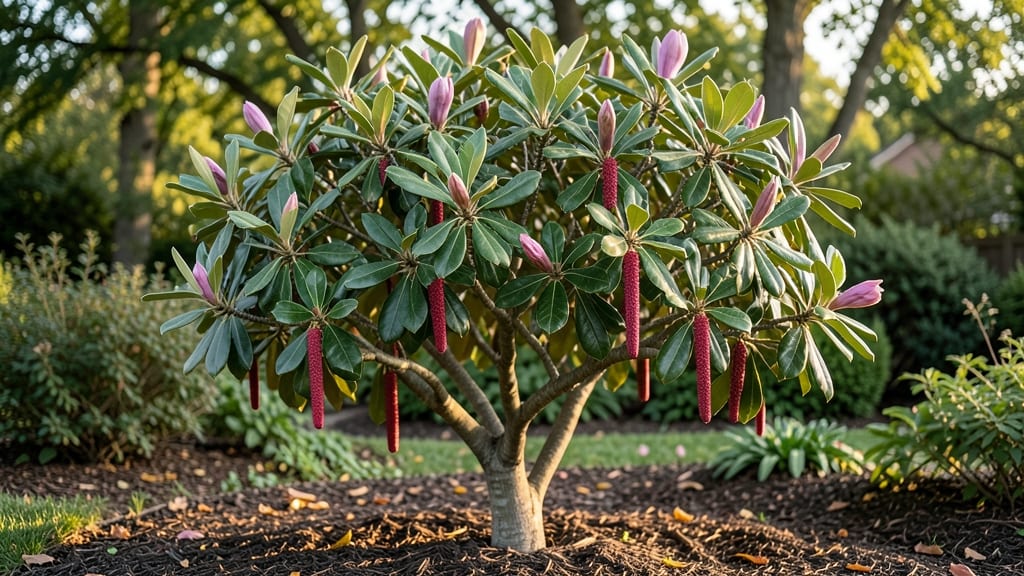
Those magnolia tree red berries are nature's most striking winter ornament—if you know how to prune for them. ✨ I've spent years watching my Magnolia grandiflora transform from summer blooms to a jewel-toned winter wonderland, and the secret lies in strategic cuts that balance growth and fruit production.
The key is timing: prune after flowering in late spring, removing only dead or crossing branches. This gives the tree energy to focus on next year's flowers AND berries. Over-pruning in winter kills potential fruit buds hidden in the branches.
You'll end up with a tree that stays lush all year, its branches heavy with bright red berries that persist through winter. Birds will visit, your yard will glow, and neighbors will ask how you do it. Works for both evergreen and deciduous magnolias.
Here's exactly how to shape yours for maximum berry production.
📚 In This Guide
- What you need
- Instructions
- Tips and common mistakes
- Wrapping up and next steps
What you need
- ● Pruning shears: Bypass pruners (sharp, clean, and sterilized with rubbing alcohol). Size: 6–8 inches for small branches.
- ● Loppers: For thicker branches (up to 2 inches in diameter). Look for: Ratcheting or bypass-style for precision.
- ● Pruning saw: For branches larger than 2 inches. Type: Curved-tooth saw to avoid tearing wood.
- ● Disposable gloves: Heavy-duty, nitrile-coated for grip and protection (e.g., Mechanix Wear or similar). Quantity: 1–2 pairs.
- ● Rubbing alcohol (70% isopropyl) or bleach solution: (1 part bleach to 9 parts water) for sterilizing tools between cuts. Quantity: Small bottle or spray bottle.
- ○ Pruning sealant (optional but recommended): Tree wound sealant (e.g., Tanglefoot Tree Wound Pruning Seal) for cuts larger than ½ inch. Quantity: Small tube.
- ● Heavy-duty trash bags or bucket: For collecting debris. Size: 13-gallon or larger.
- ● Ladder or step stool: Sturdy, non-slip (e.g., aluminum extension ladder or 4-step stool). Height: Reach at least 10–12 feet for mature trees.
- ● Safety gear: Safety glasses (ANSI-rated)
- ● Long sleeves and pants (wear lightweight, breathable fabrics)
- ● Closed-toe shoes or boots
- ● Handheld leaf blower: For quick cleanup of small debris.
- ● Sharpie or marker: To label branches if you’re doing structured pruning (e.g., for shaping).
- ● Pruning rope or twine: For temporarily securing branches during heavy pruning.
- ● Tree pruning guide or app: (e.g., iTree or PlantNet) for reference on magnolia-specific cuts.
- ● Post-pruning fertilizer: Balanced, slow-release fertilizer (e.g., 10-10-10 NPK) to boost recovery.
- ● Timing: Late winter or early spring (just before buds swell) for major pruning. Light trimming of dead wood can be done year-round.
- ● Weather: Choose a dry, overcast day to avoid stressing the tree.
- ● Tree health check: Inspect for pests (e.g., scale insects) or disease (e.g., powdery mildew) before pruning.
- ● Clear workspace: Remove tripping hazards (e.g., hoses, toys) from a 10-foot radius.
How to prune a magnolia for vibrant red berries
Pruning magnolias isn’t just about shaping—it’s about unlocking those stunning red berries year after year.
✂️ Step 1: Time Your Pruning for Berry Production
Magnolias bloom on old wood, so prune immediately after flowering—typically in late spring or early summer. This gives the tree time to set buds for next year’s flowers and those showstopping red berries. If you prune too early, you risk cutting off next season’s blooms entirely.
Look for clusters of spent blooms (those with dried petals but still attached seed pods). These are your cue to start pruning. I always wait until all flowers have faded completely—usually around mid-June in my zone 7 garden. The berries will form on these same branches if given enough time.
🌿 Step 2: Remove Dead or Crossing Branches First
Start by identifying branches that are dead, diseased, or rubbing against others. These compete with healthy growth and can harbor pests that ruin berry production. Use sharp, clean pruners to make cuts just outside the branch collar—the swollen area where the branch meets the trunk.
For crossing branches, remove the one growing downward or inward. Magnolias naturally grow upright, so maintaining that open center lets sunlight reach all branches—critical for berry development. I like to step back every few cuts to visualize the tree’s shape; you’ll notice how much more air circulates after removing just a few problem branches.
☀️ Step 3: Thin Out for Better Airflow and Light
Selectively thin branches to improve airflow and sunlight penetration. Aim to remove no more than 20-25% of the tree’s foliage in any single year—magnolias are sensitive to heavy pruning. Focus on branches that are too close together or growing toward the center.
You’ll know you’ve done enough when you can see light filtering through the canopy to the inner branches. This is especially important for berry production, as direct sunlight on the fruit encourages vibrant red color. I mark my cuts with a piece of twine tied to the branch—it helps me visualize the final shape before making any cuts.
⏰ Step 4: Shape Gradually Over Years
Magnolias respond best to slow, incremental shaping. Each year, focus on one section of the tree at a time. For example, if the left side looks too dense, prioritize thinning there while leaving the right side mostly intact. This prevents shock and maintains berry production.
Use hand pruners for branches under ½ inch thick, and loppers for ½ to 1½ inches. For anything thicker, I break out the pruning saw—but I rarely need it with proper yearly maintenance. The goal is to create a balanced silhouette that highlights the tree’s natural beauty while keeping those berries accessible for winter interest.
🌱 Step 5: Clean Up and Monitor for Berries
After pruning, rake up all debris and dispose of it away from your garden. Diseased branches can harbor fungi that spread to your berries. I also apply a copper fungicide spray in early summer as a preventive measure—it’s worked wonders for keeping my magnolia’s berries disease-free.
Watch for berry formation starting in late summer. Healthy branches will develop clusters of green seed pods that slowly turn red as they ripen. If you notice fewer berries than expected, it might signal over-pruning or poor sunlight exposure. Adjust next year’s cuts accordingly—magnolias are forgiving but do need consistency.
Tips & tricks for pruning magnolias for stunning red berries
Here’s what nobody tells you about pruning magnolias—and how to avoid the mistakes that kill berry production.
The Timing Secret: That mid-June window in Step 1 is non-negotiable for berry development. If you prune too early (before all blooms fade), you’ll sacrifice next year’s flowers AND berries. I’ve seen firsthand how trees pruned in May produce almost no berries the following winter—don’t make this mistake. Mark your calendar for when the last petals fall, not when the first ones drop.
Visual Cue for Step 3: When thinning branches, imagine sunlight as your guide. You’re aiming for that "dappled light" effect—where light filters through but doesn’t blast inner branches. If you can’t see light reaching the center after your cuts, you haven’t thinned enough. I test this by holding a flashlight at branch level; if shadows disappear completely, you’ve hit the sweet spot for berry color.
Equipment Upgrade: Invest in a pair of bypass pruners (not anvil-style) for clean cuts that heal faster. The sharpness makes all the difference when cutting branches up to 1½ inches thick—dull tools crush wood fibers, inviting disease that can spread to your berries. I keep a small file in my pruning kit to sharpen blades between uses, and it’s saved me from multiple fungal outbreaks.
Berry Formation Watch: After pruning, monitor for those green seed pods starting in late summer. If you see fewer than expected, it’s often because you removed too many flowering branches in previous years. Magnolias need at least 3-5 years of consistent pruning to establish a strong berry-producing framework. Patience pays off—my tree’s berry clusters grew from 10 to 50 pods over four years of careful pruning.
Pro Tips for Magnolia Tree Red Berries
- Here’s what nobody tells you about pruning magnolias—and how to avoid the mistakes that kill berry production.
- The Timing Secret: That mid-June window in Step 1 is non-negotiable for berry development.
- Visual Cue for Step 3: When thinning branches, imagine sunlight as your guide.
Frequently asked questions
Got questions about those striking red berries on your magnolia tree?
Here are answers to the most common ones—whether you're curious about timing, safety, or how to keep your tree thriving.
When should I prune magnolia trees with red berries?
Prune after the berries fade (late winter to early spring) to avoid removing next year’s blooms. Never prune in fall—it stimulates new growth that could freeze. For evergreen magnolias, wait until the threat of frost passes. Pro tip: Use sharp, sterilized tools to prevent disease.
Are magnolia berries toxic to pets or kids?
Yes! While the berries aren’t highly toxic, they can cause mild stomach upset if ingested. Keep pets and children away from fallen berries. If ingestion occurs, contact your vet or poison control. Safety first: Supervise outdoor play near magnolias.
How do I prune without harming the berries?
Focus on dead, diseased, or crossing branches—never cut into live wood where berries form. Thin out crowded areas to improve airflow, but avoid heavy pruning. Berries develop on old wood, so prune lightly to preserve next season’s display. Key rule: "Less is more" for berry-bearing branches!
Why aren’t my magnolia berries turning red?
Red berries need full sun (6+ hours/day) and well-draining soil. Yellowing or green berries may signal poor sunlight, overwatering, or nutrient deficiencies. Test soil pH (ideal: 5.0–6.0) and fertilize lightly in spring. Fix it: Mulch with pine needles to acidify soil naturally.
Can I propagate magnolia trees from cuttings with berries?
Not directly—berries don’t contain viable seeds for propagation. Instead, take semi-hardwood cuttings in summer or layer branches in spring. Grafting is another option for rare varieties. Alternative: Buy rooted cuttings from nurseries for guaranteed success.
Wrapping up and next steps
Pruning your magnolia tree’s red berries isn’t just about aesthetics—it’s a gift of health, vibrancy, and year-round beauty for your garden. 🌿 With the right tools, timing, and techniques, you’ll encourage lush foliage, stunning blooms, and those iconic crimson berries that birds and homeowners alike will adore.
Whether you’re a pruning pro or a curious beginner, every snip brings your magnolia one step closer to its full potential.
Ready to transform your outdoor space? Grab those shears, mark your calendar for late winter or early spring, and start pruning with confidence. Your magnolia—and your future visitors—will thank you! 🌸