
Trees
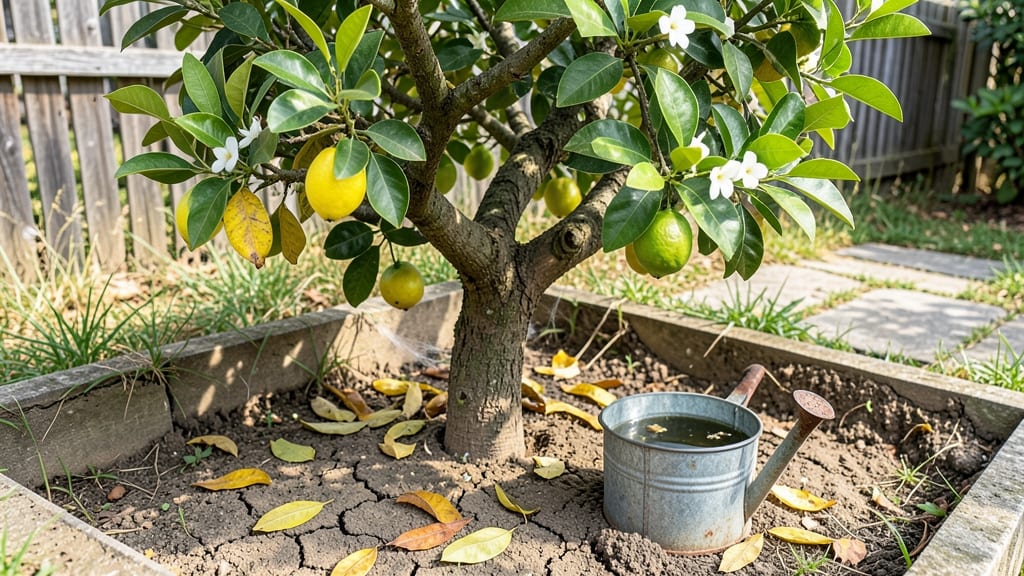
Your lemon tree shedding leaves isn’t a death sentence—it’s a wake-up call from your tree. 🌿 I’ve nursed back more lemon trees than I’d like to admit, and the key is always the same: figure out what’s stressing it and fix it before it’s too late.
Overwatering, pests, or even seasonal shifts can trigger this, but each has a specific remedy.
The first step? Check the soil—stick your finger in 2 inches deep. If it’s soggy, you’re overwatering; if it’s bone-dry, that’s the problem. Yellowing leaves often mean overwatering, while crispy edges scream thirst.
Pests like spider mites or scale can also cause sudden leaf drops, and they leave behind telltale signs like webbing or sticky residue.
Once you identify the issue, act fast. Adjust your watering routine, treat for pests with neem oil, or move the tree to a more stable spot. With the right fix, you’ll see fresh green growth in as little as 2-4 weeks.
The goal isn’t just to stop the shedding—it’s to help your tree thrive again.
This works for potted lemon trees, in-ground plants, and even those tricky dwarf varieties. The principles are the same, no matter the size. Let’s get your tree back to its lush, productive self—starting today.
Root Causes Behind Leaf Loss
When your lemon tree starts shedding leaves, it’s often a cry for help—whether from environmental stress, poor care, or underlying health issues. Understanding the specific triggers behind leaf drop is the first step to restoring your tree’s vibrancy.
Below, we break down the most common culprits, backed by science, so you can diagnose the problem like a pro.
Lemon trees (Citrus × limon) are subtropical natives, meaning they thrive in warm climates but can struggle with extreme temperature swings. Sudden drops below 40°F (4°C) or prolonged exposure to cold drafts trigger stress responses, including abscission—the natural process where the tree sheds leaves to conserve energy.
- Cold Snaps: Frost or icy winds damage cell membranes in leaves, cutting off nutrient flow. The tree drops affected foliage within 24–72 hours to prioritize root and branch survival. 🌬️
- Heat Stress: While lemon trees love warmth, temperatures above 95°F (35°C) for extended periods can cause wilting and leaf scorch. The tree may drop leaves to reduce water loss via transpiration.
- Seasonal Transition: In fall/winter, lemon trees enter a dormancy-like state, shedding older leaves to focus energy on fruit production or new growth. This is normal but can look alarming if overdone.
💡 Pro Tip: If your tree is outdoors, monitor microclimates—south-facing walls or paved areas can create heat islands that bake roots. Use mulch (3–4 inches of straw or wood chips) to insulate roots and protect against temperature extremes.
Lemon trees are drought-tolerant but not drought-proof—their roots need consistent moisture to absorb nutrients, but soggy soil suffocates them. Both underwatering and overwatering can trigger leaf drop, but the mechanisms differ:
| Issue | How It Happens | Signs to Watch For |
|---|---|---|
| Underwatering | When soil dries out, the tree’s xylem vessels (water transport tubes) collapse, blocking nutrient flow. Leaves turn yellow (chlorosis) at the edges before dropping. | ✅ Crispy, curling leaves ✅ Soil pulls away from pot edges ✅ Leaves feel paper-thin when touched |
| Overwatering | Excess water displaces oxygen in the soil, leading to root rot (fungal/bacterial infections like Phytophthora). Roots can’t absorb water or nutrients, causing leaf abscission. | ✅ Mushy, black roots ✅ Yellowing leaves that stay attached (unlike underwatering) ✅ Foul-smelling soil |
| Inconsistent Watering | Fluctuating moisture levels confuse the tree’s guard cells, which regulate water loss. Leaves drop to minimize transpiration during dry spells. | ✅ Patchy leaf loss ✅ Wilting that recover briefly after watering |
🎯 Action Plan:
- Check soil moisture 1 inch below the surface—if dry, water deeply until it drains from the bottom. If soggy, hold off and improve drainage with perlite or sand.
- Use a moisture meter or the finger test: Stick your index finger into the soil. If it’s dry past your first knuckle, it’s time to water.
- Ensure pots have drainage holes and saucers are emptied after watering to prevent root suffocation.
Lemon trees crave 6–8 hours of direct sunlight daily, but improper light exposure stresses them out. Here’s how:
- Too Little Light: In low-light conditions, the tree’s chlorophyll production slows, leading to chlorosis (yellowing leaves) and eventual drop. The tree prioritizes photosynthesis in younger, sun-exposed leaves, sacrificing older ones. 🌿
- Too Much Light (Sunburn): Intense afternoon sun (especially in hot climates) can scorch leaves, causing them to turn brown and crispy at the edges. The tree sheds these leaves to prevent further water loss.
- Sudden Light Changes: Moving a potted lemon tree from shade to full sun (or vice versa) without acclimation causes osmotic shock. Leaves drop as the tree struggles to adjust its stomatal conductance (pore regulation).
🔥 Fix It:
- Gradually harden off potted trees by exposing them to 1–2 extra hours of sun per week.
- Use shade cloth (30–50%) for young trees or those in harsh afternoon sun.
- Rotate pots quarter-turns weekly to ensure even light exposure.
Lemon trees are heavy feeders and require a balanced diet of nitrogen (N), phosphorus (P), potassium (K), and micronutrients like iron, zinc, and magnesium. Deficiencies disrupt enzyme activity and chlorophyll synthesis, leading to leaf drop. Here’s what to watch for:
| Nutrient Deficiency | Visual Clues | Why It Causes Leaf Drop |
|---|---|---|
| Nitrogen (N) | ✅ Yellowing between leaf veins (older leaves first) | The tree can’t produce enough amino acids for protein synthesis, leading to protein breakdown in leaves. |
| Potassium (K) | ✅ Brown edges or “scorch” on older leaves | Potassium regulates water and enzyme function; deficiency causes osmotic imbalances, leading to cell death. |
| Magnesium (Mg) | ✅ Interveinal yellowing (like nitrogen), but starts in younger leaves | Magnesium is central to chlorophyll structure; deficiency disrupts photosynthesis, forcing the tree to shed non-productive leaves. |
| Iron (Fe) | <