
Trees
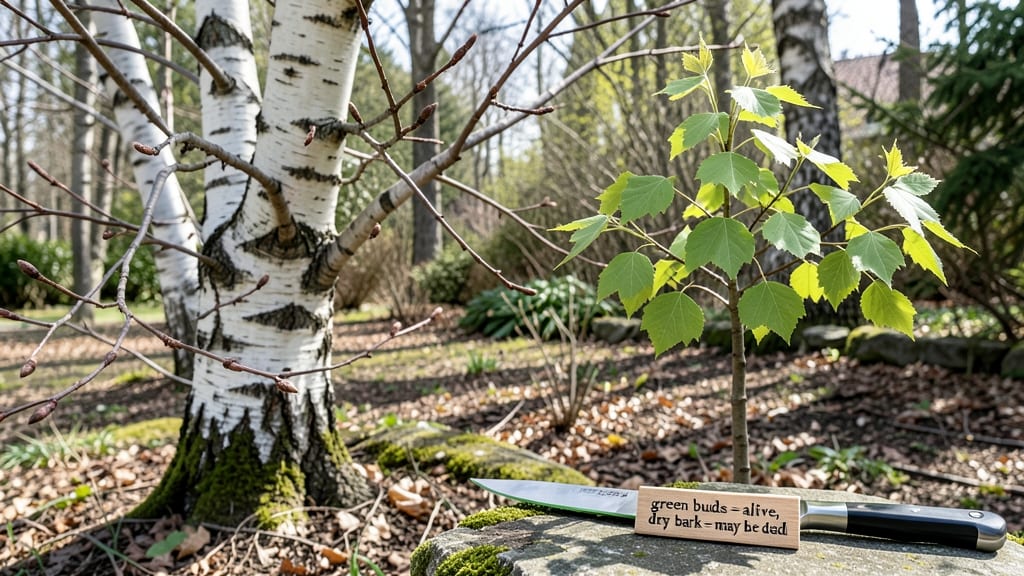
That leafless tree in your yard might still be alive—Is a tree dead if it has no leaves?—here's how to tell for sure. 🌳 I've seen too many people pull out their chainsaws only to realize they'd just cut down a sleeping giant waiting for spring.
The key is understanding whether it's dormant or truly gone.
Start by checking for buds, sap wells, or fresh bark cracks—these are signs of life hiding beneath the surface. A scratch test on twigs reveals green underneath if the tree's still kicking.
And remember, some trees naturally shed leaves in winter, while others drop them year-round. Confusion often comes from mistaking dormancy for death.
You'll know it's truly dead when branches snap like dry kindling, the bark peels away easily, and no green shows up after a scratch. Then it's time to prune or remove. But if there's any doubt, wait until late winter or early spring before making decisions—nature's got its own timeline.
This works for backyard trees, park specimens, or even that one stubborn shrub in your front yard. The same rules apply whether you're dealing with a young sapling or a mature oak. Let's get you confident in reading the signs.
Understanding Leaf Loss Causes
When a tree sheds its leaves, it’s rarely a sign of immediate death—unless it’s a tropical or evergreen species. Instead, leaf loss is often a survival strategy or a symptom of stress. Let’s break down the most common reasons why trees lose their foliage, from natural cycles to environmental threats.
Many deciduous trees (like oaks, maples, and birches) naturally drop their leaves in autumn as part of a dormancy cycle. Here’s why it happens:
- Energy Conservation: Cold weather reduces photosynthesis efficiency. Trees enter dormancy to preserve energy and redirect nutrients to roots and trunk, where they’re safer from freezing.
- Water Regulation: Frozen soil makes water absorption difficult. Shedding leaves reduces water loss through transpiration, preventing dehydration.
- Chemical Changes: Trees produce abscission layers—specialized cells that form at the leaf stem (petiole). These layers seal off nutrients and block water flow, causing leaves to detach cleanly.
Pro Tip: 💡 If the tree’s branches are still sturdy and buds appear in spring, dormancy is the likely cause. No need to panic!
Extreme conditions—like drought, heatwaves, or frost—can force trees into premature leaf drop as a stress response. Here’s how it works:
- Drought Triggers: When soil moisture drops below 50%, trees abscise (shed) leaves to minimize water loss. This is especially common in broadleaf evergreens (e.g., live oaks) that aren’t adapted to dry climates.
- Heat Shock: Temperatures above 95°F (35°C) can denature enzymes in leaves, causing them to wilt and drop. Trees prioritize root survival over foliage in these conditions.
- Frost Damage: Sudden freezes rupture leaf cells, turning them black and crispy. Trees shed these damaged leaves to prevent pathogen entry through open wounds.
Action Step: ✨ If leaf loss follows a heatwave or drought, deep watering (1–2 inches per week) and mulching can help the tree recover.
Invasive insects and pathogens can accelerate leaf loss by disrupting nutrient transport. Here’s how:
| Culprit | How It Works | Signs to Watch For |
|---|---|---|
| Spider Mites 🕷️ | Pierce leaves to suck sap, causing chlorosis (yellowing) and leaf drop. Severe infestations trigger abscission to conserve energy. | Fine webbing on undersides, stippled or bronze-colored leaves. |
| Fungal Infections (e.g., Anthracnose) 🍄 | Fungi block xylem vessels, preventing water/nutrient flow. Trees shed infected leaves to contain the spread. | Dark spots with yellow halos, premature leaf fall in spring. |
| Bacterial Leaf Scorch 🌡️ | Bacteria clog vascular tissue, causing browning at leaf edges. Trees drop leaves to limit bacterial entry. | Crispy, scorched leaf margins; wilting despite moist soil. |
Pro Tip: 🔥 If pests or disease are suspected, prune infected branches (sterilize tools with 70% alcohol) and apply neem oil or copper fungicide as a preventative.
Leaves are the tree’s nutrient factories, and a lack of key minerals can force premature shedding. Common deficiencies include:
- Nitrogen (N): Leads to yellowing between leaf veins (chlorosis). Trees drop leaves to reduce metabolic demands during shortages.
- Magnesium (Mg): Causes interveinal yellowing (like a "lime spray" effect). Mg is critical for chlorophyll production; without it, photosynthesis collapses.
- Potassium (K): Weakens cell structure, causing leaf edges to brown and curl. Trees shed these leaves to prevent root rot from poor nutrient uptake.
Action Step: 🎯 Conduct a soil test (available through local extension offices) and amend soil with compost, bone meal (for P), or greensand (for K) as needed.
Trauma—whether from storms, construction, or root damage—can disrupt a tree’s ability to support leaves. Here’s the science:
- Root Compaction: Heavy foot traffic or machinery restricts oxygen flow to roots, reducing water/nutrient uptake. Trees shed leaves to reduce transpiration demands.
- Girdling Roots: Roots that wrap around the trunk strangle the vascular cambium, cutting off nutrient transport. Leaves die and drop as a result.
- Storm Damage: Broken branches disrupt the tree’s hydraulic system, causing hydraulic failure. The tree may shed leaves to prevent further internal bleeding.
Pro Tip: 💡 If the tree is young or recently planted, avoid compacting soil around the base and use root aeration tools to relieve pressure.
Reviving or Saving Your Leafless Tree
A tree without leaves isn’t always a lost cause—often, it’s just in a dormant phase or struggling temporarily. Whether your tree is suffering from seasonal changes, disease, pests, or environmental stress, there are practical steps you can take to nurse it back to health.
Below, we break down cause-specific solutions to help your tree recover, along with preventive tips to keep it thriving long-term.
If your tree has shed its leaves in winter or early spring, it’s likely dormant—a natural survival strategy. However, if it’s unusually late or the tree looks weak, it might need a little extra care.
🔥 How to Help a Dormant Tree
- 🌡️ Wait and Observe – Give it time (2–4 weeks) to see if new growth appears.
If not, check for other signs of life like buds or sap. - 💧 Water Sparingly – Dormant trees need less water, but a deep soak every 2–3 weeks prevents root stress.
Avoid overwatering, which can suffocate roots. - 🍃 Mulch Properly – Apply 2–4 inches of mulch (wood chips or shredded bark) around the base (but not touching the trunk) to insulate roots and retain moisture. - ❄️ Protect from Late Frost – If frost is forecasted, cover young or sensitive trees with burlap or frost cloth to prevent damage.
💡 Prevention Tips
✔ Choose the Right Tree – If you live in a cold climate, opt for native, cold-hardy species like oak, maple, or pine. ✔ Avoid Late Pruning – Prune in late winter/early spring (before new growth) to prevent stress. ✔ Monitor Soil Health – Test soil pH and nutrients in fall to ensure the tree has what it needs for dormancy.
Fungal diseases (like anthracnose, powdery mildew, or root rot) or bacterial infections can cause premature leaf drop. If the tree also shows discolored bark, oozing sap, or wilting branches, it’s likely sick.
🍳 How to Treat an Infected Tree
- 🔪 Prune Infected Branches – Cut off dead, dying, or discolored branches 6–12 inches below the infection using sterilized pruners (wipe with rubbing alcohol).
- 💊 Apply Fungicide – Use a copper-based or systemic fungicide (like Neem oil or Myclobutanil) in early spring or after rain to prevent spores from spreading.
- 🌧️ Improve Airflow – Thin out dense foliage and remove nearby debris (like fallen leaves) to reduce humidity, which fungi love.
- 💧 Adjust Watering – If root rot is suspected, reduce watering and ensure the soil drains well (add compost or sand if needed).
💡 Prevention Tips
✔ Inspect Regularly – Check for spots, mold, or unusual growth on leaves/bark in spring and fall. ✔ Clean Up Debris – Remove fallen leaves and mulch from the base to prevent fungal growth. ✔ Plant Resistant Varieties – Some trees (like disease-resistant elms or oaks) are less prone to infections.
Insects like aphids, borers, spider mites, or Japanese beetles can strip leaves or weaken trees, leading to defoliation. Look for holes in leaves, sawdust-like frass, or sticky honeydew.
👨🍳 How to Kick Out Pests
- 🔍 Identify the Culprit – Check for eggs, larvae, or adult insects on leaves/bark.
Use a magnifying glass if needed. - 💦 Blast Off with Water – For soft-bodied pests (aphids, mites), spray them off with a strong stream of water. - 🍋 Use Natural Repellents – - Neem oil (diluted) – Spray on leaves to deter feeding. - Insecticidal soap – Safe for most trees, kills soft-bodied insects. - Beneficial nematodes – Introduce them into soil to attack grubs and borers. - 🪲 Set Traps or Barriers – Use pheromone traps for beetles or wrap tree trunks with sticky bands to catch crawling pests.
💡 Prevention Tips
✔ Encourage Natural Predators – Ladybugs, lacewings, and birds eat pests—plant native flowers to attract them. ✔ Avoid Over-Fertilizing – Too much nitrogen attracts sap-sucking insects. ✔ Seal Wounds Promptly – If branches are damaged, cover with pruning sealant to prevent borers from entering.
Drought, soil compaction, extreme heat, or poor drainage can cause trees to drop leaves as a survival mechanism. If the ground is cracked, dry, or waterlogged, your tree is likely suffering.
🥘 How to Relieve Stress
- 💧 Deep Watering – Water slowly and deeply (1–2 inches per week) to encourage deep root growth.
Use a soaker hose for efficiency. - 🌡️ Provide Shade – If the tree is in a hot, sunny spot, install shade cloth or temporary shade during peak heat. - 🪨 Loosen Compacted Soil – Use a garden fork to aerate the soil around the roots (but avoid damaging them). - 🌿 Improve Drainage – If the area floods, add compost or sand to loosen heavy clay soil.
💡 Prevention Tips
✔ Mulch Heavily – A 4-inch mulch ring (kept 6 inches from the trunk) retains moisture and cools roots. ✔ Water Deeply, Not Often – Infrequent deep watering encourages stronger roots than shallow, frequent watering. ✔ Choose the Right Location – Plant trees where they’ll get appropriate sunlight and wind protection.
If your tree: ✅ Shows large cankers, oozing sap, or extensive dieback. ✅ Has multiple pests or diseases you can’t identify. ✅ Is young or valuable (like a fruit or shade tree).
A certified arborist can diagnose the issue and provide targeted treatment before the tree declines further. Early intervention is key!
Frequently asked questions
Why do some trees keep their leaves all year while others lose them?
Evergreen trees like pines or spruces retain leaves (needles) year-round because their thick waxy coating and slow metabolism let them photosynthesize even in cold weather. Deciduous trees shed leaves to conserve water and energy during winter when photosynthesis is difficult. The key difference is their adaptation to climate—evergreens thrive in colder regions while deciduous trees dominate temperate zones.
Can a tree survive without leaves for more than one year?
Yes, but it depends on the cause. If the tree is dormant (like in winter), it can survive multiple leafless seasons. However, if leaf loss is due to disease, pests, or environmental stress, prolonged leaflessness often signals declining health. Check for new buds in spring—if none appear after 2-3 years, the tree is likely dead.
How can I tell if a leafless tree is still alive?
Look for these signs of life: green under bark when scratched, sap wells (small holes that ooze sap), or buds on branches. Tap branches—if they sound hollow, they're likely dead. For evergreens, check for new needle growth at branch tips. If you see any of these, the tree is probably just dormant or recovering.
Will pruning a leafless tree help it recover?
Only if the tree is partially dead. Remove dry, brittle branches that snap easily—these are dead. Avoid heavy pruning of healthy-looking wood, as this stresses the tree further. The best time to prune is late winter/early spring before new growth starts. Never prune more than 25% of the canopy at once.
Are there any trees that should never be pruned when leafless?
Yes! Oak trees (especially in drought-prone areas) and maples are prone to oak wilt and bleeding sap when pruned in winter. Avoid pruning these species from November to March. Also, never prune fruit trees in winter—they need their energy for spring blooms. Always prune at the right time for your specific tree type.