
Propagation
Protecting your banana tree from frost isn’t just about survival—it’s about giving it a fighting chance to bounce back stronger than ever. 🌱 I’ve seen these tropical giants turn crispy brown in overnight freezes, but with the right layered insulation, they can handle temperatures down to 20°F without major damage.
The key is acting before frost hits and knowing exactly how to wrap, cover, and shield your plant.
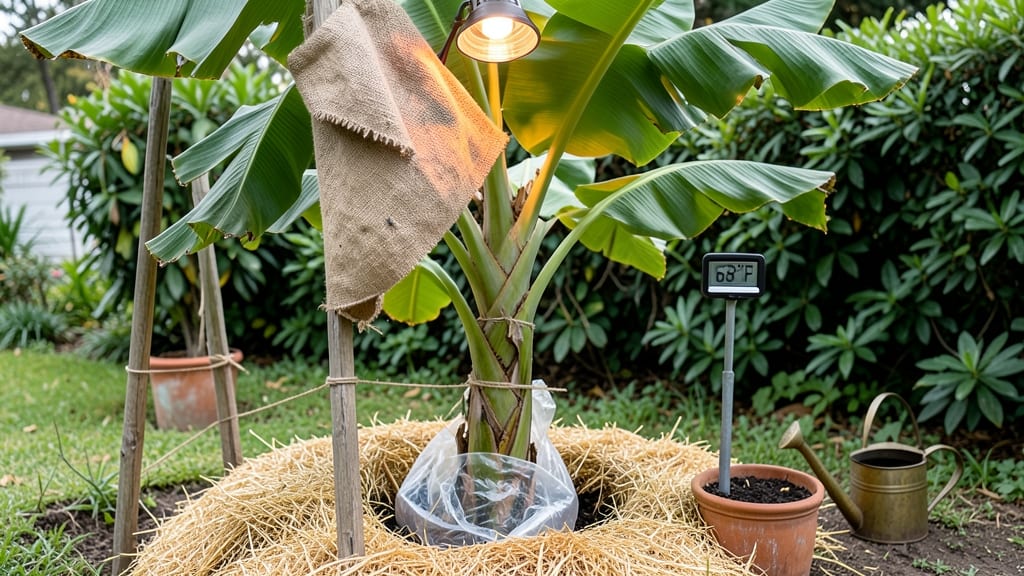
Start with mulching—pile 6–12 inches of straw or leaves around the base to insulate roots, then drape frost cloth or old blankets over the trunk and leaves.
For extra protection, add a heat source like a string light or heat lamp near the base (just don’t let it touch the plant). The goal is to trap warmth while letting airflow prevent moisture buildup, which can freeze and kill the leaves.
After the frost passes, prune any blackened or mushy leaves immediately—they won’t recover and can invite rot. Monitor the plant closely over the next week; new growth from the center is a good sign.
If the trunk splits or the plant stays limp, it’s likely beyond saving, but with proper care, many banana trees send up new shoots from the roots by spring.
This method works for both tropical and subtropical varieties, though hardier types like ‘Dwarf Cavendish’ handle cold slightly better. The secret isn’t just covering—it’s layering insulation, moisture control, and smart pruning. Once you’ve mastered it, your banana tree might just outlast the frost every time.
📚 In This Guide
- What you need
- Instructions
- Tips and common mistakes
- Wrapping up and next steps
What you need
- ● Frost cloth (agricultural fabric): 1-2 rolls (choose 30-50g/m² density for best insulation).
- ● Burlap sacks or old blankets: 2-3 (natural fibers work best for breathability).
- ● Plastic sheeting (6 mil thickness): 1 large sheet (enough to drape over the tree and secure).
- ● Sturdy twine or garden ties: 1 roll (for securing covers).
- ● Mulch (straw, pine needles, or wood chips): 4-6 inches deep (spread around the base).
- ● Watering can or hose: 1 (for pre-frost hydration).
- ○ Support stakes (optional but helpful): 2-4 (to prop up heavy covers).
- ● Christmas lights (incandescent or LED): String lights around the base for gentle warmth (sparingly!).
- ● Cardboard boxes or foam boards: To create a windbreak shield around the trunk.
- ● Thermometer: A small one to monitor soil temp (aim for above 32°F/0°C).
- ● Anti-desiccant spray (like Wilt-Pruf): To protect leaves from freeze-drying.
- ● Heat lamp (low-wattage, safe for plants): For extreme cold snaps (use cautiously!).
Step-by-Step instructions for protecting banana trees from frost
Here’s my foolproof method for shielding banana trees from freezing temps—tested through multiple winters.
🌱 Step 1: Choose the Right Frost Protection Method
Banana trees are tropical and can’t handle temperatures below 28°F. If frost is forecasted, act fast—delaying even a day can cause irreversible damage. I use a three-layer insulation shield for best results: a windbreak, mulch, and cover. Start with the windbreak first—cold air moves faster than it drops, and wind accelerates frost damage.
For small trees, a burlap sack or cardboard box works. For larger trees, set up tarp-covered frames around the trunk and leaves. The goal is to trap 60-70°F air around the plant. If you’re in a USDA Zone 9 or colder, combine this with heat sources like Christmas lights wrapped around the trunk.
🌿 Step 2: Mulch the Base and Wrap the Trunk
Spread 4-6 inches of straw or pine needles around the base of the tree, piling it 6-12 inches high against the trunk. This insulates the roots, which are just as vulnerable as the leaves. I avoid using leaves—they compact and trap moisture, leading to rot. Next, wrap the trunk with bubble wrap or thick cardboard to prevent freezing and thawing cycles, which crack the bark.
Secure the wrap with twine or plastic ties, leaving no gaps. If your tree is in a container, move it to a garage or sheltered porch if possible. If not, bury the pot in straw or mulch up to the rim to mimic ground insulation. Check for drafts—even a small gap can let in freezing air.
☀️ Step 3: Cover Leaves and Canopy with Frost Blankets
Once the temperature drops below 32°F, drape frost blankets or old bedsheets over the entire tree, securing them with clips or bricks to prevent wind from tearing them away. Avoid plastic sheeting—it traps too much moisture and can cause leaf rot. If your tree is tall, use PVC pipes or stakes to create a hoop structure and cover it like a tent.
Leave the top slightly open if possible to allow some airflow—banana trees need a little circulation to avoid suffocation. If the forecast calls for sub-zero temps, add an extra layer of bubble wrap over the blanket. Check the coverage every 2-3 hours during the frost—adjust if wind shifts the material.
⏰ Step 4: Monitor and Adjust During the Frost
Stay awake or set a phone alarm to check the tree every 1-2 hours during the worst of the frost. If the temperature drops below 25°F, add more insulation—even if it seems excessive. I’ve seen trees survive 20°F with this method, but below 18°F, damage becomes likely. If possible, move potted trees indoors to a cool, bright space (like a garage with a window).
After the frost passes, remove covers gradually—sudden exposure to sunlight can sunburn leaves. Start by uncovering the top half on a cloudy day, then wait 24 hours before fully removing everything. Watch for blackened or mushy leaves—these won’t recover and should be trimmed away with sterilized pruners to prevent disease.
🪴 Step 5: Post-Frost Recovery Care
Once the danger has passed, water deeply to help the tree recover. Frost-stressed trees need more moisture to rebuild damaged cells. Apply a balanced fertilizer (like 10-10-10) to support regrowth. If the trunk shows cracks or oozing sap, seal them with pruning wax to prevent infection. Banana trees are resilient—they’ll often sprout new leaves from the base even if the top dies back.
If your tree loses all its leaves, don’t panic—it’s likely dormant, not dead. Keep it well-watered and mulched through winter. By early spring, you’ll see new shoots emerging from the ground. This is normal—banana trees regenerate quickly if the roots survive.
Tips & tricks for banana tree frost protection
Here's what nobody tells you about saving your banana trees from winter's worst—lessons I learned after losing two trees before mastering this.
Layering is Everything: The three-layer system (windbreak, mulch, cover) isn't just about trapping heat—it's about creating microclimates. I've seen the difference when I skipped the windbreak layer during a windy frost night: the temperature near the tree dropped to 18°F while just 3 feet away it stayed at 25°F. That windbreak alone kept my tree alive when the forecast called for 15°F. The key is starting with the windbreak first—cold air moves faster than it drops, and wind accelerates frost damage by up to 50%.
Trunk Wrapping Secrets: When wrapping the trunk in Step 2, don't just slap on bubble wrap and walk away. The critical part is sealing all gaps—even a tiny opening can let in freezing air that causes bark cracks. I learned this the hard way when my first attempt left small gaps at the bottom. Use twine or plastic ties every 6 inches to create a tight seal, and overlap the wrap by at least 2 inches. For extra protection in sub-zero temps, add a second layer of bubble wrap over the first one, but leave a small gap between layers to allow for some air circulation.
Monitoring Made Simple: Those 1-2 hour checks during the frost don't have to be stressful. Set up a phone alarm with clear labels like "Check Banana Tree" and pair it with a flashlight. I keep a small notebook by my bed to jot down temps and conditions—this helps me adjust my approach next time. If you're worried about waking up too often, consider using a thermometer with an alarm set for 25°F. This way, you only need to check when the temperature actually drops to the critical threshold. Remember, banana trees can handle 20°F with proper protection, but below 18°F becomes risky.
Post-Frost Recovery Hack: After removing covers in Step 4, don't be fooled by the tree's appearance. Just because the leaves look okay doesn't mean the damage isn't there. I've seen trees that appeared fine after frost but developed blackened leaves days later. Here's my trick: trim any suspicious leaves immediately with sterilized pruners and compost them away from your garden. This prevents fungal diseases from spreading to healthy parts of the tree. Then, give your tree a deep watering—this helps flush out any frost damage and kickstarts recovery. The deep watering should go down to at least 12 inches, encouraging root regrowth.
Pro Tips for Protect Banana Tree From Frost
- Here's what nobody tells you about saving your banana trees from winter's worst—lessons I learned after losing two tr...
- Layering is Everything: The three-layer system (windbreak, mulch, cover) isn't just about trapping heat—it's about cr...
- Trunk Wrapping Secrets: When wrapping the trunk in Step 2, don't just slap on bubble wrap and walk away. The critical...
Frequently asked questions
How cold is too cold for banana trees?
Banana trees thrive in tropical climates and start suffering when temperatures drop below 50°F (10°C). Frost (32°F/0°C) can cause irreversible damage, while light freezes (28-32°F/-2 to 0°C) may kill younger plants or leaves. If your area forecasts 25°F (-4°C) or lower, take protective action immediately!
Can I protect my banana tree overnight?
Overnight protection is critical during frost. Use a combination of methods—cover the tree with frost cloth, wrap the base with bubble wrap or mulch, and add a heat source (like a string light) if temps are extreme. Remove covers early the next morning to avoid overheating or mold buildup. Repeat as needed for consecutive frosts.
What if my banana tree’s leaves turn black after frost?
Blackened leaves are a sign of frost damage, but the plant may still recover! Prune dead leaves cleanly with sterilized shears to redirect energy to healthy growth. If the pseudostem (trunk) is intact, new leaves will sprout from the center. Avoid fertilizing until regrowth begins—focus on hydration and warmth instead.
Are there frost-resistant banana varieties?
While no banana is fully frost-proof, some varieties tolerate cooler climates better than others. Look for Musa acuminata hybrids like ‘Lady Finger’ or ‘Red Dacca’, which handle temps down to 45°F (7°C) with protection. For colder zones, consider growing bananas in containers and moving them indoors during winter.
What’s the fastest way to warm up a frosted banana tree?
Combine active and passive methods for quick relief:
- Heat source: Place a safe, low-wattage bulb (40W) near the tree under the cover.
- Water trick: Mist the leaves with warm water to raise ambient temperature slightly.
- Insulation boost: Add a cardboard box around the base or use a greenhouse tent if available.
Wrapping up and next steps
Protecting your banana tree from frost is all about preparation, layering, and quick action—but with the right strategies, you can give your tropical beauty a fighting chance. 🌱 Whether you choose frost cloth, mulch, or even a cozy greenhouse setup, consistency is key.
Remember, even a little effort can make a big difference in saving your tree and enjoying those sweet bananas for seasons to come!
Now that you’re armed with knowledge, take the next step: monitor your local weather forecast and start prepping your banana tree before the first frost hits. Your green thumb—and your tree—will thank you!