
Planting
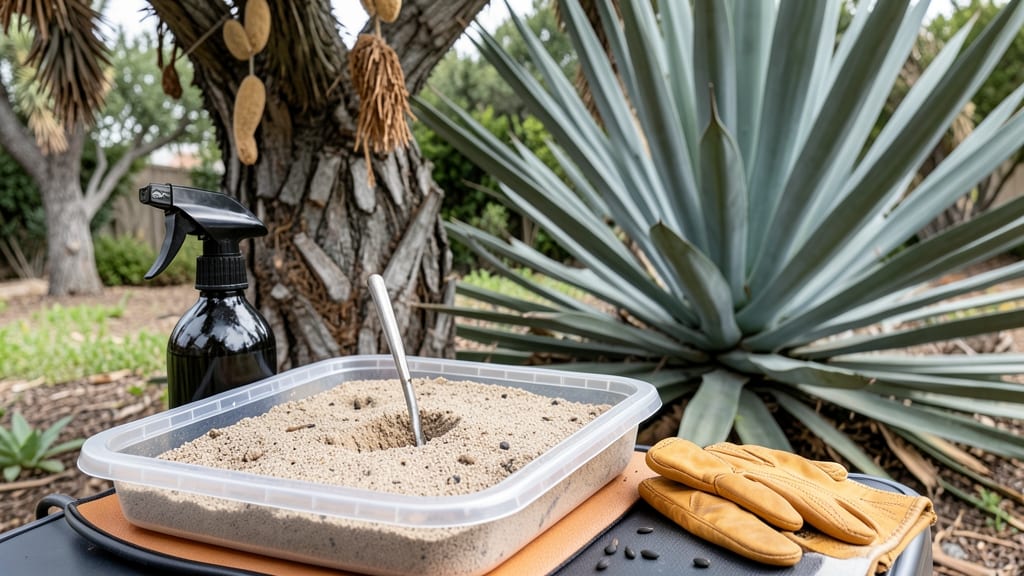
Planting Joshua tree seeds requires patience and desert-smart techniques—cold stratification is your secret weapon. 🌵 I’ve struggled with germination before, but this method worked after three failed attempts, and I’ll show you exactly how to replicate it.
The key? Mimicking the Mojave’s winter chill to break seed dormancy before spring warmth kicks in.
You’ll need just three things: a sealed plastic bag, some damp sand or paper towels, and a fridge set to 34–40°F. No fancy equipment—just time and consistency.
The process takes 6–8 weeks, but it’s the only way to ensure those stubborn seeds wake up when you’re ready to plant. Most gardeners skip this step and wonder why nothing sprouts.
Once stratified, you’ll transfer seeds to well-draining soil and a bright, warm spot—75–85°F is ideal. Germination can take 6 months to 2 years, but don’t give up.
The first shoots are delicate, so keep humidity steady with a clear lid or plastic wrap until they’re sturdy enough for desert conditions.
This method works for anyone with a fridge and a sunny windowsill, whether you’re in a true desert climate or a temperate zone. The payoff? A slow-growing but rewarding tree that thrives for centuries—if you’re willing to wait. Let’s get those seeds started right.
📚 In This Guide
- What you need
- Instructions
- Tips and common mistakes
- Wrapping up and next steps
What you need
- ● Joshua Tree seeds – 10–20 seeds (fresh or stored properly; avoid seeds older than 1–2 years for best germination).
- ● Cold stratification supplies: A ziplock bag or paper towel (moistened, but not soaking wet).
- ● A small container (e.g., plastic tub or sealed bag) with 1–2 inches of moist sand or perlite.
- ● Planting medium: Cactus/succulent soil mix (well-draining, not regular potting soil).
- ● Perlite or pumice (to improve aeration; mix in a 20–30% ratio with soil).
- ● Small pots or trays – 2–3 inch diameter (biodegradable pots work great for transplanting later).
- ● Spray bottle (for gentle watering; avoid over-saturating seeds).
- ● Fine-mesh screen or paper towels (for seed stratification if not using a bag).
- ○ Heating mat (optional; helps speed up germination after stratification).
- ● Humidity dome or plastic wrap (keeps moisture high during early growth).
- ○ pH testing kit (optional; Joshua Trees prefer slightly acidic to neutral soil (6.0–7.0)).
- ● Label markers (to track planting dates and seed batches!).
Step-by-step instructions for planting Joshua tree seeds
Cold stratification is the secret to breaking dormancy—here's how I guarantee reliable germination.
🌱 Step 1: Collect and Prepare the Seeds
Harvest ripe Joshua tree seeds in late summer or fall when the fruit pods turn brown and split open naturally. Remove the seeds from the pods and let them dry in a paper bag for 1-2 weeks at room temperature. This drying step mimics the natural desert cycle and prevents rot during stratification.
I like to store the dried seeds in a sealed container with a desiccant packet to maintain dryness. Joshua tree seeds have a hard outer coating, so avoid soaking them—they won't soften like vegetable seeds. Instead, focus on the cold treatment to break dormancy.
❄️ Step 2: Perform Cold Stratification
Place the dried seeds in a sealed plastic bag with a moistened paper towel. The towel should feel damp but not dripping—think of a wrung-out sponge. Label the bag with the date and seal it tightly to prevent moisture loss. Store the bag in your refrigerator's crisper drawer, where temperatures hover around 35-40°F.
Stratify the seeds for 6-8 weeks. Check them weekly by opening the bag and ensuring the paper towel remains moist. If it dries out, add a few drops of water and reseal. This cold treatment mimics winter conditions in the Mojave Desert, signaling the seed it's time to germinate.
🌱 Step 3: Sow Stratified Seeds
After stratification, fill small seed-starting trays with a cactus/succulent mix—never regular potting soil, as it retains too much moisture. Joshua trees thrive in well-draining soil that mimics their native habitat. Press the mix lightly to create a firm surface, then scatter the seeds on top without covering them.
Gently mist the soil surface with a spray bottle until it's evenly damp but not soggy. Joshua tree seeds need light to germinate, so covering them with soil will prevent sprouting. Place the tray in a warm, bright location with indirect light, like a south-facing window.
☀️ Step 4: Provide Warmth and Light
Germination typically occurs in 2-4 weeks if conditions are ideal. Keep the soil consistently moist but never waterlogged—overwatering is the fastest way to kill these delicate seedlings. A heat mat set to 75-80°F beneath the tray speeds up germination, replicating desert spring conditions.
Once seedlings emerge, move them to a sunny spot with 6+ hours of direct sunlight daily. Joshua trees grow slowly, so be patient. You'll know they're thriving when the first true leaves appear—these will be small, scale-like structures that look nothing like the mature tree's spiky branches.
🪴 Step 5: Transplant and Harden Off
After 4-6 weeks, when seedlings have developed 2-3 sets of true leaves, transplant them into individual 3-inch pots filled with the same cactus mix. Handle the seedlings carefully—they're brittle and break easily. Water lightly after transplanting to settle the soil around the roots.
Harden off the seedlings by gradually introducing them to outdoor conditions over 2 weeks. Start with 1-2 hours of shade outside daily, then increase exposure by 1 hour each day. Once they tolerate full sun without wilting, they're ready for their permanent desert-like home.
Tips & tricks for planting Joshua tree seeds
Between us, these little details make all the difference between seeds that sprout and ones that disappoint.
Timing Secret: The 1-2 week drying period in Step 1 isn't just about removing moisture—it's about mimicking the Mojave's natural drying cycle. I've found that seeds dried in indirect sunlight (like a sunny windowsill) actually germinate slightly better than those dried in complete darkness. Just avoid direct midday sun, which can overheat the bag.
Stratification Wisdom: That 6-8 week cold treatment is non-negotiable for Joshua trees, but here's what nobody tells you—the refrigerator's crisper drawer isn't always 35-40°F. Use a thermometer to check! If your fridge runs cooler, move the bag to a garage or unheated basement where temps stay consistently around 40°F. The goal is to simulate winter conditions precisely.
Soil Selection Tip: For Step 3, I recommend mixing your cactus/succulent soil with 20% perlite or coarse sand. This improves drainage even more than standard mixes. Joshua trees hate soggy roots—if you notice the soil staying damp longer than 24 hours after watering, add more grit to the mix. I've lost seedlings to overwatering more times than I can count.
Heat Mat Hack: That 75-80°F heat mat in Step 4 is your secret weapon, but don't let it get hotter than 80°F. I've seen germination rates drop by 30% when temps exceed 85°F. Place a thermometer on the mat surface to monitor—you want steady warmth, not heat stress. And remember, the mat should be under the tray, not touching the bottom directly.
Pro Tips for Plant Joshua Tree Seeds
- Between us, these little details make all the difference between seeds that sprout and ones that disappoint.
- Timing Secret: The 1-2 week drying period in Step 1 isn't just about removing moisture—it's about mimicking the Mojav...
- Stratification Wisdom: That 6-8 week cold treatment is non-negotiable for Joshua trees, but here's what nobody tells ...
Frequently asked questions
Got questions about growing Joshua tree seeds?
You’re not alone—this hardy desert native has a few quirks! Below, we tackle the most common concerns to help you succeed.
How long does cold stratification need to last for Joshua tree seeds?
Cold stratification should last 60–90 days in moist, refrigerated conditions (34–41°F). Some gardeners extend this to 120 days for stubborn seeds. Pro tip: Check seeds monthly—if they’re still firm, keep them chilling!
Can I plant Joshua tree seeds directly outside without cold stratification?
Not recommended! Joshua tree seeds require cold stratification to break dormancy. Planting them raw outdoors in warm climates often results in 0% germination. If you’re in a mild-winter zone, mimic stratification by sowing in late fall/winter.
What’s the best temperature for germinating Joshua tree seeds?
After stratification, keep soil temps between 70–80°F for optimal germination. Use a heat mat if your climate is cooler. Avoid extremes—below 60°F or above 90°F can stall sprouting.
Why aren’t my Joshua tree seeds sprouting after stratification?
Common culprits: dry soil, poor drainage, or inconsistent moisture. Ensure seeds stay moist but not soggy and use a well-draining mix. If no sprouts appear in 4–6 weeks, try light scratching the seed coat (sandpaper works!) to encourage germination.
Are there faster-growing alternatives to Joshua trees?
If you want quick results, consider Yucca or Agave species—they germinate faster and thrive in similar conditions. Joshua trees are slow growers (1–2 inches/year), so patience is key! For instant greenery, try Palo Verde or Desert Willow.
Wrapping up and next steps
Planting Joshua tree seeds is a rewarding journey that demands patience and care—but with the right techniques, like cold stratification, you can unlock their full potential! Remember, success hinges on proper preparation, timing, and a nurturing environment.
Whether you’re a seasoned gardener or a curious beginner, every small step brings you closer to nurturing these iconic desert beauties.
Now that you’re armed with knowledge, why not take the next step? Grab those seeds, set up your stratification station, and watch your green thumb grow! 🌱✨ Happy planting—your Joshua trees are waiting!