
How To
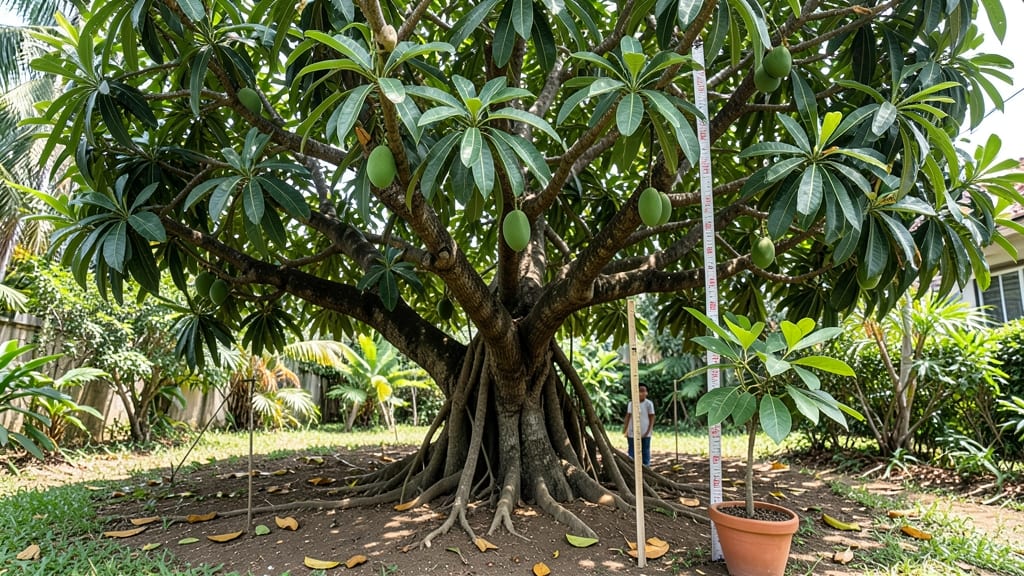
Mango trees grow to 30 to 100 feet tall in ideal tropical conditions 🥭, but their height depends on variety, climate, and care.
If you’ve ever dreamed of growing your own mango tree but wondered how tall it can truly get—or how long it takes to reach its full potential—this guide breaks down everything you need to know about mango tree growth, from seedling to mature canopy.
Standard varieties like ‘Haden’ or ‘Keitt’ can tower over three stories, while dwarf types stay manageable at 10 to 20 feet. The key? Sunlight, soil, and pruning—each factor can shift your tree’s trajectory from sky-high to backyard-friendly.
Below, I’ll walk you through the stages of growth, sunlight needs, and how to control height without sacrificing fruit. Whether you’re in USDA Zones 10-11 or a container in a warm climate, you’ll learn exactly what to expect—and how to shape your tree’s future.


Mature height of mango trees: varieties and growth expectations
If you’re considering adding a mango tree to your garden, understanding its mature height is essential for planning space and care. Standard varieties can reach 50–100 feet, while dwarf varieties stay manageable at 10–20 feet.
Your choice depends on your yard size and climate—tropical regions like Florida or Hawaii support towering trees, while cooler zones may require dwarf cultivars.
Mango trees grow rapidly in ideal conditions, with standard varieties gaining 3–6 feet per year during their first decade. However, their final height is influenced by pruning, soil quality, and sunlight. For home gardens, dwarf or semi-dwarf varieties are the best fit, offering fruit without overwhelming your landscape.
Here’s a quick comparison of popular mango varieties and their expected heights:
The Keitt variety, for example, can tower over 80 feet in tropical climates, while the Cogshall dwarf stays under 15 feet, making it perfect for containers or small yards.
If you’re in USDA Zones 10–11, standard varieties thrive, but gardeners in cooler zones should opt for dwarf or semi-dwarf types to avoid frost damage.
Climate plays a huge role in height. Mango trees in Florida or Hawaii grow faster and taller due to year-round warmth, while those in California’s coastal regions may stay shorter due to milder winters.
Even within the same variety, a tree in full sun will outpace one in partial shade, so site selection matters.
For home gardeners, pruning young trees can control height and shape. Prune in late winter or early spring to remove suckers or water sprouts, which compete for nutrients.
Regular pruning also improves airflow, reducing disease risk and encouraging fruit production. Just avoid heavy pruning once the tree is mature—it can stress the tree and reduce yields.
Soil quality also affects growth. Mango trees prefer well-draining, slightly acidic soil (pH 5.5–7.0). Amend heavy clay with compost or sand to prevent root rot, which can stunt growth. In container gardening, use a mix of potting soil and perlite to ensure drainage while providing nutrients.
If you’re growing a standard mango tree in a home garden, consider planting it near a fence or wall to support its height. For dwarf varieties, containers work well—just ensure they’re at least 15–20 gallons in size to accommodate root growth.
With the right variety and care, you can enjoy homegrown mangoes without sacrificing yard space.
Remember, patience is key—most mango trees take 3–5 years to bear fruit, and their height stabilizes around year 10. Start with a dwarf variety if space is limited, but don’t underestimate the joy of watching a towering standard mango tree thrive in your landscape.
Sunlight requirements for optimal mango tree growth and height
Mango trees thrive under full sun exposure, which is critical for achieving their maximum height and fruit production. In their native tropical climates, these trees receive 6-8 hours of direct sunlight daily, fueling rapid vertical growth and lush canopies.
Without adequate light, your mango tree may grow slowly and weakly, with sparse foliage and poor fruiting potential.
For home gardeners in USDA Zones 10-11, mimicking these conditions is key. A south-facing location ensures optimal sunlight absorption, especially during winter months when daylight is shorter. Even in container growing, place your potted mango tree near a sunny window or patio to prevent stunted growth.
⚠️ Warning: Insufficient Sunlight Stunts Growth
Mango trees grown with less than 6 hours of sun daily may reach only 50-70% of their potential height. Look for these signs of light deficiency:
- ✅ Leggy stems (long, weak branches)
- ✅ Yellowing leaves (chlorosis)
- ✅ No fruit production in mature trees
Solution: Move to full sun immediately or supplement with grow lights (12+ hours/day) for container trees.
In temperate climates, seasonal adjustments are essential. During summer, mango trees can handle partial afternoon shade to prevent heat stress, but morning sun is non-negotiable for photosynthesis. Use lightweight shade cloth (30-50%) only during peak heat (12-3 PM) to protect young leaves.
Pruning techniques can also redirect sunlight energy toward height growth. Remove overlapping branches and suckers at the base to allow more light penetration to the lower canopy. This encourages upward growth while maintaining a balanced structure—critical for trees exceeding 20 feet tall.
For dwarf varieties (like 'Cogshall' or 'Julie'), even 4-6 hours of sun can suffice, but expect slower height gains (10-20 ft max). Standard varieties, however, demand full sun to reach their 50-100 ft potential.
If your region lacks sufficient sunlight, consider greenhouse growing with supplemental lighting to maintain vigorous growth.
Remember: Sunlight directly correlates with height. A well-lit mango tree can grow 3-5 feet per year in ideal conditions, while a shaded tree may barely reach 1-2 feet annually.
Monitor your tree's canopy density—thick foliage can block light from inner branches, so thin out leaves as needed to ensure even sunlight distribution. 🌳☀️