
How To
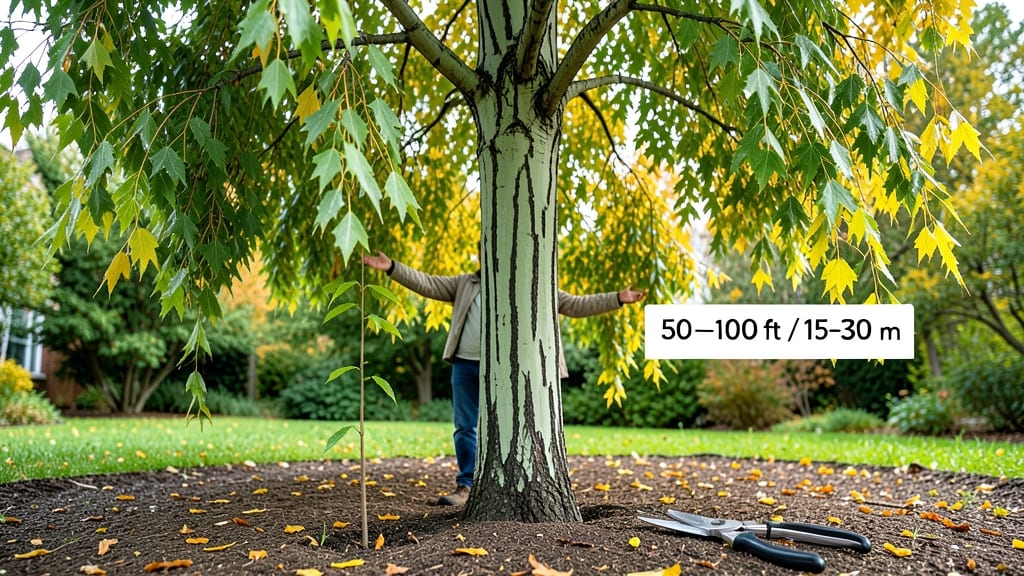
A poplar tree can how tall does a poplar tree grow to 120 feet or more—taller than a four-story building—making it one of the fastest-growing trees on the planet 🌳.
But before you rush to plant one, consider this: that sky-high potential means you’ll need a yard the size of a football field to do it justice.
If you're dreaming of a towering shade provider or a fast-growing privacy screen, poplar trees might be your perfect match—but their sky-high potential comes with serious space requirements.
Whether you're eyeing a cottonwood’s dramatic height or an aspen’s delicate branches, knowing the mature size of each species is the key to avoiding a backyard crunch.
Fast growth isn’t the only factor at play here. Climate, soil quality, and even pruning habits can push a poplar toward its upper limits or keep it more manageable.
For example, a Lombardy poplar might max out at 50 feet with regular trimming, while a black poplar left unchecked could easily double that height in just a few decades.
In this guide, I’ll break down the height ranges of the most popular poplar species, share spacing rules to prevent root conflicts, and offer tips for controlling growth naturally—so you can enjoy their beauty without sacrificing your lawn.


Poplar tree height by species: fastest-growing giants compared
Poplar trees are nature's skyscrapers, capable of shooting up 10 feet per year in ideal conditions. But not all poplars reach the same heights—some stay compact while others become towering giants.
If you're considering adding one to your landscape, knowing the mature height and growth rate of each species will help you choose the right fit for your space. Let's compare the fastest-growing poplars and their impressive height potential.
Before diving into the numbers, remember that poplars thrive in wet soils and full sun, which accelerates their growth. However, their rapid ascent means they'll quickly outgrow small yards or urban spaces. Always measure your property and check local regulations, as some species are considered invasive in certain regions.
| Species | Mature Height | Annual Growth | Growth Rate | Best For |
|---|---|---|---|---|
| Eastern Cottonwood (Populus deltoides) | 60-120 ft | 3-6 ft | Fastest-growing | Privacy screens, wetland restoration |
| Black Cottonwood (Populus trichocarpa) | 50-100 ft | 2-5 ft | Very fast | Large properties, riparian zones |
| Lombardy Poplar (Populus nigra 'Italica') | 50-80 ft | 2-4 ft | Fast | Narrow spaces, privacy hedges |
| Quaking Aspen (Populus tremuloides) | 30-50 ft | 1-3 ft | Moderate | Woodland gardens, erosion control |
| Balsam Poplar (Populus balsamifera) | 40-60 ft | 1-2 ft | Moderate | Cold climates, wildlife habitats |
The Eastern Cottonwood takes the crown for height, often surpassing 100 feet in ideal conditions. Its cottony seed fluff makes it easily recognizable, but it's also one of the most aggressive spreaders. If you're after a fast-growing shade tree, this species will deliver—but only if you have the space.
A 100-foot tree needs at least 50 feet of clearance from structures and other plants.
For a more manageable option, the Lombardy Poplar offers a narrower form with its distinctive columnar shape. While still reaching 50-80 feet, its upright growth habit makes it perfect for tight spaces or as a privacy screen.
However, its brittle wood can snap in storms, so plant it away from walkways or driveways. The quaking aspen, with its distinctive white bark, grows more slowly but creates stunning golden fall foliage.
If you're in a cold climate, the Balsam Poplar is a hardy choice, thriving in zones where other species struggle. Its resinous buds and fragrant bark make it a favorite for wildlife, but its slower growth means it won't reach massive heights as quickly as cottonwoods.
Always consider your local climate when selecting a species—some poplars struggle in hot, dry regions.
One common misconception is that all poplars grow equally fast. While they're generally fast-growing trees, their rates vary by species and growing conditions.
A cottonwood in a wet, sunny location might add 6 feet per year, while a balsam poplar in a cooler climate might only grow 1-2 feet annually. Soil moisture and sunlight directly impact growth rates, so choose a site with well-drained but moist soil for best results.
Before planting, check your local regulations—some states classify poplars as invasive and restrict their sale or planting. Invasive species can outcompete native plants, disrupt ecosystems, and even damage infrastructure with their aggressive roots.
If you're unsure, consult your local cooperative extension office for guidance on which species are safe for your area.
For gardeners with limited space, consider dwarf varieties or smaller trees like the Siberian Poplar, which tops out around 30-40 feet. While not as fast-growing as cottonwoods, they offer a more manageable option for suburban yards.
Always measure twice and plant once—these trees will be with you for decades, so choose wisely!
If you're ready to plant but want to control height, focus on proper spacing and regular pruning. Even fast-growing poplars can be managed with the right techniques, though they'll never be as compact as ornamental trees.
For a low-maintenance giant, the Lombardy Poplar is your best bet—just be prepared for its dramatic presence in your landscape.
Space requirements and planting distance guidelines for poplar trees
Poplar trees are known for their rapid growth and towering heights, but their impressive stature comes with critical space requirements. Failure to provide adequate spacing can lead to root competition, structural damage to nearby structures, and even soil depletion. Understanding these guidelines ensures your poplar thrives without becoming a nuisance.
Most poplar species require at least 30-50 feet of clearance from other trees, buildings, and property lines. The canopy spread can reach 20-40 feet wide, so plan accordingly.
For example, a cottonwood poplar can grow up to 120 feet tall, while a Lombardy poplar typically maxes out around 50-60 feet but grows much narrower.
To calculate your yard's capacity for poplars, start by measuring available space and comparing it to the minimum spacing guidelines. For instance, a cottonwood poplar needs a 70-foot diameter circle to grow comfortably.
If your yard is smaller than 50 feet wide, consider dwarf varieties or smaller trees like the black poplar (Populus nigra).
Local climate also affects spacing needs. In warmer climates, poplars grow faster and may require even more room. In cooler regions, growth slows slightly, but the trees still need ample space.
Always check your USDA hardiness zone to adjust spacing accordingly. For example, in Zone 6, a cottonwood may grow 10% taller than in Zone 7.
If you're planting multiple poplars, space them at least 50 feet apart to prevent root competition. Their extensive root systems can deplete soil nutrients and even lift sidewalks or driveways if planted too close. Always plant poplars at least 15 feet away from septic systems to avoid root intrusion.
For urban or suburban yards, consider root barriers or container planting to manage space. However, these methods require careful monitoring to ensure the tree’s health isn’t compromised. When in doubt, consult a local arborist to assess your yard’s specific conditions.