
How To
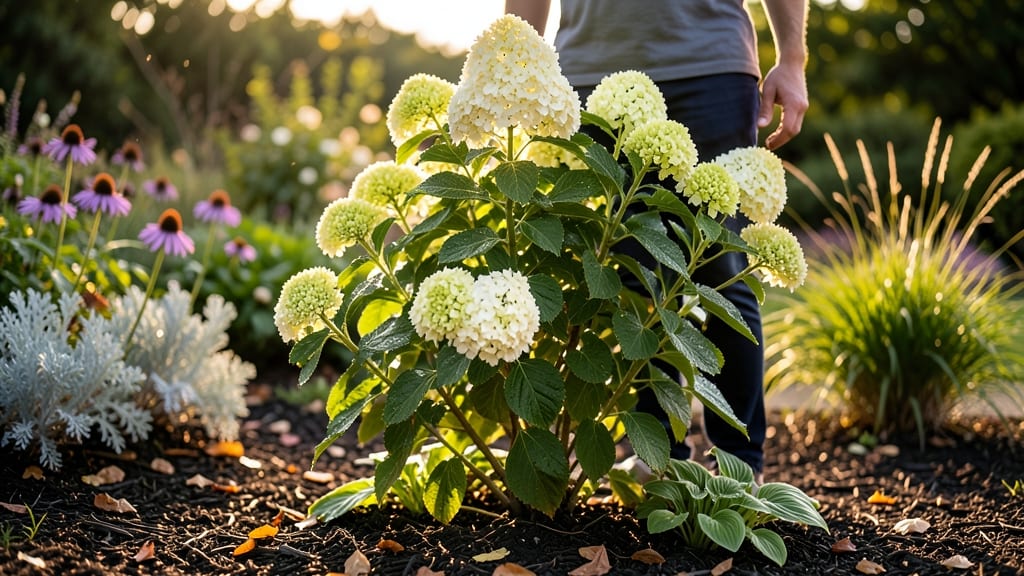
How tall hydrangea trees grow varies dramatically—from a modest 3 feet to a towering 15 feet, depending on the variety and how you shape them.
If you’re dreaming of a lush, shade-providing hydrangea tree but unsure whether it’ll tower over your home or stay compact, the answer depends entirely on the variety—and how you prune it.
Some types grow as tall as small trees, while others remain bushy shrubs, making the difference between a statement piece and a subtle garden accent.
For example, the Hydrangea paniculata varieties like ‘Limelight’ can reach 12–15 feet with aggressive growth, while Hydrangea arborescens ‘Annabelle’ tops out around 3–5 feet. Even within the same species, pruning habits can shrink or stretch their height dramatically.
In this guide, you’ll learn how to predict your hydrangea’s mature size, when and how to prune for control, and which varieties stay manageable even in small yards. Let’s get started.


Hydrangea tree height by variety: from dwarf to towering specimens
Choosing the right hydrangea variety is key if you want to control its mature height. Some types grow into towering small trees (up to 15 feet), while others stay compact as dwarf shrubs (just 3-5 feet).
The difference often comes down to genetics and pruning habits, so let’s break down the most popular varieties and their growth expectations.
For gardeners planning landscape design, spacing is critical. A 10-foot hydrangea needs at least 6-8 feet of clearance from structures, while dwarf varieties can thrive in tight spaces. We’ll also cover growth rates—some varieties mature quickly, while others take years to reach their full height potential.
| Variety | Mature Height | Growth Rate | Sunlight Needs | Spacing Needs |
|---|---|---|---|---|
| Hydrangea paniculata ‘Limelight’ | 8–12 ft | Fast (3–5 ft/year) | Full sun to partial shade | 8–10 ft from structures |
| Hydrangea arborescens ‘Annabelle’ | 3–5 ft | Moderate (1–2 ft/year) | Partial shade | 4–5 ft spacing |
| Hydrangea quercifolia ‘Snow Queen’ | 6–10 ft | Slow (1–2 ft/year) | Partial shade | 6–8 ft spacing |
| Hydrangea macrophylla ‘Endless Summer’ | 3–6 ft | Moderate (1–2 ft/year) | Partial shade | 4–5 ft spacing |
| Hydrangea paniculata ‘Little Lime’ | 4–6 ft | Fast (2–3 ft/year) | Full sun | 5–6 ft spacing |
| Hydrangea arborescens ‘Grandiflora’ | 5–7 ft | Moderate (1–2 ft/year) | Partial shade | 5–6 ft spacing |
| Hydrangea paniculata ‘Tardiva’ | 10–15 ft | Fast (3–5 ft/year) | Full sun | 10–12 ft spacing |
If you’re working with limited space, dwarf varieties like ‘Annabelle’ or ‘Endless Summer’ are perfect for container gardening or small yards. These compact hydrangeas rarely exceed
How pruning affects hydrangea tree height: techniques to control growth
Pruning is the single most effective way to control how tall your hydrangea tree grows. Without proper pruning, even dwarf varieties can sprawl uncontrollably, while aggressive cutting can stunt growth or eliminate blooms.
The key lies in understanding your specific hydrangea variety and applying the right technique at the right time. For example, Hydrangea paniculata varieties like 'Limelight' naturally reach 8–12 feet but can be kept shorter with strategic cuts, while Hydrangea arborescens like 'Annabelle' stays compact at 3–5 feet with minimal pruning.
Timing is everything when it comes to pruning hydrangea trees. Late winter or early spring (just before new growth begins) is ideal for most varieties, but oakleaf hydrangeas (H. quercifolia) should be pruned in late winter to avoid removing next year's flower buds.
Pruning too late in spring or summer risks cutting off blooms or encouraging weak, leggy growth. Always use sharp, clean pruners to make 1/4-inch cuts just above a bud or lateral branch to promote healthy regrowth.
Here’s how to prune for different growth goals using a structured approach:
One of the biggest mistakes gardeners make is over-pruning in an attempt to control height. Cutting back too aggressively—especially on mophead or lacecap hydrangeas—can eliminate next year's flower buds entirely. Always leave at least 1/3 of the plant’s structure intact.
Another common error is pruning at the wrong time, such as cutting back Hydrangea macrophylla in late summer, which removes the current year's blooms and next year's buds.
For varieties like Hydrangea paniculata, which bloom on new wood, you can prune more heavily in late winter without sacrificing flowers. In contrast, bigleaf hydrangeas (H. macrophylla) bloom on old wood, so pruning should be minimal and done immediately after flowering.
Always research your specific variety to avoid accidental defoliation or bud loss. With the right technique, you can keep your hydrangea tree at your desired height—whether you prefer a compact shrub or a towering specimen.
🌿