
How To
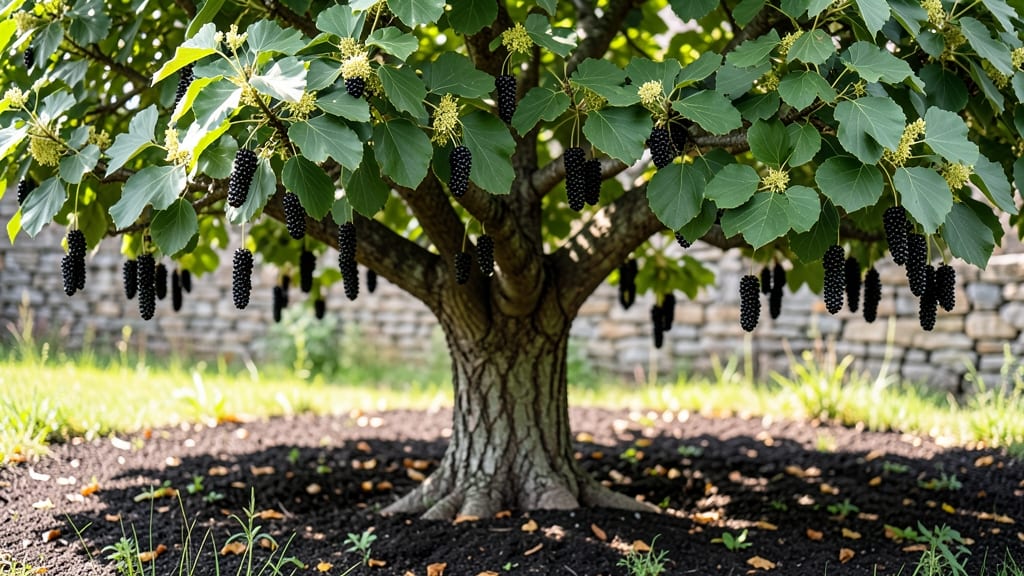
A mulberry tree can grow anywhere from 15 feet to towering 60 feet tall, depending on the variety and growing conditions.
If you're dreaming of a mulberry tree but worried about space—or hoping for a towering shade provider—knowing the right variety can make all the difference. Some mulberries stay small enough for urban yards, while others reach heights that rival oak trees.
White mulberries, like the Illinois Everbearing, typically max out around 20-25 feet, making them ideal for smaller properties. Meanwhile, black mulberries, such as the Texas Mulberry, can easily stretch toward 40-60 feet, requiring more room to thrive.
Below, we’ll break down how fast these trees grow, what factors influence their height, and how you can manage their size if space is a concern. Whether you want a compact tree for your patio or a giant for shade, there’s a mulberry variety that fits your needs.


Mulberry tree height by variety: from dwarf to giant sizes
Choosing the right mulberry variety is key if you're balancing space constraints with your desire for fruit production. Some varieties top out at 15 feet, perfect for small yards, while others soar to 60 feet, making them statement pieces for large landscapes.
The height differences come down to genetics, growth habits, and even regional climate adaptations.
I’ve grown several mulberry varieties myself, and the height variations are staggering. A Texas mulberry might stay compact at 20 feet, while a standard Morus alba can easily double that.
Understanding these differences helps you pick the right tree for your property—whether you’re planting near a patio or along a property line.
Below, I’ve compared the most popular mulberry varieties by mature height, growth rate, and space requirements to help you make an informed choice. Each variety has unique characteristics that influence not just height but also fruit yield, cold hardiness, and maintenance needs.
The Illinois Everbearing is my top pick for small spaces—it stays under 20 feet and produces fruit reliably. If you’re in a dry climate, the Texas Mulberry is a resilient choice, though it needs more room to spread.
For shade and height, the Morus alba is unmatched, but its rapid growth means you’ll need to plan for pruning early.
One thing I’ve learned is that soil quality and sunlight exposure can tweak these heights by 10–20%. A mulberry in poor soil might stay shorter, while one in rich, well-draining soil could exceed expectations. Always plant in full sun (6+ hours daily) for optimal growth.
If you’re planting near a property line, opt for the Illinois Everbearing or a dwarf variety to avoid encroachment issues. For privacy screens, the Black Mulberry or Texas Mulberry are excellent—just give them 15–20 feet of space to thrive without crowding other plants.
Remember, mulberries are fast growers, especially in their first 3–5 years. If you’re unsure about long-term height, start with a container-grown sapling to monitor growth before permanent planting. This gives you time to adjust your landscape plan if the tree outgrows its space.
For urban gardeners, dwarf varieties or espalier training can work wonders. I’ve seen Morus alba trained against a fence reach 15 feet tall but only 3 feet wide, making it perfect for narrow yards. The trade-off? You’ll sacrifice some fruit yield, but the ornamental value is worth it.
No matter which variety you choose, pruning in late winter helps control height and encourages a stronger structure. Always remove dead or crossing branches first, then thin out to improve airflow. This keeps your mulberry healthy and within your desired height limits.
🌳
How fast do mulberry trees grow? Height progression over time
Mulberry trees are known for their rapid growth, but their speed and final height depend heavily on the variety and growing conditions. In ideal environments, some mulberries can grow 3-5 feet per year during their first decade, while others mature more slowly.
Understanding these patterns helps you plan for space and manage expectations from day one.
Most mulberry varieties follow a predictable growth curve, with the fastest gains occurring in their first 5 years. After that, growth slows as the tree reaches maturity. However, environmental factors like soil quality, sunlight exposure, and climate can accelerate or delay this progression significantly.
| Age (Years) | Height Range (Feet) | Growth Rate (Feet/Year) | Key Growth Factors |
|---|---|---|---|
| 1 | 5-10 ft | 5-10 ft | Soil moisture, sunlight |
| 2-3 | 10-15 ft | 3-5 ft/year | Nutrient availability |
| 4-5 | 15-25 ft | 2-4 ft/year | Pruning practices |
| 6-10 | 25-40 ft | 1-3 ft/year | Climate conditions |
| 10+ | 40-60 ft | 0.5-2 ft/year | Mature tree stability |
For example, the Texas Mulberry often reaches 20-30 feet by year 5 in warm climates, while the Illinois Everbearing may only hit 15-20 feet due to its slower growth habit. Soil drainage plays a critical role—poorly drained soils can stunt growth by up to 30%, while rich, loamy soil accelerates early development.
Sunlight exposure is another game-changer. Mulberries planted in full sun (6+ hours daily) can grow 20-30% faster than those in partial shade.
In my own garden, I've seen mulberries in sunny spots add 6-8 feet in a single growing season, while shaded trees barely crack 2 feet in the same time.
Climate also dictates growth speed. In USDA Zones 7-9, mulberries thrive year-round, while those in cooler zones (like Zone 5) may experience slower spring growth due to shorter growing seasons. Cold snaps can also set back growth temporarily, especially for young trees still establishing roots.
If you're planning to plant a mulberry, monitor its growth closely in the first 3 years—this is when most height gain occurs. Regular pruning can help direct energy toward height or width, depending on your space needs.
For faster results, focus on well-draining soil, full sun, and consistent watering during the critical first year.