
How To
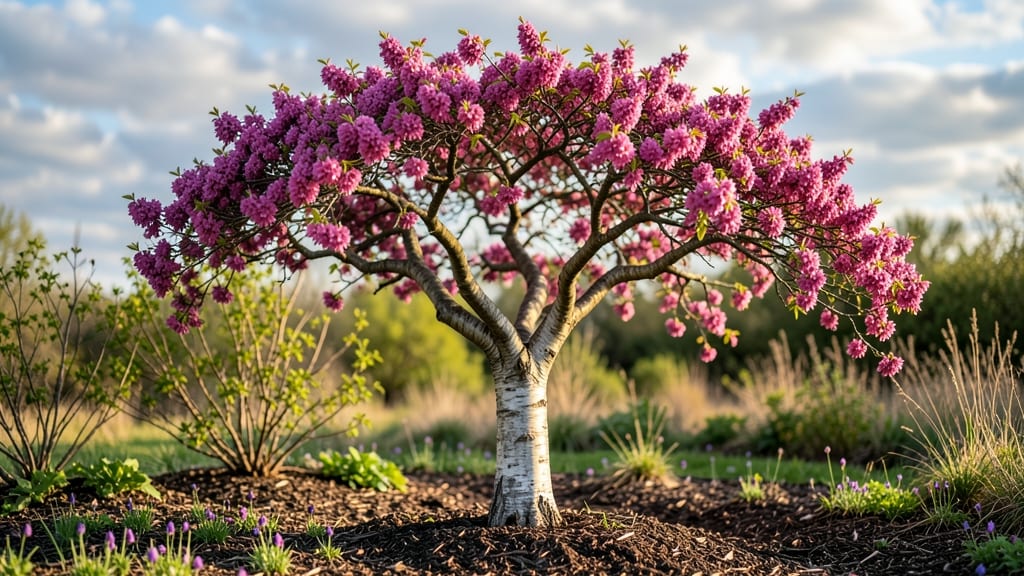
How tall does a redbud tree grow?—between 15 and 30 feet at maturity, making it a versatile choice for gardens of all sizes.
If you dream of a vibrant spring display without sacrificing space, the Eastern redbud tree (Cercis canadensis) could be your perfect match—but how tall does it really grow?
This small but mighty tree packs a punch with stunning pink blooms, making it a favorite among gardeners with limited yards.
The height of a redbud tree depends on its variety, growing conditions, and care. While standard types reach 20 to 30 feet, dwarf varieties stay under 10 feet, perfect for patios or small landscapes. Pruning and sunlight exposure also play a role in shaping its size.
Beyond its manageable height, the redbud tree offers early spring blooms and heart-shaped foliage, adding color and texture to any garden. Whether you're planning a new landscape or refreshing an existing one, understanding its growth habits helps you make the most of this beautiful ornamental tree.


Redbud tree height range: mature size and growth habits explained
The Eastern redbud tree (Cercis canadensis) is a gardener’s dream for small spaces, offering vibrant spring blooms without overwhelming your yard. On average, mature redbud trees reach 15–30 feet tall, but their size can vary dramatically based on species, growing conditions, and pruning habits.
Understanding these factors helps you plan for the perfect landscape fit while maximizing their stunning floral display.
Most standard Eastern redbuds grow between 20–30 feet when planted in ideal conditions, with a spread of 25–35 feet. However, dwarf varieties like 'Covey' or 'Lavender Twist' stay compact at 8–12 feet, making them perfect for patios or urban gardens.
The key to controlling height lies in pruning strategies and site selection, which we’ll explore in detail below.
| Redbud Type | Mature Height | Growth Rate | Best For |
|---|---|---|---|
| Eastern Redbud (Cercis canadensis) | 20–30 ft | 1–2 ft/year | Large yards, borders |
| Dwarf Redbud (Cercis canadensis 'Covey') | 8–12 ft | 6–12 in/year | Patios, containers, small gardens |
| Lavender Twist (Cercis canadensis 'Lavender Twist') | 10–15 ft | 8–12 in/year | Small yards, accent plantings |
| Texas Redbud (Cercis canadensis var. texensis) | 15–25 ft | 1–1.5 ft/year | Drought-prone areas, native gardens |
Your redbud’s growth rate depends heavily on its first 3–5 years. Young trees grow 6–12 inches per year, while established specimens may add 1–2 feet annually.
For example, a standard Eastern redbud planted in full sun could reach 10 feet in 5 years and 20 feet in 10 years if unpruned. To estimate your tree’s future height, multiply its current height by 2–3 for a rough projection.
Pruning plays a critical role in shaping your redbud’s height. Structural pruning in early spring—before buds break—helps direct growth upward or keep the tree low and bushy. I recommend removing 1/3 of the tallest branches annually to encourage lateral growth.
For dwarf varieties, prune lightly in late winter to maintain their compact form while preserving their spring bloom display.
Another key factor is soil quality. Redbuds thrive in well-draining, slightly acidic soil (pH 6.0–7.0). Poor soil or compacted clay can stunt growth, while amended loamy soil with compost promotes faster, healthier development.
If your yard has heavy clay, mix in 3–4 inches of organic matter before planting to improve drainage and nutrient uptake.
Climate also influences height. Redbuds grow best in USDA zones 4–9, where they experience cold winters and warm summers. In warmer climates (zones 8–9), growth may be faster and taller, while cooler zones (4–6) often yield shorter, stockier trees.
For instance, a redbud in zone 7 might max out at 25 feet, whereas one in zone 9 could reach 30 feet without intervention.
To encourage compact growth, plant your redbud in a partially shaded spot (4–6 hours of sun). Full sun (6+ hours) speeds up vertical growth, while light shade promotes a wider, bushier form.
I’ve seen redbuds in urban settings with filtered light stay under 15 feet while still producing abundant blooms. Balance sunlight with your space constraints to achieve the ideal size.
If you’re planting near power lines or structures, choose a dwarf variety or prune aggressively in early spring. Avoid topping the tree, as this creates weak, storm-prone branches.
Instead, focus on selective pruning to remove overly tall branches at their base. With the right approach, you can keep your redbud under 10 feet even in a full-sun location.
Remember, redbuds reward patience with
Factors that affect redbud tree height: sunlight, soil, and climate
The height of a redbud tree isn't set in stone—it depends heavily on three key factors: sunlight exposure, soil quality, and regional climate.
While most mature Eastern redbuds (Cercis canadensis) reach 15–30 feet, your tree could stay compact or grow taller based on these variables. Understanding them helps you plan for the perfect spring color display in your space.
Sunlight is the most critical factor. Redbuds thrive in full sun (6+ hours daily), which encourages faster, taller growth—up to 30 feet in ideal conditions. However, they tolerate partial shade, which can limit height to 10–15 feet while enhancing leaf color.
If you want a compact redbud, plant it in a spot with morning sun and afternoon shade.
Factors Affecting Redbud Tree Height
✅ Full Sun (6+ hours)
Promotes taller growth (20–30 ft). Ideal for open spaces.
✅ Well-Draining Soil
Encourages healthy root growth, supporting full height potential.
❌ Poor Soil (Clay/Compacted)
Restricts roots, limiting height to 10–15 ft.
❌ Partial Shade (<4 hours sun)
Slows growth, keeping trees compact (10–15 ft).
✅ USDA Zones 5–9
Warmer climates (Zones 7–9) support faster growth.
❌ Cold Zones (4)
Slower growth; may stay under 15 ft.
Soil quality directly impacts root development. Redbuds prefer well-draining, slightly acidic soil (pH 6.0–7.0). Amend heavy clay with compost or sand to prevent root suffocation, which can stunt growth.
In nutrient-rich soil, your redbud may reach its full 20–30 foot potential, while poor soil keeps it shorter. A quick soil test ensures you’re providing the right conditions.
Climate plays a surprising role, too. In USDA Zones 7–9, redbuds grow faster due to longer growing seasons, often hitting 20+ feet in 10–15 years. However, in colder Zone 4, growth slows, and trees may max out at 15 feet.
If you’re in a transitional zone (like Zone 5–6), expect moderate growth (15–25 feet) with proper care.
To encourage compact growth, prune young redbuds annually in late winter to shape the canopy. Remove suckers and water sprouts to redirect energy upward. For taller trees, avoid heavy pruning—focus on removing dead branches to maintain structural integrity.
With the right balance of sunlight, soil, and climate, you can steer your redbud’s height to fit your garden’s needs.
Remember, even a 10-foot redbud delivers months of spring color—so don’t let height limit your options! Experiment with placement and care to find your perfect match. 🌷