
How To
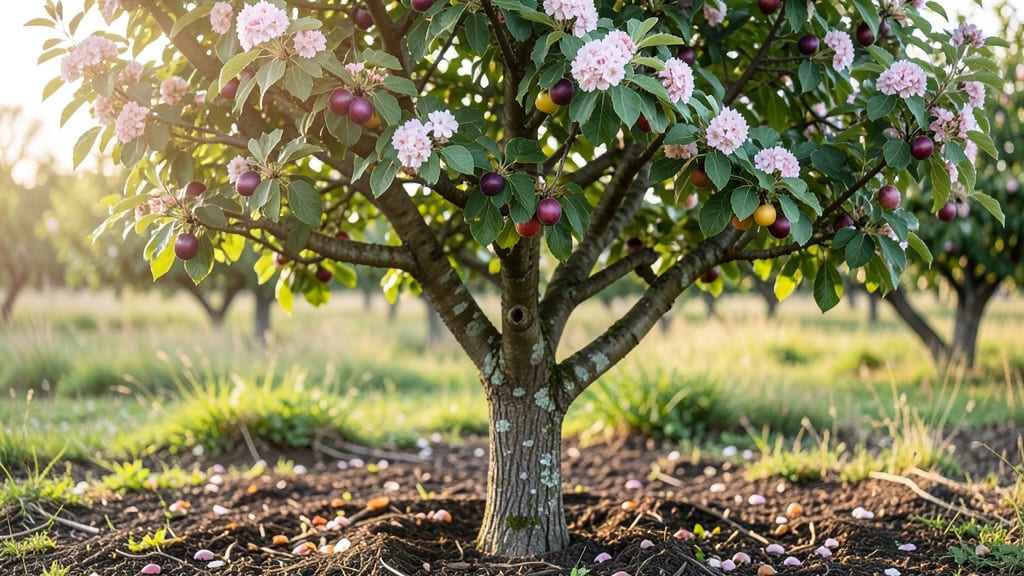
Plum tree height by variety: dwarf to standard sizes explained
Choosing the right plum tree variety depends heavily on your space constraints and long-term gardening goals. Dwarf varieties like 'Santa Rosa' stay under 10 feet, while standard varieties like 'Stanley' can reach 25 feet or taller.
The key difference lies in the rootstock used during grafting, which directly controls both height and spread. Understanding these variations helps you plan for proper spacing and sunlight access right from planting.
Most plum trees reach 50-75% of their mature height within the first 3-5 years, with growth rates averaging 12-24 inches per year. Semi-dwarf varieties strike a balance, typically growing 12-18 feet tall, making them ideal for medium-sized yards.
Their slower growth compared to standard trees also means they require less aggressive pruning to maintain shape and health.
Here’s a quick comparison to visualize how different plum varieties fit into various garden layouts:
| Variety Type | Mature Height | Ideal Spacing | Growth Rate | Sunlight Needs |
|---|---|---|---|---|
| Dwarf (e.g., 'Santa Rosa') | 8-12 ft | 6-8 ft from structures | 12-18 in/year | Full sun (6+ hrs/day) |
| Semi-Dwarf (e.g., 'Methley') | 12-18 ft | 10-12 ft from structures | 18-24 in/year | Full sun (6+ hrs/day) |
| Standard (e.g., 'Stanley') | 20-30 ft | 15-20 ft from structures | 24-36 in/year | Full sun (6+ hrs/day) |
The rootstock determines whether your plum tree will stay compact or grow tall. Dwarfing rootstocks like 'St. Julien A' or 'Pixy' restrict growth to 8-12 feet, while standard rootstocks like 'Lovell' allow trees to reach their full 20-30 foot potential.
When selecting a variety, consider not just height but also the spread of the canopy, which can be nearly as wide as the tree is tall.
For optimal airflow and sunlight penetration, space plum trees at least 10-15 feet apart if planting multiple varieties. This spacing prevents disease spread (like brown rot) and ensures even fruit ripening.
In smaller gardens, dwarf or semi-dwarf varieties are your best bet, as they fit neatly into patio gardens or raised beds with proper pruning.
Japanese plum varieties, like 'UFO' or 'Methley', often grow slightly slower than European plums but produce earlier and more abundant fruit. Their mature heights typically range from 12-18 feet, making them versatile for both urban backyards and rural orchards.
Always check the specific variety’s growth habits, as some may lean toward upright growth while others spread wider.
Pruning plays a crucial role in managing height. Annual pruning in late winter or early spring can reduce a standard plum tree’s height by 20-30% over time.
For dwarf varieties, minimal pruning is needed unless you’re shaping the tree for container growing. Always use sterilized tools to prevent bacterial infections that can stunt growth.
Climate also affects height. Plum trees in warmer USDA zones (8-10) may grow 10-20% faster than those in cooler zones (5-7). In colder regions, semi-dwarf varieties are often recommended because they recover better from winter damage while still producing a good harvest.
Always choose varieties hardy to your zone to avoid stunted growth.
If you’re growing plums in containers or small spaces, opt for columnar varieties like 'Columnar Santa Rosa,' which stay under 10 feet tall while producing abundant fruit. These varieties require regular container repotting every 2-3 years to accommodate root growth and maintain health.
Remember, the soil quality and drainage also impact height. Plum trees planted in well-draining, slightly acidic soil (pH 6.0-6.5) grow 20-30% taller than those in compacted or alkaline soil. Amend your soil with compost and organic matter before planting to encourage strong root development and optimal growth.
How pruning affects plum tree height and fruit production
Pruning isn't just about keeping your plum tree looking neat—it's a powerful tool to control tree height and boost fruit production. When done correctly, pruning can reduce a 20-foot standard plum tree to a manageable 8-foot dwarf while increasing fruit yield by up to 30%.
The key lies in understanding three core techniques: crown thinning, heading back, and renewal pruning, each with distinct effects on growth and harvest.
For home gardeners with limited space, pruning offers a way to shape your plum tree without sacrificing productivity. For example, heading back (cutting back current season's growth) encourages bushier growth, while renewal pruning (removing older wood) revitalizes fruit production in mature trees.
But timing matters—prune at the wrong season, and you risk stunting growth or inviting pests. Let's break down how to prune for both height control and maximum fruit.
⚠️ Over-Pruning Risks
Cutting back more than 25% of a plum tree's canopy in one season can stress the tree, reducing fruit production by up to 50% and leaving it vulnerable to disease. Standard plum trees (20-30 ft) should never be pruned to below 12 feet unless using dwarf rootstock. Always prioritize structural branches over aggressive height reduction.
Start with crown thinning to improve airflow and sunlight penetration, which directly impacts fruit quality. Remove dead or crossing branches first—these compete with productive wood. Next, target branches growing inward or upward, thinning them by 20-30% to open the canopy.
This technique works year-round but is safest in late winter when the tree is dormant. For height control, focus on the upper third of the tree, cutting back 1/3 of the branch length to encourage lateral growth.
Use heading back to control vertical growth in young plum trees. After harvest, identify the tallest vertical shoots and cut them back to an outward-facing bud or branch. This forces energy into horizontal branches where fruit develops.
For example, a 15-foot semi-dwarf plum tree can be kept at 10 feet by heading back the top 3-4 feet of the central leader each year. Pair this with renewal pruning—removing older scaffold branches (over 10 years old) to stimulate new growth and fruit production.
Seasonal timing is critical for fruit production. Prune dormant trees in late winter (just before buds swell) to shape structure without bleeding sap. For summer pruning, focus on fruit-bearing branches—cut back overly vigorous shoots after harvest to redirect energy.
Avoid heavy pruning in fall, as wounds take longer to heal before winter. Always sterilize pruning tools with 70% isopropyl alcohol to prevent bacterial canker, a common plum tree disease.
To maximize fruit yield, combine pruning with seasonal care. After pruning in late winter, apply a balanced fertilizer (10-10-10) to support new growth. Mulch around the base with wood chips to retain moisture and reduce stress.
Monitor for aphids or plum curculio—common pests that thrive in dense foliage. A well-pruned plum tree with open canopy produces larger, higher-quality fruit while staying within your desired height limits.
Remember, pruning is an ongoing process, not a one-time fix. Reassess your tree's shape every year and adjust cuts accordingly. With patience and precision, you can enjoy abundant plums without sacrificing your backyard space.
Start small, observe how your tree responds, and gradually refine your approach for the perfect balance of height control and fruit production.