
How To
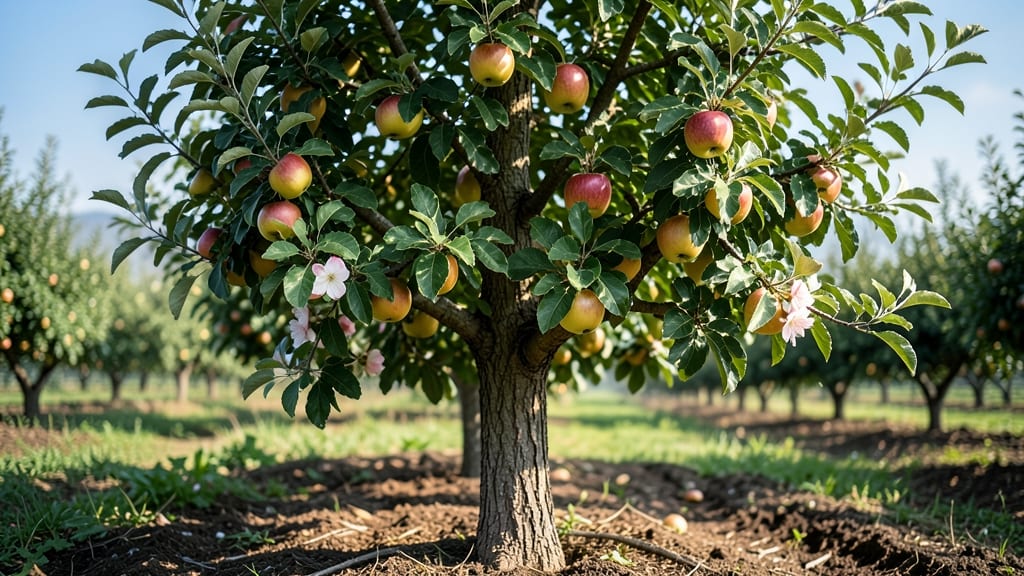
A Fuji apple tree 🍎 can grow anywhere from 8 feet to towering 25 feet tall, depending on the variety you choose—and getting the spacing right is the key to a bountiful harvest.
Picture this: you’ve just planted your dream Fuji tree, only to watch it struggle for sunlight because it’s too close to the fence. Or worse, you’ve given it plenty of room, but it’s still not producing like it should.
The truth? Size matters, and not all Fuji trees are created equal.
Standard Fuji trees reach 20-25 feet at maturity, while dwarf varieties stay compact at 8-12 feet. Semi-dwarf trees strike a balance at 12-16 feet, making them perfect for smaller yards.
But here’s the catch: spacing these trees correctly ensures they get the sunlight and airflow they need to thrive.
In this guide, I’ll break down the exact spacing you need for each variety, how to control height through pruning, and the best climate conditions to keep your Fuji tree happy and productive year after year.


Fuji apple tree height by variety: standard vs dwarf vs semi-dwarf sizes
If you're dreaming of homegrown Fuji apples, the first question should be: how tall will my tree grow? The answer depends entirely on the variety and rootstock you choose. Standard Fuji trees can reach 20-25 feet, while dwarf varieties stay compact at just 6-10 feet.
Getting this right means better harvests, easier maintenance, and a tree that fits your space perfectly.
Rootstock determines 90% of a Fuji apple tree's mature height. The scion (the Fuji variety itself) stays the same, but the underlying root system controls growth. For example, a dwarfing rootstock like M.9 keeps trees small, while semi-dwarf rootstocks like MM.106 offer a middle ground.
Even in the same climate, a standard Fuji on vigorous rootstock will tower over a dwarf Fuji on M.9.
The ideal climate zones for Fuji apple trees range from USDA Zones 5-8, but height management becomes even more critical in smaller yards or urban gardens. A 25-foot tree needs serious space, while a 6-foot dwarf fits neatly into a patio container.
Let’s break down the exact heights, growth rates, and spacing needs for each type so you can pick the perfect Fuji for your garden.
A standard Fuji apple tree on seedling rootstock will eventually dwarf your two-story house, but it also produces larger fruit yields due to its size. These trees thrive in USDA Zones 5-8 and need 20-25 feet of spacing to avoid crowding.
If you have the space, they’re ideal for commercial orchards or sprawling rural properties where fruit production is the priority over convenience.
For urban gardens or small backyards, a semi-dwarf Fuji on MM.106 rootstock strikes a balance. These trees mature at 12-16 feet and grow 2-4 feet per year, making them manageable with a ladder.
They’re perfect for home orchards where you want high yields without the maintenance of a giant tree. Just ensure you plant them 12-15 feet apart to allow airflow and sunlight penetration.
If space is extremely limited, a dwarf Fuji apple tree on M.9 rootstock is your best bet. These trees stay 6-10 feet tall and grow slowly—just 1-3 feet per year.
They’re ideal for containers, patios, or balcony gardens, and you can even grow two in a 5-gallon bucket with proper care. Dwarf varieties fruit earlier (often within 2-3 years) and require 8-10 feet of spacing, making them the most low-maintenance option for small spaces.
One common mistake is assuming all dwarf Fuji trees stay the same size. The rootstock matters more than the label. For example, a Fuji on M.26 rootstock might grow 8-10 feet tall, while the same variety on B.9 rootstock could reach 12-14 feet.
Always check the nursery tag or ask the grower about the exact rootstock before purchasing.
Climate also plays a role in height management. In warmer zones (Zones 7-8), Fuji trees tend to grow faster and larger, while in cooler zones (Zones 5-6), growth may be slower but more compact.
If you’re in a mild winter zone, consider pruning in late winter to control height and encourage
Proper spacing requirements for Fuji apple trees by size type
Planting your Fuji apple trees with the right spacing ensures they thrive and produce abundant fruit. The variety you choose—standard, semi-dwarf, or dwarf—directly impacts how far apart they should be.
Proper spacing prevents competition for sunlight and nutrients, which can lead to smaller harvests or poor fruit quality. Let’s break down the ideal distances for each type.
For standard Fuji apple trees, which can reach 20-25 feet tall, you’ll need the most space. These trees require 20-25 feet between each tree and 25-30 feet between rows.
This spacing allows their wide canopies to spread without shading each other, ensuring strong fruit production. If your yard is limited, consider semi-dwarf varieties for a more manageable option.
| Variety | Mature Height | Spacing Between Trees | Row Spacing | Sunlight Needs |
|---|---|---|---|---|
| Standard | 20-25 ft | 20-25 ft | 25-30 ft | Full sun (6+ hours/day) |
| Semi-Dwarf | 12-16 ft | 12-15 ft | 15-20 ft | Full sun (6+ hours/day) |
| Dwarf | 8-12 ft | 8-10 ft | 10-12 ft | Full sun (6+ hours/day) |
Semi-dwarf Fuji apple trees strike a balance between size and productivity, growing 12-16 feet tall. These trees need 12-15 feet between each tree and 15-20 feet between rows. This spacing works well for smaller backyards while still allowing plenty of airflow to reduce disease risk. Semi-dwarfs are a popular choice for home growers who want a manageable tree without sacrificing fruit quality.
If space is extremely limited, dwarf Fuji apple trees are your best bet. These compact varieties grow 8-12 feet tall and can be planted 8-10 feet apart with 10-12 feet between rows.
Dwarf trees are perfect for containers or small urban gardens, but they may require more frequent pruning to maintain shape and encourage fruit production. Always choose a dwarf rootstock for the best results.
Before planting, prepare the soil by amending it with compost and ensuring it drains well. Poor soil can stunt growth and reduce fruit size, regardless of spacing. After planting, mulch around the base of the tree to retain moisture and suppress weeds.
Proper spacing, combined with good soil preparation, sets the stage for a healthy, productive Fuji apple tree that will reward you with delicious fruit for years to come.
Remember, sunlight exposure is critical for fruit production. Trees that are too close may shade each other, leading to smaller apples or fewer blooms. Always plant in a location with full sun exposure (6+ hours of direct sunlight daily) to maximize your harvest.
With the right spacing, your Fuji apple trees will thrive and produce sweet, crisp fruit season after season.