
How To
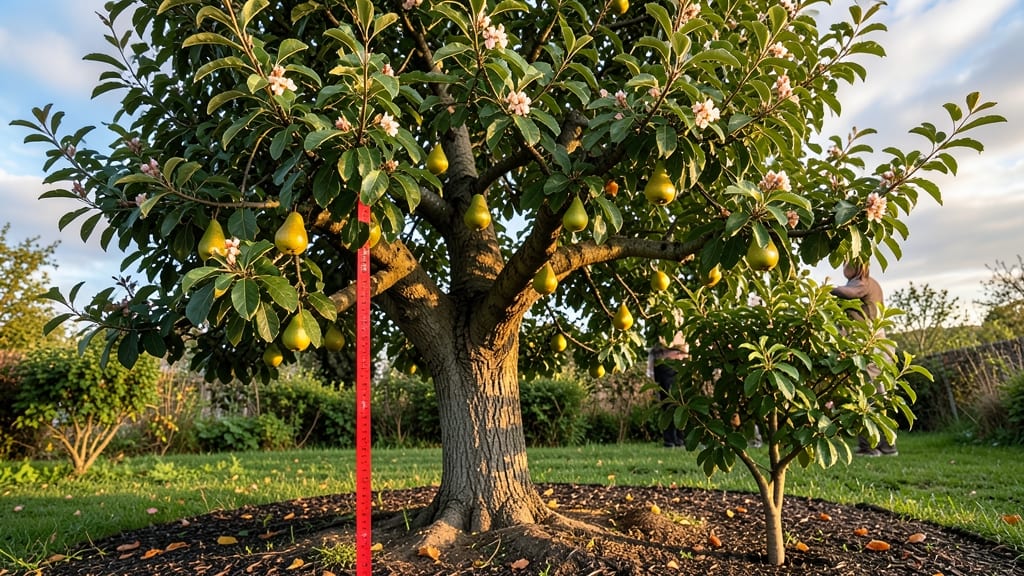
A pear tree can grow anywhere from 8 feet tall to over 50 feet, depending on the variety and care you provide 🍐.
Wondering if your backyard can accommodate a pear tree? The height of a pear tree can vary dramatically—from a compact dwarf variety that fits a patio to towering giants that need acres of space. If you're dreaming of fresh pears but worried about space, you're in the right place.
Standard pear trees can reach heights of 30 to 50 feet, making them more suited for rural properties or large gardens. On the other hand, dwarf varieties stay between 8 and 16 feet, perfect for urban yards or even large containers.
Below, I’ll break down the height ranges for different types of pear trees, factors that influence their growth, and practical tips to manage their size so you can enjoy homegrown pears without sacrificing your garden layout.


Pear tree height variations: dwarf, semi-dwarf, and standard sizes explained
Choosing the right pear tree size is crucial for your garden layout. I’ve learned that dwarf varieties can fit cozy patios, while standard trees need sprawling backyards. The difference in height isn’t just about aesthetics—it impacts fruit production, pruning needs, and even pollination success.
Let’s break down the three main categories so you can pick the perfect fit for your space.
First, consider your available space. A dwarf pear tree typically reaches 8-16 feet at maturity, making it ideal for urban gardens or small yards. These compact trees often produce fruit earlier than their taller counterparts, which is a major perk for impatient gardeners like me.
Meanwhile, semi-dwarf varieties grow to 16-25 feet, offering a middle ground for medium-sized properties.
| Type | Mature Height | Best For | Pruning Needs |
|---|---|---|---|
| Dwarf | 8-16 ft | Containers, small yards, urban gardens | Minimal, structural shaping |
| Semi-Dwarf | 16-25 ft | Medium yards, orchard settings | Moderate, open canopy |
| Standard | 30-50+ ft | Large properties, traditional orchards | Regular, safety-focused |
Standard pear trees can soar to 30-50 feet or more, creating a stunning focal point but requiring significant space and maintenance. I’ve seen these majestic trees in rural orchards where their sprawling canopies provide shade for acres.
If you’re planting near a house, fence, or power lines, a standard tree might not be practical without aggressive pruning.
Another key factor is rootstock type. Dwarf trees are grafted onto dwarfing rootstock like Quince C or Old Home x Farmingdale, which naturally limits their size. Semi-dwarf trees use intermediate rootstock, while standard trees grow on their own roots or seedling rootstock.
This choice directly impacts how tall your tree will grow and how easily you can manage its height.
For space planning, visualize your tree’s mature size before planting. A 16-foot semi-dwarf needs at least 10 feet of clearance on all sides for proper airflow and light penetration.
Standard trees may require 20-30 feet of space. I always sketch a rough layout to avoid future headaches with overgrown branches near walkways or structures.
Pruning plays a huge role in managing height. With dwarf varieties, I focus on structural shaping early on to encourage a balanced form. Semi-dwarf trees benefit from annual pruning to remove suckers and crossing branches, while standard trees often need seasonal thinning to maintain safety and fruit quality.
Always prune during dormant season (late winter) for best results.
Climate also affects height. In warmer zones, pear trees tend to grow faster and taller, while cooler climates may stunt growth slightly. I’ve noticed my semi-dwarf Bartlett in Zone 7 grows about 2 feet taller than the same variety in Zone 5.
Always check your USDA hardiness zone when selecting a variety.
If you’re unsure which size to choose, start with a dwarf or semi-dwarf—they’re more forgiving for beginners and still produce abundant fruit. I planted a Moonglow dwarf pear in my backyard last year, and it’s already bearing fruit at just 5 feet tall.
The satisfaction of harvesting homegrown pears from a manageable tree is unmatched!
Remember, height isn’t set in stone. Even standard trees can be kept smaller with consistent pruning, though this requires more effort. The key is to start with the right variety for your space and commit to regular care.
With the right approach, you’ll have a pear tree that fits perfectly in your landscape—whether it’s a patio-sized dwarf or a backyard giant.
Best dwarf pear tree varieties for small spaces (with height limits)
If you dream of growing pears but lack space for a towering standard pear tree, dwarf varieties are your perfect solution. These compact trees mature between 8 to 12 feet, making them ideal for containers, small yards, or urban balconies.
With the right variety, you can enjoy fresh pears without sacrificing space or aesthetics.
Dwarf pear trees thrive in USDA Zones 5-9 and require full sun (6+ hours daily). Their smaller stature doesn’t compromise fruit quality—many produce sweet, juicy pears just like their larger counterparts. The key is choosing a variety suited to your climate and container size (if growing in pots).
Here’s a comparison of the top 5 dwarf pear varieties, including their mature heights, fruit characteristics, and ideal growing conditions:
For container growing, prioritize varieties like 'Hood' or 'Kieffer'—their compact size (8–10 ft) makes them perfect for 15–25 gallon pots. Use a high-quality potting mix with 50% organic matter and ensure the container has drainage holes. Dwarf pears need regular pruning to maintain shape and encourage fruit production.
When planting, space dwarf pears 6–8 feet apart in-ground or place containers where they’ll receive unfiltered sunlight. Mulch around the base to retain moisture and regulate soil temperature. With proper care, these trees can produce fruit in 3–5 years—far sooner than standard varieties.
Pro tip: Pair dwarf pears with companion plants like lavender or thyme to deter pests naturally. Their fragrant blooms also add beauty to small gardens while keeping the air fresh.