
Pruning
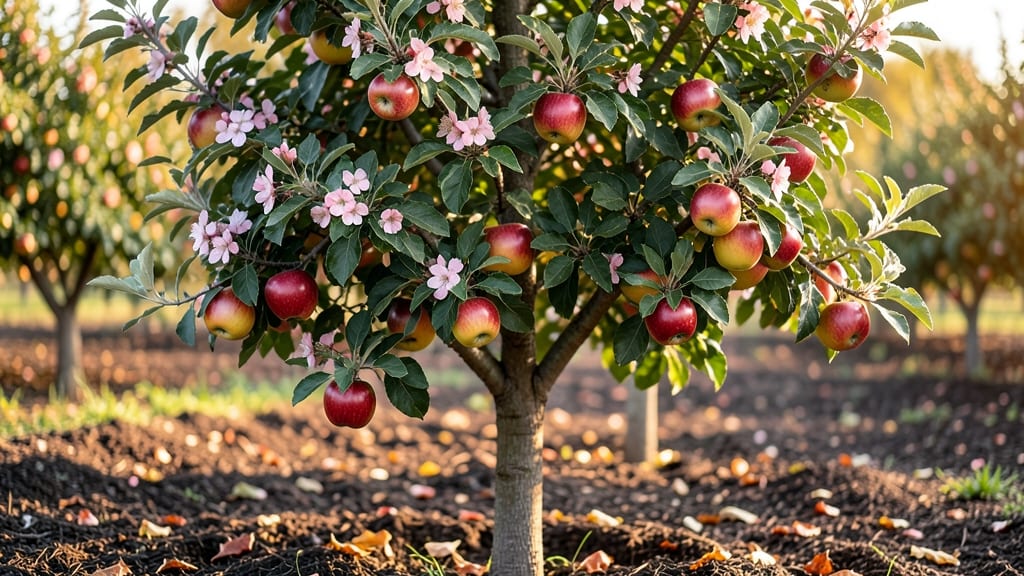
Honeycrisp apple trees thrive best in USDA hardiness zones 4 through 8, where cold winters help set fruit and warm summers promote healthy growth. Plant them in well-draining soil with full sunlight for peak performance.
Honeycrisp apples are famous for their crisp texture and sweet-tart flavor, but their growth depends heavily on climate conditions. 🍏 These trees need 600-1,000 chill hours (temperatures below 45°F) during winter to trigger flowering, which explains why zones 4-8 are ideal—they provide the perfect balance of cold winters and warm summers.
In marginal zones like 8, you might need to choose disease-resistant rootstocks or provide extra winter protection to ensure fruit set.
Beyond hardiness zones, microclimates play a huge role—south-facing slopes or urban areas can be warmer than official zone ratings. I always recommend testing your soil's drainage and pH (aim for 6.0-7.0) before planting, as poor conditions can stress the tree even in the right zone.
For zones 4-5, focus on early spring pruning to encourage strong branch growth before summer heat arrives.
💡 In This Article
- Understanding Honeycrisp Apple Tree Hardiness Requirements
- Optimal Planting and Care for Honeycrisp Trees by Zone
Understanding Honeycrisp apple tree hardiness requirements
The Honeycrisp apple tree's hardiness hinges on a critical balance between winter chill and summer warmth. These trees require 600-1,000 chill hours—hours below 45°F—to break dormancy and trigger flowering. This explains why zones 4-8 are ideal: they provide 800-1,200 chill hours annually, ensuring reliable fruit set.
In zone 4, trees experience 1,200+ chill hours, while zone 8 offers 600-800 hours, pushing the tree to its limits without proper care.
Temperature sensitivity peaks during bloom, when flowers need 50-70°F for pollination. Below 50°F, pollen won't release, while above 85°F, flowers may drop. This is why zone 5-7 are sweet spots—they provide consistent spring temperatures between 55-75°F during bloom.
In zone 8, late frosts after bloom can devastate fruit production, making early-blooming varieties like Honeycrisp riskier without protective measures.
The tree's health also depends on summer heat. Honeycrisp apples need 100-150 frost-free days to mature fully, which zones 4-6 typically provide. In zone 8, summer heat can stress trees, leading to sunburn or reduced fruit quality. This is why afternoon shade or mulching becomes essential in marginal zones.
The tree's root system also benefits from well-drained soil—waterlogged roots in zone 5 can cause winter dieback, while sandy soils in zone 7 may require extra irrigation during fruit development.
What most gardeners overlook is how humidity and disease pressure vary by zone. Zones 4-5 face fewer fungal diseases like apple scab, while zones 7-8 require fungicide sprays due to higher humidity. In zone 6, the balance is ideal: moderate humidity and cool nights enhance flavor development.
This is why Honeycrisp apples taste sweeter in zones 5-6—they develop complex sugars without the stress of extreme climates.
For those in zone 8, consider dwarf rootstocks like M.9, which mature faster and can produce fruit in 3-4 years instead of 5-7. These smaller trees also benefit from winter wrapping to protect against late frosts.
In zone 4, focus on early spring pruning to remove winter-damaged branches before sap flow begins. The key is adapting care to your specific zone's climate quirks—whether it's protecting blossoms in zone 8 or ensuring deep soil warmth in zone 4.
Here’s a quick comparison of zone challenges:
- Zone 4: Prioritize winter protection (mulch, windbreaks) and early pruning to avoid spring frost damage.
- Zone 5-6: Ideal conditions—focus on soil fertility and pollinator support (plant near other apple varieties).
- Zone 7-8: Use dwarf rootstocks, shade cloth in summer, and fungicide sprays preemptively.
The science behind Honeycrisp’s zone needs reveals why patience and precision matter. A tree in zone 5 might take 5 years to bear fruit, while one in zone 8 could struggle without microclimate adjustments.
Understanding these nuances ensures your Honeycrisp tree thrives, delivering those legendary crisp apples year after year. 🍏