
Pruning
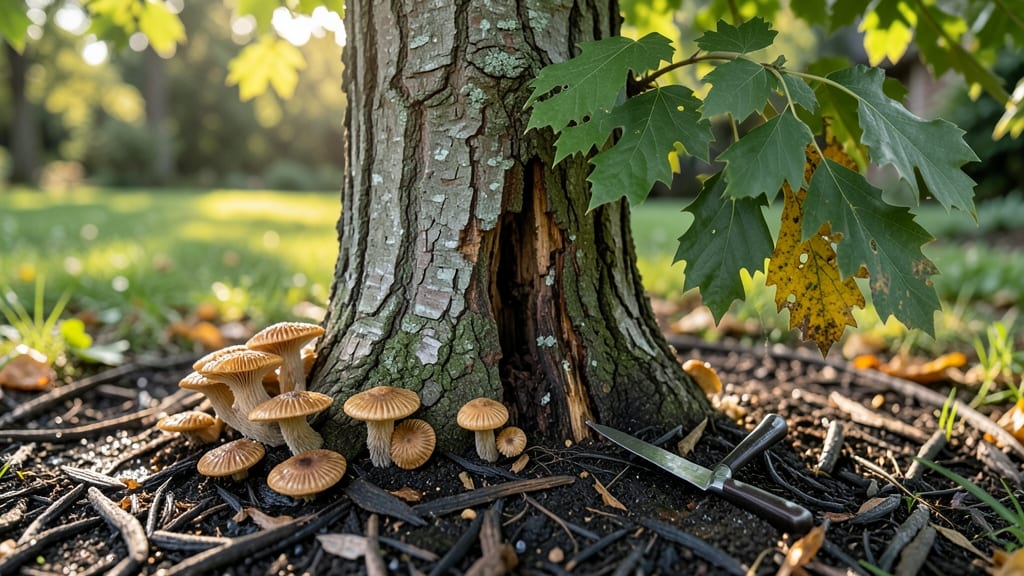
Those strange mushrooms sprouting from your elm tree aren’t just a weird sight—they’re a warning sign that needs attention. ✂️ While some fungi are harmless, others signal decay or disease that weakens the tree over time.
The key to saving your elm isn’t just pruning—it’s understanding which mushrooms are safe to ignore and which demand action before they spread.
Most elm trees develop shelf fungi (like bracket mushrooms) as they age, but these can hide deeper rot. My first step is always inspecting the base of the growth—if the wood feels soft or crumbly, that branch is a risk.
Pruning at the right time (late winter or early spring) gives the tree energy to heal, while avoiding cuts during wet seasons prevents new infections.
With the right cuts, you’ll stop the spread and keep your tree strong for years. I’ve seen elms recover completely after removing just a few infected branches—especially when combined with proper wound care.
The goal isn’t just to chop away mushrooms but to restore balance so the tree can fight back naturally.
Fair warning: some mushrooms mean the tree is already too far gone. If you see conks (shelf fungi) larger than a dinner plate or oozing sap, it’s time to call an arborist.
But for early-stage growth? This method works—just don’t skip the cleanup after pruning (those spores don’t disappear on their own).
📚 In This Guide
- What you need
- Instructions
- Tips and common mistakes
- Wrapping up and next steps
What you need
- ● Pruning shears: Bypass pruners (for cuts up to ¾ inch) – 1 pair (sharp, high-quality, like Felco or Fiskars).
- ● Loppers: Bypass or anvil type (for cuts up to 2 inches) – 1 pair (extendable handles for taller trees are a plus).
- ● Pruning saw: Curved-tooth or folding saw (for branches over 2 inches) – 1 (lightweight for ease of use).
- ● Safety gear: Work gloves (cut-resistant, like Mechanix or leather gloves) – 1 pair.
- ● Safety glasses or goggles – 1 pair.
- ● Long sleeves and pants (to protect from scratches and sap).
- ● Disinfectant: 70% isopropyl alcohol or pruning sealant (to sterilize tools between cuts) – small bottle.
- ● Ladder or extension pole: Sturdy, tall enough to reach branches – 1 (or hire a professional for large trees).
- ● Heavy-duty trash bags: For collecting debris – 2-3 bags.
- ○ Rope or tarps: To catch falling branches – optional but helpful.
- ● Tree wound dressing: Pruning paste (to seal large cuts and prevent disease) – small tube.
- ● Garden hose or spray bottle: To clean tools and rinse sap off cuts.
- ● Notebook or app: To sketch a pruning plan or track cuts.
- ● Budding knife: If you’re experimenting with elm tree mushroom cultivation (for grafting or inoculating branches).
- ● First-aid kit: For minor cuts or scrapes.
Instructions for pruning elm trees to prevent mushroom growth
Here's how I keep my elm trees healthy and fungus-free through seasonal pruning.
✂️ Step 1: Assess the Tree for Damaged or Infected Branches
Start by examining the elm tree closely for any branches with mushrooms growing on them or around the base. Look for blackened bark, sawdust-like frass (a sign of boring insects), or conks (shelf fungi)—these indicate decay. I use a 10x magnifying glass to spot early signs of infection that the naked eye might miss.
Focus on branches that are dead, crossing, or rubbing against others. These create entry points for fungal spores. If you see mushrooms growing on a branch, that branch is already compromised and should be removed entirely. Healthy branches have smooth bark, green leaves, and no visible signs of decay.
✂️ Step 2: Prune Infected Branches Using the Right Technique
Use sharp, clean pruning shears or a pruning saw to make cuts at a 45-degree angle, about ¼ inch above a healthy bud or branch collar. Never leave stubs—this invites further infection. For larger branches, I make the first cut 12-18 inches out from the trunk**, then a second cut to remove the branch entirely, and finally a third cut to shape the remaining stub.
Dispose of infected branches immediately by burning them (if allowed in your area) or sealing them in a plastic bag for trash pickup. Never leave them on the ground or in your yard—this spreads fungal spores. After pruning, I spray the wounds with a 1:10 ratio of bleach to water to disinfect and prevent further decay.
✂️ Step 3: Thin the Canopy for Better Air Circulation
Remove up to 25% of the tree's canopy by selectively pruning branches that are overcrowded or blocking sunlight from reaching the inner branches. Aim for an open, airy structure that allows light and air to flow freely. I start at the bottom and work my way up, removing branches that are growing inward or downward.
Thinning the canopy reduces humidity in the tree, which is one of the biggest factors in mushroom growth. You’ll know you’ve done it right when you can see light filtering through the branches on a sunny day. Avoid removing more than ¼ of the canopy in a single season—this stresses the tree and makes it more vulnerable to disease.
✂️ Step 4: Clean Up Debris and Apply Preventative Measures
After pruning, rake up all fallen leaves, twigs, and debris from the base of the tree and around the root zone. Mushrooms thrive in moist, decaying organic matter, so keeping the area clean is critical. I use a leaf blower to remove debris from hard-to-reach areas, then dispose of it in the trash.
Apply a 2-3 inch layer of wood chips or mulch around the base of the tree, but keep it 6 inches away from the trunk to prevent rot. Water the tree deeply but avoid overwatering—elm trees prefer well-drained soil. If mushrooms reappear, consider applying a copper-based fungicide in early spring to prevent spores from taking hold.
⏰ Step 5: Schedule Seasonal Maintenance
Prune elm trees in late winter or early spring before new growth begins, and again in summer after flowering if necessary. Avoid pruning in fall—this encourages new growth that won’t harden off before winter, making the tree more susceptible to disease. I mark my calendar with reminders to inspect the tree every 3 months for early signs of mushrooms or decay.
Monitor the tree for new growth and signs of stress. If you notice mushrooms reappearing, revisit your pruning technique or consider consulting an arborist. With consistent care, your elm tree can stay healthy and free of fungal growth for years to come.
Tips & tricks for healthy elm tree branches
Keeping your elm tree fungus-free starts with smart pruning habits that prevent mushroom growth from the get-go.
Inspection Tip: In Step 1, when you're looking for blackened bark or conks, bring a small trowel to gently scrape away any suspicious-looking bark. Healthy bark should be firm and smooth—if it crumbles or smells musty, that's your cue to remove the entire branch. I've caught early infections this way that would have gone unnoticed otherwise.
Cutting Technique: For Step 2, make sure your pruning shears are sharp enough to cut cleanly through branches without tearing. Dull blades crush the wood fibers, creating larger wounds that take longer to heal. I test my shears by cutting through a small twig—if it squishes instead of slices, it's time to sharpen them. The 45-degree angle cut is crucial for proper water runoff.
Canopy Management: When thinning in Step 3, prioritize removing branches that are growing directly upward—they create dense pockets where humidity builds. I like to visualize sunlight streaming through the tree after pruning; if you can't see light filtering through on a sunny day, you haven't thinned enough. Remember, we're aiming for that open, airy structure that mushrooms hate.
Cleanup Strategy: After pruning, don't just pile debris under the tree—this is a mushroom buffet waiting to happen. I use a leaf blower to send all debris to the compost bin (not the yard waste), and I always wear gloves when handling infected branches. The bleach solution in Step 2 is your best defense against spreading spores through open wounds.
Pro Tips for Elm Tree Mushrooms
- Keeping your elm tree fungus-free starts with smart pruning habits that prevent mushroom growth from the get-go.
- Inspection Tip: In Step 1, when you're looking for blackened bark or conks, bring a small trowel to gently scrape away any suspicious-looking bark.
- Cutting Technique: For Step 2, make sure your pruning shears are sharp enough to cut cleanly through branches without tearing.
Frequently asked questions
When is the best time to prune elm trees for mushroom growth?
Prune elm trees in late winter or early spring (before buds swell) to avoid stressing the tree and encourage healthy regrowth. If you’re cultivating mushrooms on logs or stumps, prune branches in fall or winter for optimal decay conditions. Avoid summer pruning—it stresses the tree and can harm mushroom colonization.
Are elm tree mushrooms safe to eat, or are they toxic?
Most elm tree mushrooms are not edible and can be toxic if ingested. Wild mushrooms like Ganoderma (reishi) grow on elms but are medicinal, not culinary. Always identify mushrooms with an expert before handling. If you’re cultivating mushrooms for decor or compost, stick to non-toxic species like oyster mushrooms on elm wood.
Can I reuse elm branches for mushrooms after pruning?
Yes! Elm branches are excellent for mushroom cultivation. Cut branches into 4–6-inch logs, sterilize them (boil or bake at 160°F for 1 hour), then inoculate with mushroom spawn. Store logs in a shady, moist environment (50–70% humidity) for colonization. Avoid reusing branches that show signs of disease or pest damage.
Why aren’t my elm tree mushrooms growing after pruning?
Mushrooms may fail to grow due to low humidity, poor airflow, or incorrect spawn placement. Ensure logs are kept moist (not soggy) and in indirect light. If using sawdust spawn, drill holes for better colonization. Patience is key—some species take 3–12 months to fruit! Check for pests (like beetles) and adjust conditions if needed.
What’s a good alternative if my elm tree isn’t suitable for mushrooms?
If your elm tree is too young, diseased, or you’re unsure about mushroom growth, try these alternatives:
- Hardwood logs: Oak, maple, or beech are classic choices for gourmet mushrooms like shiitake.
- Sawdust blocks: Pre-inoculated blocks (e.g., oyster or wine cap) are beginner-friendly.
- Straw or coffee grounds: Great for oyster mushrooms in a controlled setup.
Wrapping up and next steps
Pruning your elm tree for elm tree mushrooms isn’t just about aesthetics—it’s a year-round commitment to your tree’s health and vitality. By mastering the right tools, timing, and techniques, you’ll encourage strong growth, reduce disease risks, and even enjoy the occasional edible or medicinal harvest. 🌱
Ready to take the next step? Start small—pick one season to focus on, whether it’s spring’s fresh growth or winter’s dormant branches. Over time, you’ll build confidence and transform your elm tree into a thriving, resilient part of your landscape. Happy pruning! ✂️🌳