
Light Requirements
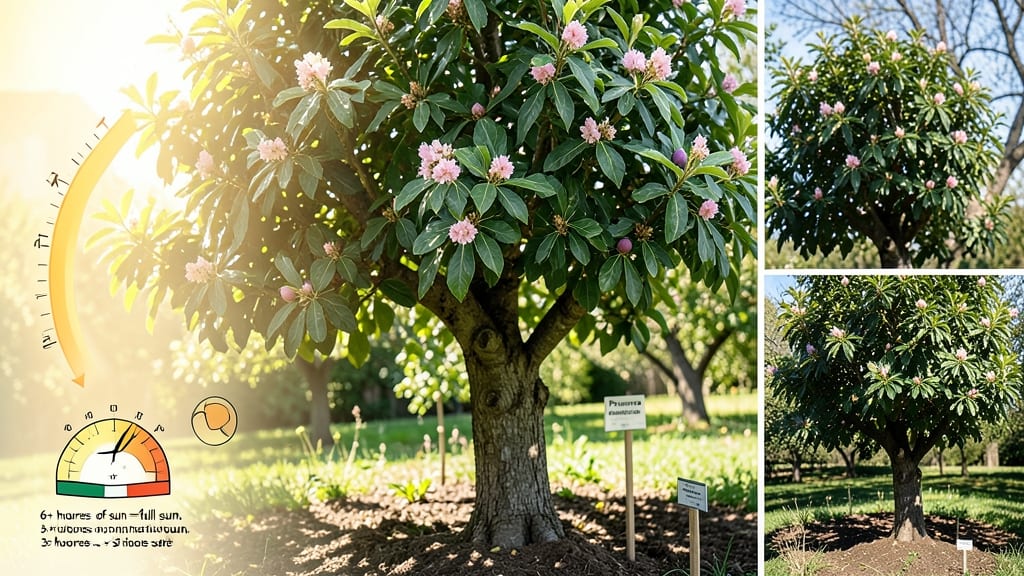
A plum tree needs full sun to thrive and produce the sweetest fruit 🍑 — but not all varieties follow the same rule. If you’ve ever planted one in a shady spot and watched the harvest disappoint, you’re not alone.
Most plum trees demand 6+ hours of direct sunlight daily, but some shade-tolerant varieties can handle partial shade in warmer climates. The key is understanding your tree’s type and your garden’s light conditions.
In this guide, I’ll break down which plum trees can survive partial shade, how to spot sunlight stress, and why even a few hours less sun can mean fewer plums. You’ll also learn how to adjust your planting strategy for different USDA zones.
Whether you’re working with a sunny backyard or a partially shaded spot, these insights will help you maximize your plum tree’s growth and fruit production.

Sunlight requirements for plum trees: full sun vs. partial shade
When planting a plum tree, sunlight is the single most critical factor for both growth and fruit production. Most plum varieties—especially European and Japanese plums—require 6 to 8 hours of direct sunlight daily to thrive.
Without enough light, your tree may produce sparse fruit, weak branches, or even fail to bloom altogether. But here’s the twist: some hybrid varieties and dwarf plums can tolerate partial shade, making them ideal for smaller yards or urban gardens.
The science behind this is simple: plum trees rely on photosynthesis to convert sunlight into energy for fruit development. Insufficient light weakens the tree’s ability to produce carbohydrates, directly impacting fruit size, sweetness, and yield.
For example, a Stanley plum left in deep shade might still grow leaves but will struggle to set fruit. Understanding your specific variety’s needs is key to avoiding disappointment.
Climate zones also play a role. In hot, dry regions (like USDA Zone 8-10), afternoon shade helps prevent sunburn, while in cooler climates (Zones 4-6), full morning sun is ideal to kickstart growth early. Even within the same zone, microclimates—like a north-facing yard—can drastically alter sunlight exposure. Let’s break down the specifics by plum type to help you choose the right spot.
If you’re planting a European plum, such as the Stanley or Methley varieties, aim for a location with unfiltered sunlight for at least 6 hours daily. These trees are the most demanding and will reward you with larger, sweeter fruit when given ideal conditions.
In contrast, Japanese plums, like the Santa Rosa, are slightly more adaptable but still prefer 5-7 hours of direct sun. Place them where they receive morning sun and afternoon shade to balance growth and fruit quality.
For gardeners with limited space or partial shade conditions, hybrid plums like 'Methley' or 'Santa Rosa' are excellent choices. These varieties can tolerate 4-5 hours of sunlight and still produce a decent fruit crop, though yields may be smaller.
Dwarf plums, such as 'Patio' or 'Little Princess', are the most shade-tolerant and can thrive with just 4 hours of sunlight daily, making them perfect for containers or small yards.
One common mistake is assuming that any shade is better than none. Dappled shade (like under tall trees) is preferable to deep shade, as it still allows some light to filter through.
However, avoid planting plum trees near structures that cast dense, prolonged shade, such as large buildings or dense evergreens. Even a few hours of shade can reduce fruit production by up to 30%, so strategic placement is crucial.
In hotter climates, like those in USDA Zones 9-10, afternoon shade can actually benefit plum trees by preventing heat stress or sunburn on young leaves. Look for varieties like 'Improved Egg' or 'Shiro', which handle partial shade better than others.
Conversely, in cooler northern climates (Zones 4-6), prioritize south-facing exposure to maximize sunlight during shorter days. Adjusting for your local climate ensures your plum tree gets the right balance of light and protection.
To test your garden’s sunlight conditions, use a simple sunlight tracker for a week. Place a white board or reflective surface where you plan to plant and mark the hours of
Best plum varieties for low-sun gardens: shade-tolerant options
Not all plum trees demand full sun to thrive—some varieties adapt beautifully to partial shade, making them perfect for urban gardens, north-facing yards, or spaces with limited sunlight.
If your garden gets 4-6 hours of sun daily, you can still grow plums with the right shade-tolerant varieties. Let’s explore the best options for your low-light garden.
Most plum trees prefer full sun (6+ hours), but European and Japanese hybrids like 'Santa Rosa' and 'Methley' tolerate partial shade better than others.
These varieties produce smaller fruit yields but still deliver sweet, flavorful plums. Dwarf varieties often handle shade better than standard trees, making them ideal for containers or small spaces.
Plum Tree in Partial Shade: Pros & Cons
✅ Pros
- Better for urban gardens with limited sun
- Reduces heat stress in hot climates
- Smaller fruit yields but still edible
- Dwarf varieties fit containers or small yards
❌ Cons
- Poorer fruit production (smaller, fewer plums)
- Slower growth compared to full-sun trees
- Higher risk of disease in damp shade
- Less vibrant foliage without full sun
💡 Tip: Choose dwarf varieties for containers and ensure well-draining soil to prevent root rot in shaded conditions.
Among the best shade-tolerant plum varieties, 'Santa Rosa' stands out for its disease resistance and ability to produce medium-sized plums even in partial shade. This European hybrid thrives with 4-6 hours of sun and is perfect for USDA zones 5-9.
Another top pick is 'Methley,' a Japanese plum that tolerates shade well while delivering sweet, purple-skinned fruit.
'Stanley' is another excellent choice for low-sun gardens, offering large, purple plums with minimal care. This variety handles partial shade better than most and is often used in commercial orchards where full sun isn’t available.
For dwarf options, consider 'Improved Egg'—a compact tree that produces small, yellow plums and grows well in containers or small yards.
When selecting a plum tree for shade, prioritize dwarf or semi-dwarf varieties to maximize fruit production in limited space. These trees are easier to manage, produce fruit sooner, and adapt better to partial shade conditions. Always plant in well-draining soil and avoid waterlogging, which can worsen in shaded areas.
If your garden only gets morning sun or dappled shade, focus on Japanese plum varieties like 'Santa Rosa' or 'Methley.' These trees are more forgiving than European plums and still yield decent fruit harvests. Just be prepared for smaller plums and lower yields compared to full-sun trees.
For the best results, pair your shade-tolerant plum with companion plants like roses or lavender to improve airflow and reduce disease risk. Regular pruning to open the canopy will also help maximize sunlight exposure for the remaining branches.
With the right variety and care, your plum tree can thrive even in partial shade gardens! 🌿