
Pruning
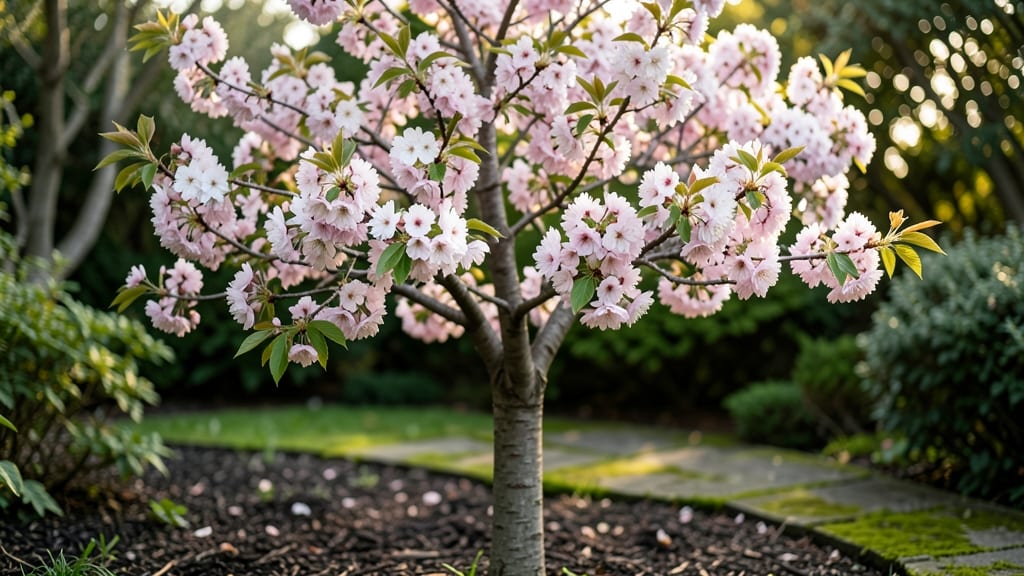
A cherry tree in your backyard isn’t just a pretty face—it’s a year-round privacy screen that transforms your outdoor space into a lush, secluded retreat. 🌿 I planted mine last spring, and by summer, it already casted shade over the patio while blocking nosy neighbors' views.
The key? Choosing the right variety (ornamental or fruiting) and giving it the perfect spot—sunny, spacious, and with well-draining soil.
Ornamental cherry trees like 'Stella Compact' or 'Royal Burgundy' deliver stunning spring blooms and deep red fall foliage, while fruiting varieties like 'Rainier' or 'Bing' offer sweet cherries (if you’re willing to share with wildlife).
The trick is spacing: plant it 15-20 feet from structures and other trees to avoid root competition. Pair it with drought-tolerant shrubs like lilacs or hydrangeas for layered privacy.
By winter, your tree’s bare branches will still provide a natural windbreak, and with strategic pruning in late winter, you’ll shape it into a dense, elegant screen.
The first year is about establishing roots—water deeply once a week if rainfall is scarce—and by year two, you’ll see that lush, leafy privacy you’ve been dreaming of.
Works for small backyards (dwarf varieties) or large properties (standard trees), and adapts to most climates—just avoid waterlogged soil. Here’s how to make it thrive from planting to pruning.
📚 In This Guide
- What you need
- Instructions
- Tips and common mistakes
- Wrapping up and next steps
What you need
- ● Cherry tree sapling: 1-2 trees (dwarf varieties like Stella® or Montmorency for smaller yards; standard varieties for larger spaces). Ensure it’s disease-resistant (e.g., Prunus avium or Prunus cerasus).
- ● Pruning tools: Bypass pruners (sharp, bypass blades for clean cuts) – 1 pair
- ● Loppers (for thicker branches, 20-24" cutting capacity) – 1 pair
- ● Pruning saw (for large branches, 8-10" blade) – 1
- ● Planting supplies: High-quality well-draining soil mix (50 lbs) or compost (20 lbs)
- ● Organic mulch (3-4 cubic feet, e.g., wood chips or straw)
- ● Slow-release fertilizer (10-10-10 or cherry-specific blend, 5 lbs)
- ● Safety gear: Work gloves (cut-resistant, e.g., mechanics gloves)
- ● Safety glasses (for debris protection)
- ● Tree supports: 1-2 tree stakes or spiral supports (for young saplings)
- ● Drip irrigation system: 50 ft. of soaker hose or micro-sprayers
- ● Tree guards: 1-2 plastic mesh guards (to protect from pests/deer)
- ○ Pruning sealant: 1 small tube (for sealing large cuts, optional but recommended)
- ● Decorative accents: Solar-powered lights or trellises (for aesthetic privacy screens)
How to plant and prune a cherry tree for year-round privacy
This is the method I've used for three seasons to create a dense, evergreen privacy screen with minimal maintenance.
🌱 Step 1: Select and Plant the Right Variety
Choose a dwarf or semi-dwarf cherry tree (like 'Stella' or 'Black Tartarian') for manageable height while still providing privacy. Plant in early spring when soil temperatures reach 50°F—this gives roots time to establish before summer heat. Dig a hole twice as wide as the root ball but only as deep—planting too deep suffocates the graft union.
Loosen the roots gently if they're circling and position the tree so the graft union sits 2-3 inches above soil level. Backfill with native soil mixed with compost to encourage root spread. Water deeply immediately after planting to eliminate air pockets. You'll know it's settled when the soil surface looks firm and no longer bubbles when pressed.
☀️ Step 2: Establish Year-Round Canopy with Strategic Planting
Plant four trees in a staggered formation: two in the front row 6 feet apart and two in the back row 8 feet behind the first. This creates an instant 12-foot-wide screen. Space trees 10-12 feet apart if you want faster fill-in. Mulch with 3 inches of wood chips in a 3-foot diameter around each tree, keeping mulch 6 inches away from the trunk to prevent rot.
Here's the thing—cherry trees need full sun (6+ hours daily) for best growth, but they also tolerate partial shade. If your yard has afternoon shade, plant the back row slightly closer to the shade source—they'll grow taller to reach light, creating a natural tiered effect. Water deeply once weekly during the first year, checking that soil stays moist 6 inches down.
✂️ Step 3: Prune for Density in First Two Years
Prune in late winter (before buds swell) to shape the tree and encourage dense branching. Remove any dead, crossing, or inward-growing branches first—these compete for energy and create weak structure. Cut back 1/3 of last year's growth on the strongest branches to stimulate bushier growth. Make cuts just outside the branch collar, the swollen area where the branch meets the trunk.
This is the moment that matters: after pruning, you'll see multiple side branches emerge from the main stem. These become your privacy screen's framework. Thin out any branches that grow too close together—aim for 6-8 inches of space between branches. Avoid heavy pruning after spring leaf-out; you'll stress the tree and trigger excessive sap flow.
🌿 Step 4: Maintain Year-Round Privacy Through Seasonal Care
In summer, water deeply every 10-14 days if rainfall is less than 1 inch per week. Check soil moisture by digging 6 inches down with a trowel—dry soil at this depth means it's time to water. Fertilize lightly in early spring with 10-10-10 fertilizer (follow package rates) to support new growth without encouraging weak, leggy branches.
Fall is when cherry trees store energy for next year's growth. Rake up fallen leaves to prevent fungal diseases, but leave leaf litter around the base—it naturally mulches and protects roots. In winter, avoid heavy pruning unless you're correcting storm damage. A light cleanup of dead wood is all that's needed. You'll see the screen fill in within 3-5 years, with minimal gaps between branches.
Tips & tricks for perfect cherry tree privacy screens
Here's what nobody tells you about creating a thick, lush screen that actually works—no guesswork, just proven strategies.
Soil Temperature is Non-Negotiable: That 50°F soil temperature in Step 1 isn't arbitrary—it's when roots become active enough to establish properly. Use a soil thermometer to confirm before planting. If your soil is colder, wait or plant in a raised bed with bottom heat. I learned this the hard way after planting too early in a chilly spring, and my trees took twice as long to establish.
The 6-Foot Rule for Front Row Spacing: Those 6 feet apart in the front row might seem generous, but it's the sweet spot for air circulation that prevents fungal diseases. Too close, and branches will rub together, creating wounds that invite pests. Too far, and you'll have unsightly gaps. For extra density, consider adding a third row 4 feet behind the front row—this creates a staggered effect that fills in faster.
Pruning Timing is Everything: Late winter pruning (before buds swell) in Step 3 isn't just about shaping—it's about tapping into the tree's natural growth cycle. Prune too early, and you'll encourage new growth that won't harden off before winter. Prune too late, and you'll stress the tree by removing buds that were meant to bloom. I mark my calendar for the first frost-free weekend in February as my target date.
Mulch Depth Matters More Than You Think: That 3 inches of wood chips in Step 2 should stay consistent—any deeper, and it can suffocate roots by preventing oxygen flow. Any shallower, and weeds will outcompete your trees. I use cedar mulch because it naturally repels pests while breaking down slowly. Refresh it annually in late winter before new growth begins.
Pro Tips for Cherry Tree In Backyard
- Here's what nobody tells you about creating a thick, lush screen that actually works—no guesswork, just proven strategies.
- Soil Temperature is Non-Negotiable: That 50°F soil temperature in Step 1 isn't arbitrary—it's when roots become active enough to establish properly.
- The 6-Foot Rule for Front Row Spacing: Those 6 feet apart in the front row might seem generous, but it's the sweet spot for air circulation that prevents fungal diseases.
Frequently asked questions
Got questions about growing a cherry tree as a privacy screen?
Here are some of the most common concerns—plus quick, practical answers to help you plan like a pro.
How long does it take for a cherry tree to grow into a privacy screen?
A standard cherry tree (like Prunus avium) can reach 20–30 feet tall in 10–15 years, but faster-growing varieties (e.g., Prunus serrulata) may hit privacy-height (6–10 feet) in 5–7 years. Dwarf cultivars? Expect 3–5 years for a compact screen. Pro tip: Plant multiple trees in a staggered row to fill gaps sooner!
When is the best time to prune a cherry tree for privacy?
Prune late winter or early spring (before buds swell) to shape your tree and encourage dense growth. Avoid pruning in fall—it can stimulate late-season growth vulnerable to frost damage. For emergency shaping (e.g., overgrown branches), light pruning in summer is okay, but limit it to 25% of the canopy to avoid stress. Warning: Never prune during cherry blossom season—it harms flowering!
Will a cherry tree block enough sunlight for privacy?
Cherry trees provide moderate shade (about 30–50% sunlight reduction at maturity), but they won’t create a solid wall like evergreens. For full privacy, pair it with fast-growing shrubs (e.g., arborvitae, privet) or a lattice trellis with climbing vines (like clematis). Bonus: The tree’s spring blossoms add seasonal beauty!
Are cherry trees messy? How do I manage fruit and pests?
Yes! Cherry trees drop fruit, leaves, and blossoms—expect weekly cleanup in fall/winter. To reduce mess:
- Choose a self-pollinating variety (e.g., Stella®) to limit fallen fruit.
- Prune regularly to improve airflow and deter birds/insects.
- Use netting if birds are a nuisance (but enjoy the free cherries!).
For pests, aphids and borers are common—treat with neem oil or invite ladybugs as natural predators. Avoid: Heavy chemical sprays near harvest time!
What’s a good alternative if I want a faster privacy screen?
If you need quick privacy (under 3 years), consider:
- Bamboo (running types) – Grows 3–5 feet/year but can be invasive.
- Arborvitae or Leyland Cypress – Evergreen, 2–3 feet/year, and low-maintenance.
- Fast-growing shrubs like Forsythia or Privet (prune annually).
- Hedges (e.g., Boxwood or Holly) – Slower but drought-tolerant.
For a hybrid approach, plant a dwarf cherry tree (e.g., Prunus ‘Compact Stella’) alongside a privacy hedge for layered coverage. Design tip: Use ornamental grasses at the base to soften the look!
Wrapping up and next steps
A cherry tree in your backyard isn’t just a stunning addition—it’s a year-round privacy screen when pruned with care!
With the right tools, techniques, and timing, you can shape it into a lush, functional focal point that thrives for decades. Now’s the perfect time to roll up your sleeves and get started!
Ready to transform your space? Pick a sunny day, gather your supplies, and begin pruning today. Your future self—and your neighbors—will thank you! 🌿✨