
Landscaping
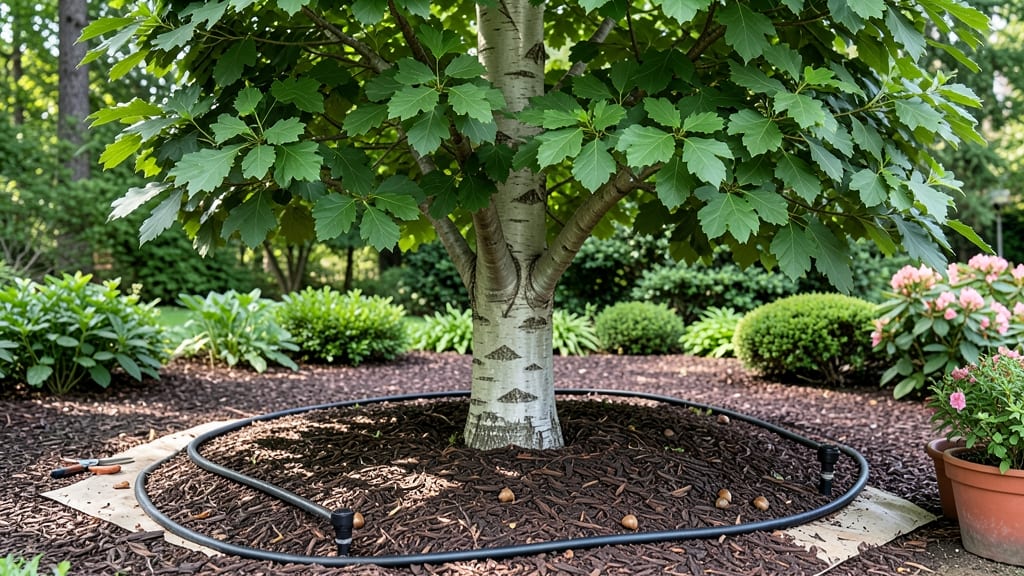
Beech tree landscaping transforms any yard into a timeless, four-season masterpiece. 🌿 The moment you spot their velvety bronze leaves in autumn or the intricate bark patterns in winter, you’ll understand why these trees are landscaping staples.
They thrive in both formal gardens and naturalistic settings, offering year-round structure and subtle beauty that no annual flower could match.
Start by planting them where they’ll shine—15-20 feet from structures to avoid root competition—with well-draining soil enriched with compost. Their slow, steady growth means you won’t need to replant anytime soon, but proper spacing now prevents future crowding.
Pair them with shade-loving perennials like hostas or ferns to create a lush understory that highlights their elegance.
What makes beech trees truly special is their year-round interest: glossy green leaves in summer, fiery fall foliage, and striking exfoliating bark in winter. A single specimen becomes a focal point, while clusters create a natural woodland feel.
The key to keeping them thriving? Mulch annually and water deeply during droughts—simple steps for dramatic results.
Whether you’re designing a formal hedge, a woodland garden, or a simple backyard retreat, beech trees deliver effortless sophistication. Their adaptability means they’ll fit almost anywhere, from city lots to rural estates. Once established, they require minimal care—just enjoy the show they put on every season.
📚 In This Guide
- What you need
- Instructions
- Tips and common mistakes
- Wrapping up and next steps
What you need
- ● Beech tree saplings – Choose Fagus sylvatica (European beech) or Fagus grandifolia (American beech). Buy 3–5 trees for a balanced look, spacing them 20–30 feet apart for mature growth.
- ● High-quality soil – 50 lbs of organic compost or topsoil to amend native soil (beech trees thrive in well-draining, slightly acidic soil, pH 4.5–6.5).
- ● Mulch – 3–4 cubic yards of wood chips or pine straw to retain moisture and suppress weeds.
- ○ Slow-release fertilizer – 10–20 lbs of a 10-10-10 or 20-20-20 blend for young trees (optional but recommended for the first year).
- ● Tree stakes & ties – 3–5 stakes (2–3 ft tall) and soft fabric ties to support saplings during establishment.
- ● Shovel & spade – For digging planting holes 2–3 times wider than the root ball.
- ● Wheelbarrow – To transport soil, mulch, and tools.
- ● Pruning shears – For trimming dead branches or shaping young trees.
- ● Watering can or hose with nozzle – Deep-watering capability (1–2 gallons per tree, 2–3 times per week for the first year).
- ● Gloves & knee pads – Because comfort (and clean hands!) matter.
- ● Tree guards – Protect young trunks from deer or lawnmowers.
- ● Soil test kit – To check pH and nutrient levels before planting.
- ● Drip irrigation system – For efficient watering, especially in dry climates.
- ● Decorative stones or edging – To define planting areas and add curb appeal.
Step-by-step guide to designing a stunning beech tree landscape
Transform your outdoor space with timeless beauty—here's how to integrate beech trees for year-round elegance.
🌱 Step 1: Assess Your Site and Choose the Right Variety
Beech trees thrive in well-drained soil with full sun to partial shade, but their specific needs vary by variety. American beech (Fagus grandifolia) handles shade better than European beech (Fagus sylvatica), which prefers 6+ hours of direct sunlight. Measure your space—mature beech trees spread 30-50 feet wide, so plant them 50-75 feet apart for proper growth.
Check soil pH with a test kit—beech trees prefer slightly acidic to neutral (6.0-7.0). If your soil is heavy clay, amend with 2-3 inches of compost and 10% sand to improve drainage. I always dig a 2-foot-deep hole twice as wide as the root ball to encourage root spread.
☀️ Step 2: Plant for Seasonal Impact and Structural Balance
Beech trees shine year-round, but their golden fall foliage and smooth bark demand strategic placement. Position them as anchor plants near patios or entryways where their 30-50 foot canopy will provide shade. For layered landscapes, pair them with understory plants like ferns or hostas that tolerate their dappled shade.
Dig the planting hole 1-2 weeks before to let soil settle. Place the tree so the top of the root ball sits 2 inches above ground level—settling will occur over time. Backfill with native soil mixed with 1 part compost to encourage root establishment. Water deeply to eliminate air pockets, then create a 4-inch-high berm around the base to direct water away from the trunk.
🪴 Step 3: Mulch and Water for Long-Term Health
Spread 3-4 inches of wood chips or shredded bark (never fresh wood) in a 3-foot-wide circle around the tree, keeping mulch 6 inches away from the trunk. This suppresses weeds while retaining moisture. Beech trees have shallow but extensive root systems, so avoid deep tilling or compacting soil within their dripline.
Water deeply 2-3 times per week for the first year, providing 10-15 gallons per watering to encourage deep root growth. After establishment, water only during drought periods—beech trees are drought-tolerant once mature. You'll know they're thriving when new leaves emerge bright green in spring and hold their color until late autumn.
✂️ Step 4: Prune for Shape and Disease Prevention
Beech trees rarely need pruning, but remove dead, diseased, or crossing branches in late winter or early spring before new growth begins. Use clean, sharp pruners to make cuts just outside the branch collar. Avoid "heading back" (cutting back to a bud)—this creates weak growth. If you notice blackened leaves in summer, it's likely beech leaf disease, which has no cure; remove infected leaves promptly.
For aesthetic shaping, limit pruning to removing no more than 25% of the canopy at one time. Beech trees respond poorly to heavy pruning, and their smooth gray bark is a defining feature—never remove large branches that expose the trunk. Instead, focus on thinning the crown to improve air circulation and light penetration.
Tips & tricks for beautiful beech tree landscaping
Creating a stunning beech tree landscape takes thoughtful planning—here are the key details that'll make all the difference in your design.
Variety Matters: American beech trees tolerate more shade than European varieties, which need at least 6 hours of direct sunlight daily. If your site has limited sun exposure, choose American beech (Fagus grandifolia) for reliable growth. For maximum seasonal impact, European beech (Fagus sylvatica) delivers breathtaking golden fall foliage when given proper sunlight. The 30-50 foot mature spread means you'll want to space them 50-75 feet apart to prevent root competition.
Soil Preparation: Beech trees thrive in slightly acidic to neutral soil (pH 6.0-7.0). If your soil is heavy clay, improve drainage by mixing in 2-3 inches of compost and 10% sand before planting. The 2-foot-deep hole you dig should be twice as wide as the root ball—this encourages roots to spread horizontally rather than circling the trunk. I've found that amending soil with compost also improves moisture retention during dry spells.
Planting Depth: Position your beech tree so the top of the root ball sits 2 inches above ground level. This accounts for natural settling that occurs over time. The 1-2 weeks you spend letting the planting hole settle before planting prevents soil compaction around the roots. After backfilling with native soil mixed with 1 part compost, create a 4-inch-high berm around the base to direct water away from the trunk and prevent rot.
Mulching Strategy: Apply 3-4 inches of wood chips or shredded bark in a 3-foot-wide circle around the tree, keeping mulch 6 inches away from the trunk. This mulch ring suppresses weeds while retaining moisture—critical for the first year when you're watering deeply 2-3 times per week. The shallow but extensive root systems mean you should avoid deep tilling within the dripline to prevent root damage.
Pro Tips for Beech Tree Landscaping
- Creating a stunning beech tree landscape takes thoughtful planning—here are the key details that'll make all the difference in your design.
- Variety Matters: American beech trees tolerate more shade than European varieties, which need at least 6 hours of direct sunlight daily.
- Soil Preparation: Beech trees thrive in slightly acidic to neutral soil (pH 6.0-7.0).
Frequently asked questions
Got questions about adding beech trees to your landscape? Here are some of the most common ones—and their answers—to help you plan with confidence!
How fast do beech trees grow, and when can I expect shade?
Beech trees grow at a moderate pace, typically gaining 12–24 inches per year. American beeches mature faster (15–20 years for full shade), while European beeches take slightly longer (20–25 years). Plant them in sunny spots now for the fastest canopy development!
What’s the best time of year to plant a beech tree?
The ideal window is early spring or fall (September–October or March–April). Avoid extreme heat or frost—young roots need time to establish. Spring planting lets them soak up moisture before summer droughts, while fall gives them a head start before winter.
Can I plant a beech tree near my house or driveway?
Yes, but mind their mature size! American beeches reach 60–75 feet tall with a 40–50-foot spread, while European beeches stay slightly smaller (50–60 feet tall). Plant at least 20–30 feet from structures to avoid root conflicts or falling branches. Check local codes too!
Are beech trees prone to pests or diseases? How do I prevent issues?
Beech trees can attract beech bark disease (caused by scale insects) or bronze leaf disease. To protect them:
- Inspect bark annually for cankers or oozing sap.
- Encourage healthy soil with mulch and balanced fertilizer.
- Avoid wounding the trunk—use sterilized tools if pruning.
What are some low-maintenance alternatives to beech trees?
If beeches seem high-maintenance, consider these elegant, shade-providing alternatives:
Tree
Height
Pros
Oak (White or Red)
60–80 ft
Drought-tolerant, long-lived, and pest-resistant.
Maple (Silver or Norway)
40–60 ft
Fast-growing, vibrant fall color, and adaptable.
Lindens (Tulip or Littleleaf)
40–70 ft
Tolerates urban pollution, low-maintenance foliage.
Wrapping up and next steps
Beech tree landscaping offers a timeless, low-maintenance solution for year-round beauty—whether you crave vibrant autumn colors, sturdy winter silhouettes, or lush summer shade. Their adaptability, disease resistance, and graceful growth make them a standout choice for any yard, from urban gardens to sprawling estates. 🌳✨
Ready to transform your outdoor space? Start by choosing the right variety for your climate, then sketch a simple planting plan. Reach out to a local nursery or arborist for expert guidance—your future shady retreat is just a few steps away!