
Pruning
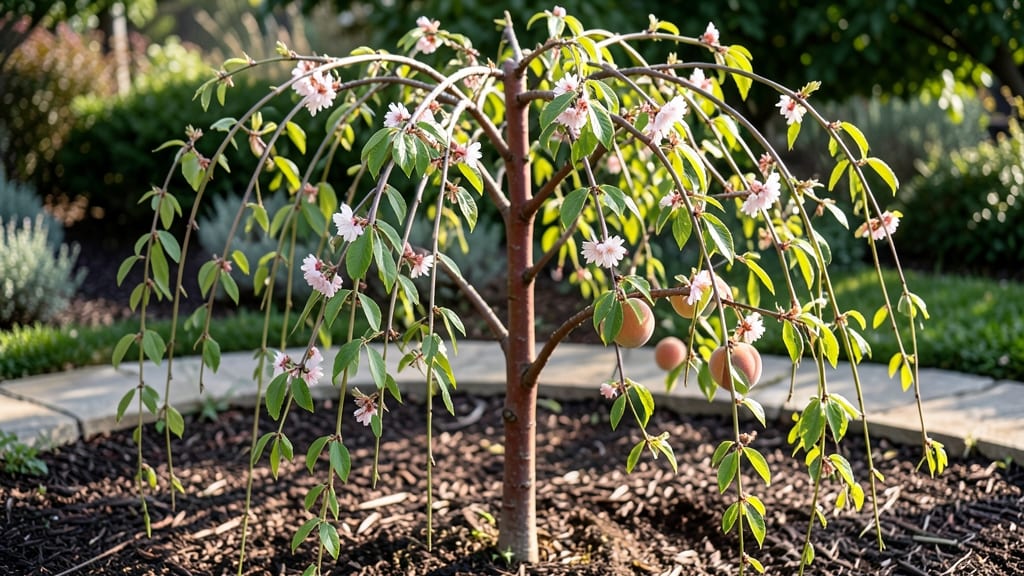
Weeping peach tree images transform gardens into living art with their cascading branches and delicate blossoms. 🌸 I’ve seen them turn ordinary backyards into dreamy landscapes—especially when pruned to highlight their natural grace.
The key isn’t just cutting; it’s shaping the tree to emphasize its weeping habit while keeping it healthy enough to produce fruit (or stunning spring flowers, if you choose a non-fruiting variety).
These trees shine as focal points near patios, where their branches create a romantic canopy for outdoor dining. Pair them with dwarf boxwoods for structure or salvia for contrasting textures, and you’ll have a design that works year-round—spring blooms, summer shade, and autumn color.
The real magic happens when you prune in late winter, before buds swell, to encourage long, graceful branches that sway in the breeze.
What you’ll end up with is a tree that feels like a living sculpture, its form softening hard lines in your landscape. Whether you’re going for cottage charm, modern minimalism, or a Japanese-inspired garden, the weeping peach adapts beautifully.
The branches can even frame a view or draw the eye toward a trellis or arbour.
For best results, focus on air circulation and light penetration—this keeps the tree disease-resistant and encourages those iconic, trailing branches. I’ll show you how to prune like a pro, even if you’ve never shaped a tree before.
📚 In This Guide
- What you need
- Instructions
- Tips and common mistakes
- Wrapping up and next steps
What you need
- ● Pruning shears – Bypass pruners (sharp, 6-8 inch blades) for clean cuts on small branches.
- ● Loppers – Long-handled (24-36 inches) for thicker branches (up to 2 inches in diameter).
- ● Pruning saw – Curved-tooth saw for branches larger than 2 inches.
- ● Gloves – Heavy-duty, cut-resistant (e.g., leather or reinforced fabric) to protect hands from thorns and sharp tools.
- ● Disinfectant (70% isopropyl alcohol or bleach solution) – To sterilize tools between cuts and prevent disease spread.
- ○ Pruning sealant (optional but recommended) – Tree wound paint or pruning paste to seal larger cuts (1/4 inch or wider) and reduce sap loss.
- ● Ladder or step stool – Sturdy, non-slip (extendable ladder for taller trees).
- ● Trash bags or bucket – For collecting pruned branches and debris.
- ● Notebook & pencil – To sketch your pruning plan or mark branches to remove.
- ● Safety glasses – To protect eyes from debris and sap splashes.
- ● Extension pole pruners – For high branches without a ladder.
- ● Sharpener (file or stone) – To keep blades in top condition.
- ● Tree tie or zip ties – For securing branches if you’re training the tree’s shape.
- ● Camera or phone – To capture before/after weeping peach tree images for your garden journal!
- ● Compost bin – To recycle small pruned branches as mulch.
How to prune a weeping peach tree for year-round beauty
Transform your weeping peach tree into a living work of art with these precise pruning techniques.
☀️ Step 1: Time Your Pruning for Optimal Growth
Prune your weeping peach tree during late winter or early spring, just before buds swell but before new growth begins. This timing ensures you remove dead wood while encouraging vigorous spring growth. Avoid pruning in fall—it invites disease and weakens the tree's winter resilience.
For container-grown trees, you can prune lightly after harvest to shape the canopy. But major structural pruning always waits for dormancy. Watch for swollen buds—that's your signal to grab your tools and begin.
✂️ Step 2: Remove Dead, Diseased, and Crossing Branches
Start by eliminating any dead or diseased branches—they're easy to spot as they're brown, brittle, or lack leaves. Cut these back to healthy wood using clean, sharp pruners (sterilize with rubbing alcohol between cuts). Next, remove branches that cross or rub against each other, as these create wounds and invite pests.
Look for suckers—vigorous shoots growing from the base or trunk. These drain energy from the main structure. Snip them off at the base with a sharp pair of pruners. Here's the thing—weeping peaches are all about elegance, so every cut should improve the tree's graceful silhouette.
🌿 Step 3: Thin the Canopy for Light Penetration
Weeping peaches thrive when light reaches all branches, encouraging fruit production and preventing fungal issues. Step back and visualize the tree's natural shape—remove 15-20% of the canopy by selectively thinning branches. Focus on inner branches that block light from reaching the center.
Make cuts just outside the branch collar (the swollen area where the branch meets the trunk). Avoid leaving stubs—these invite decay. You'll know you're doing it right when you see even light distribution across the canopy after pruning.
⏰ Step 4: Shape for Balance and Airflow
Weeping peaches grow best with a balanced, open structure. Prune to maintain the tree's natural weeping habit while ensuring airflow circulates freely. Avoid heavy pruning on one side—this creates uneven growth. Instead, make small, strategic cuts to encourage lateral branches.
For container trees, prune to fit the pot's size. If branches exceed the container's height, cut them back by one-third to maintain proportion. Step back frequently to check your progress—you're sculpting, not hacking.
💧 Step 5: Post-Pruning Care for Recovery
After pruning, water deeply to help the tree recover. Apply a balanced fertilizer (10-10-10) to support new growth, but avoid heavy nitrogen—it encourages leafy growth at the expense of fruit. Monitor the tree for new shoots emerging from the pruning cuts; these are a sign of successful recovery.
Keep the area around the tree weed-free for the first few weeks to reduce stress. Mulch lightly with 2-3 inches of organic mulch to retain moisture and regulate soil temperature. Your tree will reward you with lush foliage and abundant blooms next season.
Tips & tricks for graceful weeping peach tree pruning
Here's what nobody tells you about transforming your weeping peach into a year-round masterpiece—these are the details that separate good pruning from great.
Tool Prep: Sterilize your pruners between cuts with rubbing alcohol, not water—this prevents spreading disease from branch to branch. I learned this the hard way after pruning a healthy branch and accidentally transferring fungal spores to another part of the tree. A 10-second wipe between cuts makes all the difference. For larger branches, use a clean saw or loppers to avoid crushing the bark.
Visualizing the Canopy: Step back frequently during Step 3 to check light penetration. The goal is to see sunlight reaching the inner branches—this is how you know you're thinning correctly. I like to imagine the tree as a fountain: water (or light) should flow freely through all levels. If you're unsure, take before-and-after photos to track progress over time.
Container Tree Adjustments: When pruning container-grown trees in Step 4, remember that one-third reductions apply to branch length, not diameter. Cutting back by one-third means measuring the branch's length from tip to collar, not just trimming the ends. This maintains the tree's natural proportion while keeping it manageable in its pot. For container trees, also check for roots circling the pot—these need pruning too.
Post-Pruning Care: The 2-3 inches of organic mulch in Step 5 should extend just beyond the tree's drip line (the area where leaves naturally fall). This creates a moisture barrier that regulates soil temperature perfectly. I've found that adding a slow-release fertilizer like 10-10-10 at this stage gives the tree exactly what it needs without overwhelming it.
Pro Tips for Weeping Peach Tree Images
- Here's what nobody tells you about transforming your weeping peach into a year-round masterpiece—these are the details that separate good pruning from great.
- Tool Prep: Sterilize your pruners between cuts with rubbing alcohol, not water—this prevents spreading disease from branch to branch.
- Visualizing the Canopy: Step back frequently during Step 3 to check light penetration.
Frequently asked questions
Got questions about cultivating or styling a weeping peach tree? You’re not alone! Here are answers to the most common queries—from pruning tips to troubleshooting—so you can keep your tree thriving and stunning year-round.
When is the best time to prune a weeping peach tree for optimal growth?
Prune your weeping peach tree during late winter or early spring (before buds swell) to encourage vigorous growth. Avoid heavy pruning in fall, as it can stimulate tender new growth vulnerable to frost. Light shaping can be done in summer, but avoid major cuts during active blooming or fruiting seasons.
How do I fix overgrown or leggy branches in a weeping peach tree?
Start by removing dead, crossing, or inward-growing branches first. For leggy branches, make cuts just above a bud or lateral branch at a 45-degree angle. Thin out dense areas to improve airflow and sunlight penetration. Never remove more than 25% of the canopy in one season to avoid stressing the tree.
Will pruning my weeping peach tree reduce fruit production?
Pruning correctly can enhance fruit quality by improving air circulation and sunlight exposure. However, avoid over-pruning—focus on structural shaping rather than aggressive cuts. If you notice fewer peaches, check for pests, water stress, or nutrient deficiencies alongside your pruning routine.
Can I use weeping peach tree images as inspiration for other fruit trees?
The principles of canopy pruning apply to many fruit trees like weeping cherries, crabapples, or even ornamental pears. Study the natural growth habit of your tree and mimic the open-center or vase shape seen in weeping varieties. Just adjust timing—some trees (like citrus) prefer summer pruning.
What should I do if my weeping peach tree’s branches are dying or wilting?
First, inspect for pests (aphids, borers) or disease (bacterial leaf spot). Prune affected branches immediately with sterilized tools. Improve drainage if roots are waterlogged and apply a balanced fertilizer. If the issue persists, consult a local arborist—your tree might need rejuvenation pruning or soil testing.
Still stumped? Drop your question in the comments—we’re happy to help your weeping peach tree shine!
Wrapping up and next steps
The weeping peach tree isn’t just a stunning addition to your garden—it’s a living masterpiece that rewards patience and care with year-round elegance.
Whether you’re drawn to its delicate blooms, lush foliage, or the artistry of its weeping branches, mastering the techniques shared here will help you cultivate a tree that’s both functional and breathtaking. 🌿✨
Ready to transform your outdoor space? Start by gathering your tools, scheduling your next pruning session, and—most importantly—enjoy the process. Every snip is a step toward a healthier, more beautiful tree, and the results will be worth every moment!