
Diseases
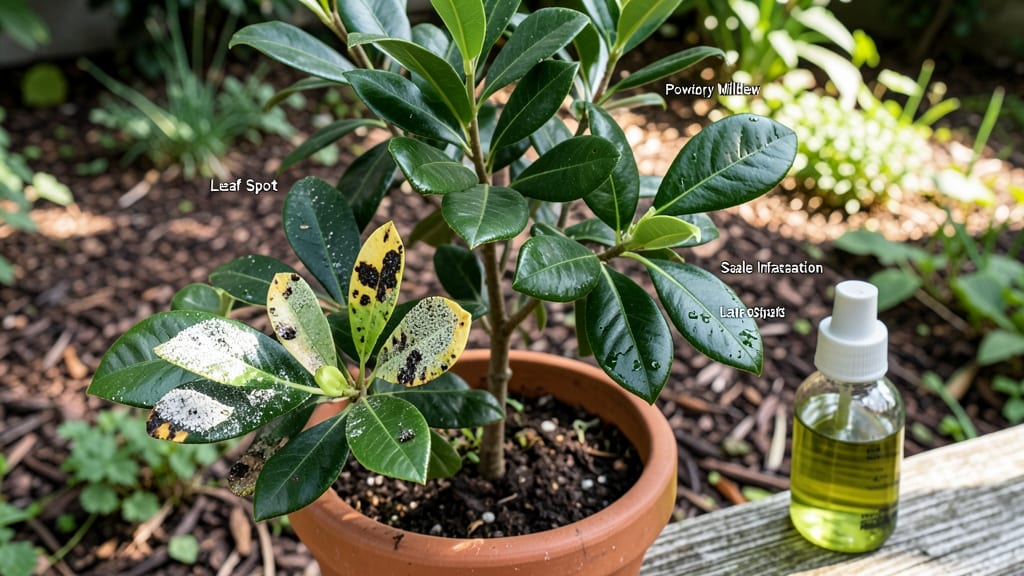
Bay tree diseases can turn a once-vibrant plant into a struggling one overnight, with fungal blights like powdery mildew, bacterial leaf spot, and root rot appearing seemingly out of nowhere. The most common culprits often strike when humidity spikes or water pools around the roots, creating the perfect conditions for spores to take hold. I’ve battled these myself, and the key is catching them early before they spread to every leaf.
Powdery mildew shows up as a white, flour-like dust on leaves, while bacterial leaf spot creates dark, water-soaked patches that eventually turn yellow. Root rot, on the other hand, sneaks in silently, causing yellowing leaves and a foul smell from the soil.
The good news? Organic solutions like neem oil, copper fungicide, or even a baking soda spray can turn things around if you act fast—no harsh chemicals needed.
With the right prevention—like improving airflow, watering at the base, and avoiding overhead sprinklers—you’ll keep your bay tree looking lush and disease-free for years.
The first sign of trouble is your cue to intervene before the fungus gets a foothold, and I’ll walk you through exactly how to do that naturally.
Whether you’re dealing with a young sapling or a mature tree, these methods work for all sizes. The goal is to restore your bay tree’s health without sacrificing its natural beauty or the safety of your garden ecosystem. Let’s get it back to thriving!
Root Causes of Bay Tree Struggles
Bay trees—those sturdy, aromatic evergreens—can fall victim to a variety of diseases, often due to underlying environmental or biological stressors. Understanding why these issues arise is the first step to prevention and treatment. Below, we break down the key culprits behind bay tree diseases, from fungal infections to environmental mismanagement.
Fungi are the most common culprits behind bay tree diseases, thriving in moist, shaded conditions. These microscopic invaders exploit weak spots in the tree’s defenses, leading to blights, leaf spots, and root rot.
🍄 Overly Wet Soil and Poor Drainage
Bay trees despise soggy roots. When soil remains waterlogged—whether from overwatering, heavy clay, or poor drainage—fungi like Phytophthora and Pythium multiply rapidly. These pathogens block water and nutrient uptake, causing:
- Root rot: Roots turn brown, mushy, and decay, while leaves yellow and wilt.
- Cankers: Sunken, discolored lesions form on stems, often oozing sap.
- Leaf blight: Dark, greasy spots appear on foliage, eventually killing leaves.
Why it happens: Fungal spores in the soil germinate when roots are constantly submerged, creating the perfect breeding ground. Bay trees need well-draining soil with a pH of 6.0–7.5—if drainage is poor, roots suffocate, inviting fungal attacks.
🌧️ Prolonged Leaf Wetness
Bay trees with dense, waxy leaves can trap moisture, especially in humid climates or during rainy seasons. Fungi like Septoria or Cercospora latch onto this dampness, causing:
- Leaf spots: Circular, brown patches with yellow halos.
- Defoliation: Leaves drop prematurely, weakening the tree.
Why it happens: Fungal spores splash onto leaves from soil or splashing rain, then germinate in the film of water. Bay trees in containers or shaded areas are especially vulnerable because airflow is restricted, slowing evaporation.
Bay trees under stress are easier targets for diseases. When environmental conditions stray from their ideal range, the tree’s immune system falters, making it susceptible to infections.
☀️ Extreme Heat or Cold Shock
Bay trees prefer moderate climates (USDA Zones 7–10). Sudden temperature swings—like late frosts or scorching summer heat—damage cells, creating entry points for fungi.
- Heat stress: Leaves scorch (brown edges), and anthracnose fungi exploit these wounds.
- Cold damage: Frost cracks bark, allowing Botryosphaeria (a canker-causing fungus) to invade.
Why it happens: Stress hormones like ethylene spike, suppressing the tree’s natural antifungal compounds. Mulch heavily in winter and provide afternoon shade in summer to mitigate damage.
🍃 Nutrient Deficiencies or Overfeeding
Bay trees need balanced nutrition. Too little (or too much) of key nutrients like nitrogen, phosphorus, or magnesium disrupts cellular function, leaving them prone to infections.
- Nitrogen deficiency: Pale, yellowing leaves signal weak growth, making the tree more susceptible to rust fungi.
- Magnesium deficiency: Interveinal chlorosis (yellowing between leaf veins) weakens cell walls, inviting powdery mildew.
- Over-fertilization (especially salt buildup): Burns roots, creating stress cracks where Phytophthora thrives.
Why it happens: Poor nutrient balance disrupts the tree’s cuticle layer (the waxy skin on leaves), making it easier for spores to penetrate. Test soil annually and fertilize with slow-release, organic options (like compost or fish emulsion) to avoid imbalances.
While not diseases themselves, pests like aphids, scale insects, and spider mites indirectly cause bay tree problems by damaging tissue and spreading fungal spores.
🐜 Sap-Sucking Insects Spread Fungi
Aphids and scale insects excrete honeydew, a sticky residue that fosters sooty mold—a black fungal growth. Meanwhile, their feeding wounds provide direct access for pathogens.
- Sooty mold: Black, velvety patches on leaves reduce photosynthesis.
- Secondary infections: Wounds from pests allow Botrytis (gray mold) to infect flowers or new growth.
Why it happens: Honeydew is a fungal buffet—spores like Capnodium (sooty mold) thrive in this sugary environment. Prune heavily infested branches and apply neem oil to disrupt the cycle.
🕷️ Root-Feeding Grubs Compromise Roots
Larvae of beetles (like Japanese beetles) or fungus gnats chew on roots, creating wounds where Armillaria (a deadly root rot fungus) can establish.
Why it happens: Damaged roots lose their ability to absorb water and nutrients, stressing the tree. Use beneficial nematodes or diatomaceous earth to control grubs before they cause irreversible harm.
Key Takeaway: Most bay tree diseases stem from a combination of fungal opportunism and environmental mismanagement. By addressing drainage, nutrition, and pest control proactively, you can starve out pathogens before they take hold.
Quick Fixes for Bay Tree Troubles
Now that you’ve identified the issue plaguing your bay tree, it’s time to roll up your sleeves and get it back to thriving! Below are targeted, natural solutions for the most common fungal blights and diseases, paired with prevention tips to keep your tree healthy long-term.
Think of this as your bay tree first-aid kit—simple, effective, and free of harsh chemicals.
If your bay tree is battling root rot, powdery mildew, or leaf spot, act fast with these steps:
🔥 Step 1: Prune the Problem Areas
- 👨🍳 Cut out infected leaves, stems, or branches using sterilized pruning shears (wipe with rubbing alcohol between cuts).
- ⏰ When to do it: Early morning when the plant is hydrated but not sweating.
- ✨ Pro Tip: Remove at least 2 inches below the visible damage to ensure the fungus doesn’t linger.
🌡️ Step 2: Improve Airflow & Drainage Fungi love stagnant, damp conditions.
Fix this by: - 📊 Repotting (if needed): Use a well-draining potting mix (add perlite or sand for aeration). - 🌿 Space plants apart—bay trees need 6+ inches of clearance between branches. - 💡 Pro Tip: Elevate pots on feet or saucers to prevent water pooling at the base.
🍳 Step 3: Apply a Natural Fungicide
Skip the chemicals! Try these DIY sprays (test on a small area first):
| Solution | How to Use | Frequency |
|---|---|---|
| Neem Oil Mix | 1 tsp neem oil + 1 tsp mild soap + 1 quart water. Spray undersides of leaves. | Every 7–10 days until cured. |
| Baking Soda Spray | 1 tbsp baking soda + 1 quart water + a few drops of dish soap. | Weekly (for mildew). |
| Hydrogen Peroxide | 1 part 3% H₂O₂ + 4 parts water. Drench soil and spray leaves. | Every 2 weeks. |
🔪 Step 4: Adjust Watering Habits
- 💧 Water deeply but infrequently—let the top 1–2 inches of soil dry before watering again.
- 🚫 Avoid overhead watering (use a drip irrigation system or water at the base).
- ✨ Pro Tip: If root rot is severe, trim affected roots (healthy roots are firm and white; rotten ones are mushy and brown).
If aphids, spider mites, or scale insects are weakening your bay tree (and inviting fungal hitchhikers), tackle them with:
🔥 Step 1: Blast Off Pests with Pressure
- 👨🍳 Spray leaves with water (a hose on gentle setting) to dislodge pests.
- 🌡️ Follow up with insecticidal soap (1 tbsp castile soap + 1 quart water).
🍳 Step 2: Introduce Beneficial Predators
- 🐞 Ladybugs, lacewings, or predatory mites eat aphids and mites naturally. Buy them online or attract them with neem oil sprays.
- 💡 Pro Tip: Plant marigolds or dill nearby to lure pest-eating insects.
🌿 Step 3: Quarantine & Monitor
- 🚫 Isolate infected plants until pests are gone to prevent spread.
- 🔍 Check undersides of leaves daily for new eggs or webbing.
An ounce of prevention is worth a pound of cure! Follow these long-term strategies to protect your tree:
💡 Year-Round Care Checklist
- 🌡️ Soil pH: Bay trees prefer slightly acidic soil (6.0–7.0).
Test with a kit and amend if needed. - 🍃 Mulch properly: Use 2–3 inches of organic mulch (like bark or straw) to retain moisture without suffocating roots. - 🌿 Rotate pruning tools: Clean blades with rubbing alcohol after each use to prevent fungal transfer. - 🍎 Feed smart: Use a balanced, organic fertilizer (like fish emulsion) once in spring—over-fertilizing stresses plants and invites pests.
🎯 Seasonal Maintenance
| Season | Task |
|---|---|
| Spring | Prune dead/diseased branches, apply neem oil preventatively. |
| Summer | Mulch again and monitor for pests weekly. |
| Fall | Reduce watering as temps drop; remove fallen leaves (fungal hotspots). |
| Winter | Check for hidden pests (they love dormant trees!). |
Final Thought: Most bay tree diseases are manageable with early action—and many can be prevented entirely with good airflow, proper watering, and a little TLC. Your tree will be back to its lush, fragrant self in no time! 🌿✨
Frequently asked questions
What are the first signs my bay tree has powdery mildew?
Look for a white, powdery coating on the upper surfaces of leaves, especially on younger growth. The mildew often appears in patches first before spreading. Leaves may also start curling or yellowing as the infection progresses. Check undersides too—spores love damp, hidden spots!
Can I save my bay tree if the roots smell rotten?
Yes, but act fast! Healthy roots should smell earthy and look firm. If they're mushy, dark brown, and emit a foul odor, you've got root rot. Trim away all diseased roots with sterilized shears, repot in fresh, well-draining mix, and reduce watering immediately. Add perlite or sand to improve aeration.
Why does my bay tree keep getting leaf spots even after treatment?
Persistent leaf spots often mean poor airflow or overhead watering keeps re-infecting your tree. Prune to improve circulation, water at the base only, and space plants 6+ inches apart. Also check for hidden pests—aphids and mites spread fungal spores. A neem oil spray every 2 weeks can break the cycle.
Is it safe to use copper fungicide on edible bay leaves?
Yes, but with caution! Copper is organic and OMRI-listed, meaning it's safe for edible plants when used correctly. Always follow label instructions—typically 1 application every 2-3 weeks during active growth. Harvest leaves 24 hours after spraying to avoid residue. For extra safety, use a baking soda spray instead on trees you cook with.
How can I tell if my bay tree's yellow leaves are from disease or nutrient deficiency?
Disease-related yellowing usually has distinct patterns: fungal spots, powdery coatings, or wilting. Nutrient issues show as uniform yellowing—check the pattern: new leaves yellowing? Likely nitrogen deficiency. Old leaves yellowing? Could be potassium or magnesium. Test your soil and compare with healthy bay tree symptoms.