
Diseases
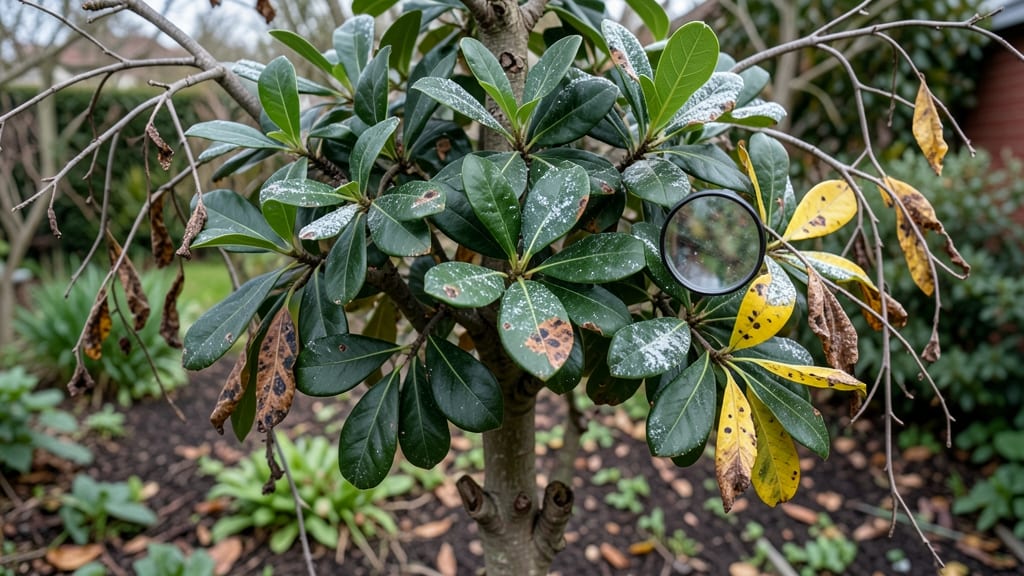
Your bay laurel tree’s glossy leaves are its pride—until bay laurel tree diseases like dark spots or wilting reveal a fungal blight. 🌿 I’ve battled root rot and leaf spot on mine, and the difference between saving a tree and losing it often comes down to spotting symptoms early.
What starts as a few brown spots can spread like wildfire if you ignore it, but with the right moves, you can stop it cold.
The most common culprits are overwatering (hello, root rot) and poor airflow (leaf spot’s favorite hiding spot). I learned the hard way that bay laurels hate soggy feet—drainage fixes half the problems right there. The other half?
Pruning for airflow and cleaning up fallen leaves, which are basically fungal buffets for pathogens. Think of it like giving your tree a spa day: fresh air, dry roots, and no junk pile at its feet.
By the time you see blackened stems or yellowing leaves, it’s already a race against time—but you can still win. Copper fungicides work fast for leaf spot, while root rot demands better drainage and possibly even soil amendments.
The key is acting before the tree’s defenses collapse. With these steps, you’ll have your bay laurel thriving again in weeks, not months.
No two trees are the same, so watch for clues like wilting despite good water or sticky residue (scale insects love bay laurels). When in doubt, snap a photo and compare it to symptom guides—sometimes the fix is simpler than you think.
Let’s get your tree back to its healthy, aromatic best.
Root Causes of Bay Laurel Troubles
Bay laurel trees (Laurus nobilis) are hardy but not invincible—when diseases strike, they usually do so because of a mix of environmental stress, poor care, or microbial invaders.
Understanding why these issues arise is the first step to stopping them before they spread. Below, we break down the most common culprits and their scientific triggers.
Fungi are the #1 enemy of bay laurels, thriving in damp, stagnant conditions. Here’s how they exploit your tree:
- Moisture Overload 💦 - Fungi like Phytophthora and Botrytis love prolonged leaf wetness (e.g., from overhead watering or poor drainage).
When humidity stays above 75% for 12+ hours, spores germinate and infect wounds or stomata (leaf pores). - Actionable fix: Water at the base (not leaves) and ensure soil drains within 6–8 hours after watering.
- Weakened Defenses 🛡️ - Stressed trees (from drought, nutrient deficiency, or physical damage) produce fewer phenolic compounds—natural fungicides.
Without these, fungi like Cercospora (causing leaf spot) spread unchecked. - Pro tip: 💡 Mulch with 2–3 inches of organic matter (wood chips, compost) to stabilize soil moisture and boost root health.
- Warm, Stagnant Air 🌡️
- Temperatures between 65–85°F (18–30°C) with high humidity create the perfect fungal buffet. Septoria (another leaf-spot culprit) thrives in these conditions, turning leaves into a buffet of spores.
- Solution: Improve air circulation with strategic pruning (remove dense, rubbing branches) and avoid planting laurels in shady, low-lying spots.
Bay laurels despise compacted, waterlogged, or nutrient-poor soil—three conditions that turn roots into fungal magnets.
- Clay or Sandy Soil Traps Water 💧 - Clay holds excess moisture, while sandy soil drains too fast, causing osmotic stress (roots can’t absorb water efficiently).
Both scenarios weaken roots, making them vulnerable to Armillaria (root rot) or Fusarium. - Fix: Amend soil with 1 part compost to 2 parts native soil and test pH (ideal: 6.0–7.0). If drainage is terrible, consider raising beds or installing French drains.
- Over-Fertilization Burns Roots 🔥 - Excess nitrogen (from synthetic fertilizers) promotes lush, weak growth—more surface area for fungi to latch onto.
Plus, salt buildup from fertilizers disrupts microbial balance in the rhizosphere (the soil around roots). - Better approach: Use slow-release organic fertilizers (like fish emulsion or worm castings) in early spring and avoid fall applications.
- Lack of Beneficial Microbes 🦠 - Healthy soil teems with mycorrhizal fungi (which help roots absorb water/nutrients) and bacteria that outcompete pathogens.
If your soil is sterile (e.g., from pesticides or tilling), harmful fungi move in. - Boost biodiversity: Apply mycorrhizal inoculants or compost tea in spring to repopulate beneficial microbes.
Diseases don’t just appear—they wait for an invitation. Common triggers include:
- Physical Damage ⚔️ - Pruning cuts, hail, or animal bites create entry points for Nectria (a canker-causing fungus).
Even leaf scorch (from salt spray or drought) weakens the cuticle, letting pathogens in. - Prevention: Use sterilized pruners (dip in 70% alcohol) and seal wounds with pruning sealant (for cuts > ½ inch).
- Improper Watering 💦➡️🔥 - Drought stress → Leaves curl, stomata close, and phylloplane fungi (like Alternaria) take over. - Overwatering → Roots suffocate, leading to anaerobic conditions where Pythium (another rot fungus) thrives. - Golden rule: Water deeply 1–2 times per week (not daily light sprinkles).
Let the top 1–2 inches of soil dry between waterings.
- Pests Pave the Way 🐜
- Scale insects, spider mites, or aphids feed on sap, weakening the tree and excreting honeydew—a sticky medium where sooty mold fungi (Capnodium) grow.
- Attack plan: Blast pests off with water (100 psi) or use neem oil (apply at dusk to avoid harming pollinators).
Even the hardiest bay laurels falter when basic care is ignored. Red flags include:
- Planting in the Wrong Spot 🌳❌
- Laurels hate waterlogged areas (e.g., near downspouts) or competition (e.g., planted too close to shrubs). Poor airflow = fungal paradise.
- Do this instead: Space laurels 8–10 feet apart and avoid low-lying gardens where cold air pools.
- Ignoring Pruning Hygiene ✂️🚫
- Leaving dead wood or crossing branches creates hiding spots for Valsa (a canker fungus). Infected branches should be removed and destroyed (not composted).
- Sterilize tools: Wipe blades with rubbing alcohol between cuts to prevent cross-contamination.
- Skipping Seasonal Checks 📅 - Many diseases (like bay laurel blight) start as tiny yellow spots in spring.
By the time leaves drop, the fungus has spread. - Monthly habit: Inspect undersides of leaves and stem junctions for discoloration, lesions, or fungal growth. Act fast—catch diseases early with copper fungicides (e.g., Bordeaux mixture).
Where you live directly impacts disease risk. Key factors:
| Factor | Risk Level | Why It Matters | Solution |
|---|---|---|---|
| Humid climates | ⚠️⚠️⚠️ High | Fungi like Phytophthora thrive in tropical/subtropical zones (e.g., Florida, Southeast U.S.). | Plant on mounds or use resistant cultivars (e.g., Laurus nobilis ‘Angustifolia’). |
| Coastal areas | ⚠️⚠️ Medium | Salt spray burns foliage, weakening defenses. | Mulch heavily and flush soil with fresh water post-storms. |
| Urban pollution | ⚠️ Medium | Ozone/sulfur dioxide stress trees, making them susceptible to secondary infections. | Avoid planting near high-traffic roads or industrial zones. |
| Dry climates | ⚠️ Low | Less fungal pressure, but drought stress can invite pests. | Deep watering and drip irrigation to prevent moisture fluctuations. |
Key Takeaway: Most bay laurel diseases are opportunistic—they exploit weaknesses caused by poor growing conditions. By addressing water, soil, airflow, and stress factors, you can starve out fungi before they take hold. 🚀
Quick Fixes for Sick Bay Laurels
Reviving your bay laurel tree starts with identifying the problem—but once you know what’s ailing it, action is key. Below are practical, step-by-step solutions tailored to the most common diseases, plus prevention tips to keep your tree thriving.
Think of this as your emergency first-aid kit for fungal blights, bacterial infections, and environmental stressors.
Fungal diseases like powdery mildew, leaf spot, or root rot thrive in damp, shaded conditions. Here’s how to stop the spread and restore health:
🔥 Remove Infected Foliage Immediately
- How: Snip off yellowing, spotted, or powdery leaves with sterilized pruning shears (wipe with rubbing alcohol between cuts).
- Why: Fungi spread via spores—removing infected parts prevents contamination.
- Pro Tip: 💡 Bag and dispose of clippings in the trash (not compost) to avoid reinfection.
🍳 Apply Fungicidal Sprays (Organic or Chemical)
| Disease | Recommended Treatment | Frequency |
|---|---|---|
| Powdery Mildew | Neem oil spray or baking soda mix (1 tsp baking soda + 1 quart water + drop of soap) | Every 7–10 days until cleared |
| Leaf Spot | Copper fungicide (e.g., Bordeaux mixture) or hydrogen peroxide spray (3% solution) | First signs, then monthly |
| Root Rot | Fungicide soil drench (e.g., Mycorrhizal fungi or Trichoderma) + improve drainage | One-time deep soak, then monitor |
- Pro Tip: 🌡️ Best time to spray: Early morning or late evening to reduce leaf burn from sunlight.
👨🍳 Boost Airflow & Light
- Thin out dense branches to improve circulation (aim for 20–30% less foliage).
- Move the tree (if possible) to a sunnier spot with at least 6 hours of direct light daily.
- Prevention: 🎯 Space trees 3–5 feet apart to avoid humidity buildup.
Bacterial diseases (like canker or bacterial leaf blight) cause oozing sap, blackened stems, or sudden wilting. Act fast—bacteria spread faster than fungi:
⏰ Prune & Sterilize Aggressively
- How: Cut out infected stems 6+ inches below the lesion (bacteria lurk underground).
- Sterilize tools between cuts with bleach (1 part bleach : 10 parts water) or 70% isopropyl alcohol.
- Pro Tip: ✨ Do NOT compost infected wood—burn or trash it to prevent reinfection.
🔪 Use Copper-Based Bactericides
- Best options:
- Copper hydroxide (e.g., Kocide 3336)
- Copper soap (e.g., Daconil Fruit Tree Spray)
- How to apply: Spray every 10–14 days until symptoms vanish.
- Prevention: 💡 Avoid overhead watering—use drip irrigation to keep leaves dry.
🌱 Strengthen the Tree’s Defenses
- Fertilize with compost or a balanced 10-10-10 fertilizer to boost immunity.
- Water deeply but infrequently (bay laurels hate soggy roots).
Even without pathogens, root rot from overwatering or compacted soil can kill bay laurels. Here’s how to revive and prevent it:
🥘 Fix Drainage Problems
- Test soil moisture: Stick your finger 4 inches deep—if it’s damp, wait to water.
- Amend soil: Mix in perlite, sand, or coconut coir to improve drainage.
- Raise the root zone: If planted in a low spot, add a 2–3 inch layer of gravel beneath the tree.
🔪 Adjust Watering Habits
- Water deeply but less often: 1–2 inches per week (check with a rain gauge).
- Use a moisture meter to avoid guesswork.
- Prevention: 🎯 Plant in well-draining soil (bay laurels hate clay-heavy ground).
🌿 Mulch Correctly
- Apply 2–3 inches of mulch (wood chips or pine straw) away from the trunk (keep 3–4 inches clear).
- Replenish annually to maintain moisture retention.
Stop diseases before they start with these easy habits:
✅ Inspect weekly for early signs (spots, wilting, discoloration). ✅ Clean up fallen leaves/debris (fungi love hiding there). ✅ Avoid wounding the tree (use sharp, sterilized tools when pruning). ✅ Rotate fungicides if you spray often (prevents resistance). ✅ Plant companion plants like rosemary or lavender (they repel pests naturally).
Final Thought: Most bay laurel diseases are preventable with proactive care. Once you spot a problem, act fast—but don’t panic! With the right treatment, your tree can bounce back stronger than ever. 🌿💪
Frequently asked questions
What are the first signs of bay laurel tree diseases?
Watch for tiny yellow spots on leaves (early leaf spot), white powdery patches (powdery mildew), or blackened stems with oozing sap (bacterial canker). Dark, mushy roots signal root rot. Check undersides of leaves and stem junctions monthly—early action prevents spread.
Can I save my bay laurel if the roots are rotting?
Yes, but act fast! Prune away blackened roots, improve drainage with perlite or gravel, and water only when the top 2 inches of soil are dry. Apply a mycorrhizal fungicide drench to help roots recover. Severe cases may need transplanting to raised beds.
How do I tell if my bay laurel has fungal or bacterial infection?
Fungal issues show as powdery growth, spots with fuzzy edges, or leaf discoloration (like leaf spot). Bacterial infections cause water-soaked lesions, oozing sap, or sudden wilting. Bacteria spread faster—prune infected areas immediately and use copper-based sprays for bacterial problems.
Is it safe to use chemical fungicides on edible bay laurel leaves?
Use organic options first like neem oil or copper fungicides (follow label instructions). Avoid synthetic chemicals 2 weeks before harvesting leaves for culinary use. Always rinse leaves thoroughly before cooking if treated with fungicides.
Why does my bay laurel keep getting powdery mildew even after treatment?
This usually means poor airflow or overhead watering. Thin out dense branches, move the tree to sunnier spot, and water at the base only. Rotate fungicides (don't use the same one repeatedly) to prevent resistance.