
Size
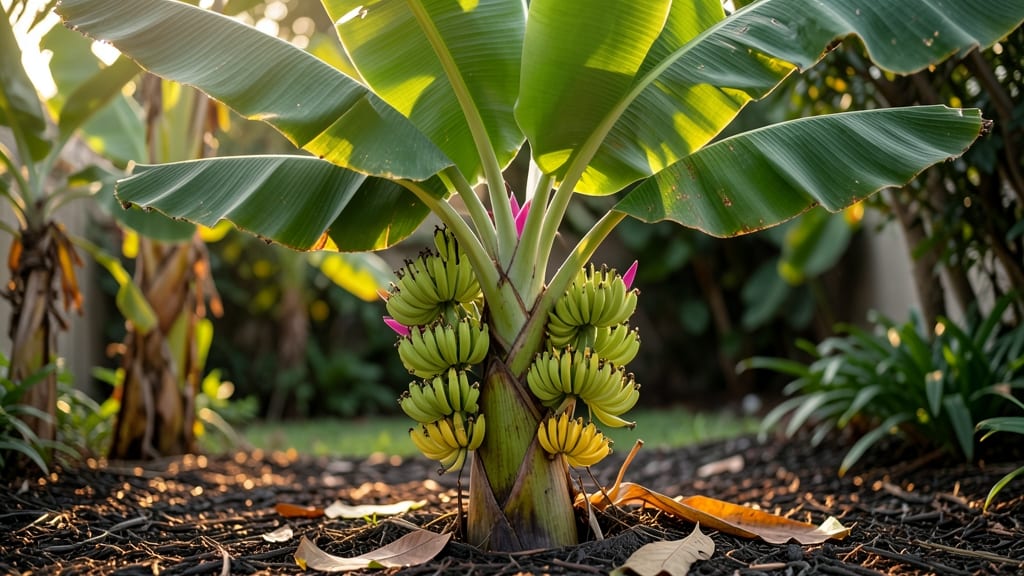
A banana tree’s size can range from a compact 8-foot dwarf to a towering 30-foot giant, depending on the variety and growing conditions.
If you’ve ever dreamed of harvesting your own bananas but wondered whether a banana tree will tower over your backyard—or fit snugly in a pot—you’re not alone.
The size of a banana tree can vary dramatically depending on its variety, climate, and growing conditions, making it critical to choose the right type for your space.
For example, the Dwarf Cavendish stays manageable at 8–12 feet, perfect for containers or small gardens, while the Gros Michel can stretch to 25 feet or more in tropical climates. Even indoor growers can enjoy smaller varieties, though they’ll never reach their outdoor counterparts’ full height.
In this guide, you’ll learn how to pick the right size for your space, how climate affects growth, and 5 simple tricks to control height—whether you’re planting outdoors or keeping your banana tree indoors.


Banana tree height by variety: small vs. giant species explained
Choosing the right banana tree variety is the first step to ensuring your space can accommodate its mature size. Some varieties stay compact enough for containers or small gardens, while others grow tall enough to rival a two-story house.
Understanding these differences helps you plan your garden layout or container setup effectively.
Banana trees are often mislabeled as "trees" since they’re actually giant herbaceous plants with pseudo-stems made of tightly packed leaves. Their height can vary dramatically—from as short as 3 feet in dwarf varieties to over 30 feet in tropical giants.
Let’s explore the key categories to help you pick the perfect fit for your space.
If you’re working with limited space, dwarf varieties like the Dwarf Cavendish are ideal. They top out at just 3–6 feet and thrive in 15-gallon containers, making them perfect for patios or balconies.
Their smaller size also means they produce miniature bananas, which are delicious and fun to harvest.
For medium-sized gardens, varieties like the Lady Finger or Red Dacca offer a balance. These grow to 6–15 feet and provide a stunning tropical look without overwhelming your yard. They’re also more cold-hardy than giant varieties, making them suitable for USDA zones 9–11 with proper winter protection.
Giant varieties like the Gros Michel or Bluggoe are best suited for large landscapes or tropical climates. These trees can reach 20–30 feet tall, requiring ample space and ideal growing conditions. In cooler climates, they’re often grown as container plants and moved indoors during winter.
Another factor to consider is the growth rate. Dwarf varieties mature faster, often producing fruit within 12–18 months, while giant varieties can take 2–3 years to bear fruit. This means quicker rewards for smaller spaces but longer waits for larger trees.
When selecting a variety, also think about fruit production. Dwarf varieties yield smaller bunches, while larger trees produce heavy, abundant harvests. If you’re growing for personal use, a dwarf variety might be sufficient, but for sharing or selling, a medium or large tree could be more practical.
Lastly, consider your climate zone. Tropical varieties like the Gros Michel thrive in USDA zones 10–12 and require year-round warmth. In cooler climates, opt for hardier varieties like Bluggoe or Red Dacca, which can tolerate brief chilly spells with protection.
No matter which variety you choose, understanding its mature size and growth habits will help you create a thriving banana garden that fits your space perfectly. With the right variety, you’ll enjoy fresh bananas—and stunning foliage—without the worry of an oversized plant taking over your yard.
How climate and growing conditions affect banana tree size
Banana trees thrive in tropical and subtropical climates, where warm temperatures and high humidity fuel their rapid growth. In these ideal conditions, a standard banana tree can reach 20–30 feet tall within 2–3 years, while dwarf varieties max out around 8–12 feet.
However, cooler temperatures, lower humidity, or limited sunlight can stunt growth significantly, sometimes by 50% or more. Understanding these factors helps you predict—and control—how tall your banana tree will grow.
One of the biggest influences on size is temperature. Banana trees need consistent warmth, ideally between 75–85°F (24–29°C). In USDA Zones 10–12, they grow vigorously year-round, while in cooler zones (like Zone 9 or below), they may only reach half their potential height without winter protection.
Even a single frost can kill the plant, forcing regrowth from the base the following season.
Here’s how key growing conditions impact your banana tree’s size:
🌡️ Climate Factors That Shrink or Stretch Your Banana Tree
Ideal: 75–85°F (24–29°C)
Effect: Below 60°F (15°C) stunts growth; frost kills.
Ideal: 70–90%
Effect: Low humidity (<50%) causes leaf scorch and slower growth.
Ideal: 6+ hours daily
Effect: Partial shade reduces height by 30–50%.
Ideal: 15+ gallons for dwarf varieties
Effect: Root-bound trees grow 2–3x slower.
Sunlight is another critical factor. Banana trees need full sun (6+ hours daily) to reach their full height. In partial shade, growth slows dramatically—some varieties may only reach half their mature height.
For example, a Dwarf Cavendish in full sun might hit 8 feet, but in shade, it could stay under 5 feet. If you’re growing bananas in containers, sunlight becomes even more critical, as root space is already limited.
Soil type also plays a role, though it’s less dramatic than climate. Banana trees prefer well-draining, slightly acidic soil (pH 5.5–7.0). Heavy clay soils can restrict root growth, while sandy soils may not retain enough moisture.
In containers, the soil mix matters even more—use a blend of peat moss, perlite, and compost to mimic tropical conditions. Poor soil can reduce height by up to 20%, especially in the first year of growth.
Finally, container growing inherently limits size. Even dwarf varieties planted in small pots (under 10 gallons) will struggle to reach their full height. For example, a Red Dwarf banana tree might only grow to 4–6 feet in a 5-gallon pot, compared to 8–10 feet in the ground.
To maximize size in containers, choose large pots (15+ gallons) and upgrade them as the tree grows. Regular root pruning can also encourage bushier growth, though it won’t increase height significantly.
By tweaking these conditions—whether it’s moving your pot to a sunnier spot, adding mulch to retain moisture, or choosing a cooler-climate variety like Lady Finger—you can fine-tune your banana tree’s size to fit your space.
The key is consistency: bananas respond best to stable conditions, so avoid drastic changes in temperature or watering.