
Trees
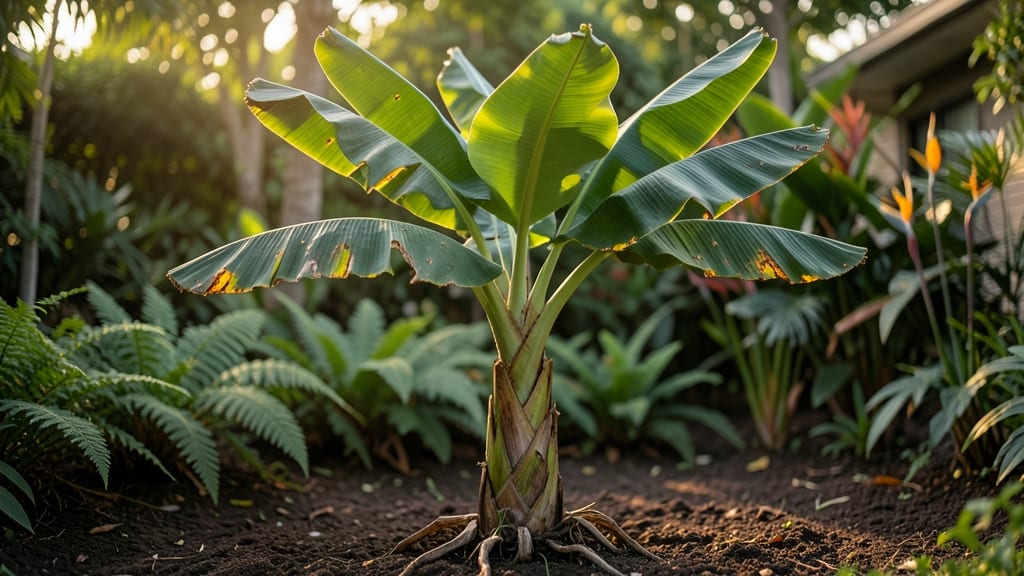
Banana trees thrive in warm climates with consistent temperatures between 70–85°F (21–29°C) and high humidity, avoiding frost or extreme cold below 50°F (10°C). They require full sun exposure and well-draining soil to prevent root rot, making tropical and subtropical zones ideal for cultivation.
Banana trees are tropical plants at heart, so they demand warmth and moisture to flourish. 🌿 The ideal 70–85°F (21–29°C) range keeps their metabolic processes running smoothly, while humidity above 60% prevents leaf browning—a common issue in dry climates.
Even a single frost can kill a banana tree, which is why growers in cooler regions often use containers for mobility or protective coverings during winter.
What's fascinating is how these trees adapt: some varieties, like the cold-hardy 'Red Dacca,' can tolerate brief dips to 28°F (-2°C), but most commercial types won't survive below 50°F (10°C) for long.
Beyond temperature, sunlight plays a crucial role. Banana trees need at least 6–8 hours of direct sunlight daily to produce fruit, but too much intense heat without shade can scorch their broad leaves. That's why many growers in hot climates use shade cloth during peak afternoon hours.
The soil also matters—waterlogged conditions lead to root rot, so well-draining, slightly acidic soil (pH 5.5–7.0) is essential. These factors combined explain why banana trees dominate tropical regions but struggle in temperate climates without careful management.
💡 In This Article
- Optimal Temperature and Humidity for Banana Tree Growth
- Best Regions for Growing Banana Trees Outdoors
Optimal temperature and humidity for banana tree growth
Banana trees rely on a delicate balance of warmth and moisture to drive their growth cycles. Their optimal temperature range of 70–85°F (21–29°C) isn't just arbitrary—it aligns with the tropical conditions where they evolved. At these temperatures, their metabolic processes, including photosynthesis and nutrient absorption, operate at peak efficiency.
The broad leaves, which can reach up to 3 feet (1 meter) long, maximize sunlight capture, but temperatures above 90°F (32°C) can cause heat stress, leading to leaf curling and reduced fruit production. 🔥
Humidity plays an equally critical role, with ideal levels above 60%. Banana trees absorb moisture primarily through their leaves, and low humidity causes them to lose water rapidly through transpiration. This leads to brown, crispy leaf edges—a condition called "leaf scorch"—which weakens the plant.
In contrast, high humidity (70–80%) mimics their natural habitat and supports healthy flower development. The pseudostem (the tree-like structure) contains vascular bundles that transport water and nutrients, but these systems struggle when humidity drops below 50%, often resulting in stunted growth or fruit drop.
Cold temperatures pose the biggest threat to banana trees, particularly frost. When temperatures fall below 50°F (10°C), cellular damage begins, and frost at 32°F (0°C) or lower can kill a tree within hours. The damage occurs because ice crystals form in the plant's cells, rupturing their membranes.
This is why banana trees in cooler climates are often grown in containers—allowing them to be moved indoors during winter. Even brief exposure to 40°F (4°C) can stunt growth and reduce fruit quality, as the plant diverts energy toward survival rather than reproduction. 💫
Water stress from drought or excessive heat also affects flowering. Banana trees typically flower when they reach 3–4 feet (1–1.2 meters) tall, but drought conditions can delay or prevent flowering entirely.
The inflorescence (flower cluster) is highly sensitive to moisture levels, and even temporary water shortages can cause the flower to abort. This is why consistent irrigation is crucial, especially during the dry season or in arid climates.
Overwatering, however, is just as harmful—it leads to waterlogged soil, which suffocates roots and promotes fungal diseases like Fusarium wilt, a deadly pathogen for banana trees.
One fascinating adaptation is how banana trees regulate their internal temperature. Their large leaves act as natural shade, reducing heat exposure to the pseudostem by up to 10°F (5.5°C) on sunny days. Additionally, the waxy coating on the leaves reflects sunlight, further protecting the plant.
However, this mechanism isn't foolproof—prolonged exposure to 95°F (35°C) or higher can still cause irreversible damage. That's why growers in hot climates often use shade cloth to maintain temperatures within the ideal range while still providing sufficient sunlight for photosynthesis. 🌿
For those growing banana trees in containers, temperature control becomes even more critical. Pots heat up faster than soil, so placing them on elevated surfaces or using heat-reflective materials can help.
In regions with mild winters, growers might wrap the pseudostem with burlap or use frost cloths to protect against sudden temperature drops. The key is mimicking the stable, warm conditions of their native tropical environment as closely as possible, whether outdoors or in a greenhouse. ✨