
Pruning
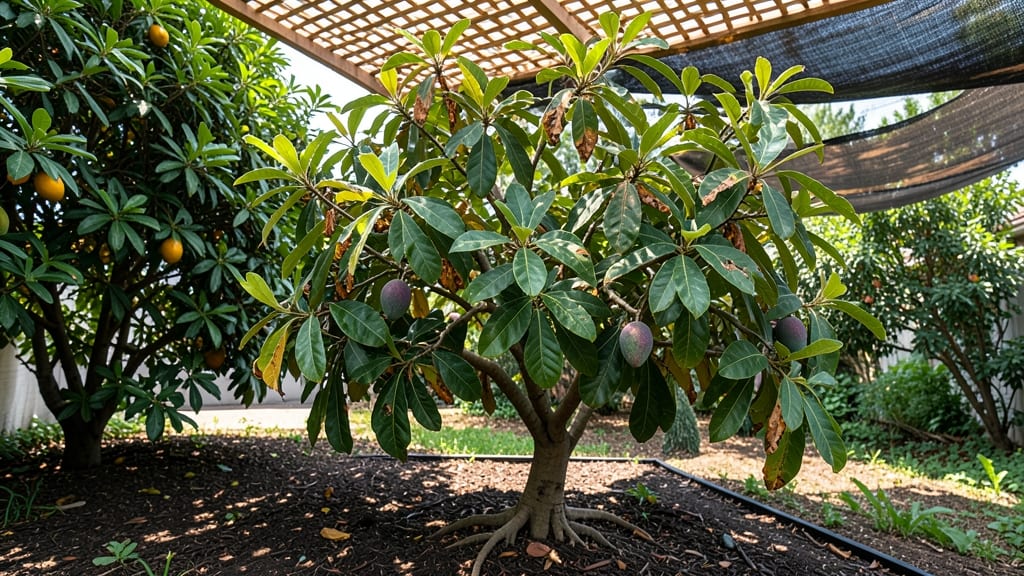
Your avocado tree’s scorched leaves and fruit are a cry for help—not a death sentence. 🌿 Sunburn happens when sudden exposure or too much afternoon sun turns vibrant green into crispy brown patches, but with the right moves, you can nurse it back to health fast.
The real culprit? Intense midday sun—especially after moving a potted tree or planting one too close to a sunny wall. Avocados prefer bright, indirect light, not the harsh glare that bleaches leaves and stunts fruit. Even outdoor trees can get sunburned if summer heat spikes unexpectedly.
Start with dappled shade (like a sheer curtain or lattice) for 2-3 weeks, then gradually increase sun exposure. Prune any severely damaged leaves—don’t panic, the tree will regrow—and water deeply (1-2 inches per week) to help stressed foliage recover.
Most sunburned areas won’t magically heal, but stopping further damage keeps your tree productive.
Prevention is easier: harden off young trees slowly, avoid south-facing walls, and mulch to keep roots cool. With these tweaks, your avocado will bounce back—and next season, it’ll handle the sun like a pro.
Root Causes of Leaf Scorching
When your avocado tree’s leaves develop brown, crispy patches or white, sun-bleached spots, it’s not just a cosmetic issue—it’s a sign of physiological stress. Understanding the underlying mechanisms helps you address the problem before it damages fruit quality or weakens the tree.
Here’s why it happens, broken down by the key culprits:
Avocado trees, especially tropical varieties like Hass or Fuerte, are sensitive to sudden temperature spikes. Their leaves contain high levels of chlorophyll and carotenoids, which can overheat when exposed to direct sunlight without gradual hardening. Here’s the science:
- Photosynthesis overload: When sunlight exceeds the tree’s ability to convert energy into sugars, excess light energy triggers the production of reactive oxygen species (ROS). These molecules damage cell membranes, causing sunburn—visible as brown, papery patches.
- Transpiration stress: Hot, dry air increases water loss through stomata (leaf pores). The tree prioritizes water retention over cooling, leading to leaf desiccation (drying out) in exposed areas.
- Variety matters: Mexican avocado cultivars (e.g., Lamb Hass) tolerate heat better than Guatemalan types (e.g., Reed), which are more prone to sunburn in full sun.
Actionable insight: If you’ve recently transplanted a tree or moved it to a sunnier spot, it needs 1–2 weeks of gradual exposure to prevent shock. Use shade cloth (30–50%) during peak afternoon sun (12 PM–4 PM) while acclimating.
Not all leaves are created equal—and some are biologically vulnerable to sunlight. Young, tender leaves and those on the south or west sides of the tree are prime targets for sunburn due to:
- Thin cuticles: Mature leaves have thicker waxy layers to reflect sunlight, but new growth lacks this protection. Their epidermal cells absorb too much UV radiation, leading to photobleaching (white, sun-bleached spots).
- Angle of incidence: Leaves perpendicular to the sun (common on vertical branches) receive unfiltered UV rays, while horizontal leaves benefit from natural diffusion.
- Fruit sunburn mimicry: Young avocado fruit also lacks protective pigments. If leaves nearby burn, the fruit beneath them is at risk of developing superficial scald (white, greasy patches).
Actionable insight: Prune to open the canopy for airflow and reduce leaf overlap. For young trees, use lightweight shade netting (like Agribon) over susceptible branches during summer.
Water isn’t just about hydration—it’s a cooling mechanism for plants. When avocado trees experience drought or poor root health, their ability to thermoregulate plummets, amplifying sunburn risk. The chain reaction:
- Closed stomata = trapped heat: Under drought, stomata close to conserve water, but this traps heat inside leaf tissues. Temperatures can rise 10–15°F above ambient air, accelerating cell damage.
- Nutrient imbalances: Water stress disrupts the uptake of magnesium and calcium, which are critical for chlorophyll stability and cell wall integrity. Deficiencies make leaves more susceptible to oxidative damage.
- Root competition: Shallow roots (common in container-grown trees) can’t access deep moisture, leaving the canopy vulnerable even in well-watered soil.
Actionable insight: Deep-water trees 2–3 times per week during heatwaves (1–1.5 inches per session). For containers, use self-watering systems or hydrogel crystals to maintain moisture. Mulch with straw or wood chips to retain soil moisture and reduce temperature fluctuations.
Sunburn isn’t always immediate—sometimes it’s the result of chronic neglect in how the tree’s structure is managed. Overly dense or unbalanced canopies create "hot spots" where:
- Leaf shading creates light gradients: Inner leaves receive low-light adaptation (fewer chlorophyll pigments), while outer leaves are sun-adapted. When pruned improperly, these mismatched leaves get "shocked" by sudden exposure.
- Branch angle matters: Horizontal branches absorb sunlight evenly, but vertical "bottlebrush" growth (common in Hass trees) leaves leaves exposed to direct, concentrated UV.
- Dead or dying wood: Pruning wounds that heal poorly (e.g., jagged cuts) create entry points for pathogens, weakening the tree’s ability to recover from sun stress.
Actionable insight: Prune to maintain an open vase shape with branches spaced 12–18 inches apart. Avoid heading cuts (trimming back to a bud)—instead, use thinning cuts to remove entire branches at the collar. Apply wound paint with copper to prevent infection.
Pro tip: 🌡️ Monitor leaf temperature with a surface thermometer—if it exceeds 95°F (35°C), take corrective action immediately. Healthy leaves should stay 10–15°F cooler than ambient air.
Revive Your Avocado Tree Now
Now that you understand why your avocado tree is suffering from sunburn, let’s roll up our sleeves and get to work! The good news? With a few targeted fixes and preventive measures, you can nurse your tree back to health and even prevent future damage.
Below are practical solutions tailored to the root causes of sunburn—whether it’s too much direct sunlight, improper watering, or lack of protection.
Sunburn often starts with dehydration, especially when leaves are exposed to harsh afternoon rays. Here’s how to bring them back to life:
💧 Step 1: Deep Watering to Replenish Moisture
Avocado trees love their roots moist but not soggy. If the soil is dry, water deeply—aim for 1–2 inches per week, depending on your climate.
Use a soaker hose or drip irrigation to deliver water slowly to the root zone, avoiding leaf wetting (which can encourage fungal issues). - Pro Tip: 💡 Check moisture by sticking your finger 2–3 inches into the soil. If it’s dry, it’s time to water.
🌞 Step 2: Provide Temporary Shade
If your tree is in a hot, exposed spot, create partial shade immediately: - Quick Fix: Use shade cloth (30–50%) draped over a frame near the tree.
Secure it loosely to allow airflow. - Permanent Fix: Plant fast-growing shade trees (like a young lemon tree or mulberry) on the sunniest side to break the intensity over time.
🍃 Step 3: Prune Damaged Leaves (But Not Too Much!)
Severely scorched leaves won’t recover, so trim them off with sterilized pruning shears (wipe with rubbing alcohol between cuts).
Focus on: - Yellow or crispy leaves (signs of irreversible damage). - Leaves with brown edges (early sunburn). - Avoid cutting more than 20% of the foliage at once—this stresses the tree further.
Sunburned avocados (those with white or brown patches) are often a sign of excessive exposure or uneven watering. Here’s how to salvage them:
🛡️ Step 1: Use Fruit Protection
- For Young Fruit: Wrap individual avocados in light-colored paper bags (like onion sacks) to diffuse sunlight.
Secure with twist ties, leaving room for growth. - For Mature Trees: Apply a reflective mulch (like white plastic sheeting) around the base to bounce back some light and keep roots cool.
🚰 Step 2: Adjust Watering for Fruit Health
Avocado trees need consistent moisture, especially during fruit development.
Try this schedule: | Season | Watering Frequency | Depth | |------------------|-----------------------|--------------------| | Spring/Summer | Every 2–3 days | 6–8 inches deep| | Fall/Winter | Every 5–7 days | 4–6 inches deep |
- Avoid wetting leaves—water at the base to prevent fungal infections that worsen sunburn.
🍃 Step 3: Mulch Like a Pro
A 3–4 inch layer of organic mulch (straw, wood chips, or shredded leaves) acts like a cooling blanket for roots and retains moisture. Just keep it 6 inches away from the trunk to prevent rot.
Once your tree is recovering, prevent future sunburn with these habits:
📍 Choose the Right Spot
- Ideal Location: Morning sun + afternoon shade (e.g., east-facing or under a partial shade structure).
- Avoid: South or west exposures in hot climates—these are sunburn magnets.
🌡️ Monitor Temperature Extremes
- Heatwaves? Mist leaves early in the morning to cool them down (avoid evening misting—it invites pests).
- Frost Risk? If you’re in a cooler zone, cover young trees with frost cloth in winter.
🌿 Fertilize for Resilience
A balanced fertilizer (like 6-6-6) in early spring helps trees build thicker, sun-resistant leaves. Avoid high-nitrogen fertilizers—they promote soft, sunburn-prone growth.
🌳 Plan for Growth
- Young Trees: Stake them if needed to prevent leaning into harsh sun.
- Mature Trees: Thin out dense foliage to improve airflow and reduce sun concentration on inner leaves.
Final Thought: 🌟 With these fixes, your avocado tree should bounce back in 4–6 weeks. Keep an eye on new growth—if it’s dark green and glossy, you’re on the right track! For severe cases, consider consulting a local arborist to assess root health and structural needs.
Frequently asked questions
Can sunburned avocado leaves recover on their own?
Most severely scorched leaves won’t recover—they’ll remain brown and crispy. However, the tree can grow new healthy foliage from healthy buds. Focus on removing damaged leaves and providing shade to protect emerging growth. With proper care, you’ll see fresh leaves in 4-6 weeks.
How do I tell if my avocado tree has sunburn vs. pest damage?
Sunburn shows as dry, papery brown patches or white bleached spots on leaves, often on sun-exposed sides. Pest damage usually has irregular holes, chewed edges, or sticky residue. Check the undersides of leaves—pests leave behind eggs, frass (insect droppings), or webs.
Will sunburned avocado fruit still ripen properly?
Fruit with sunburn (white/greasy patches) will still ripen, but the quality may suffer. The affected areas won’t soften normally and may develop off-flavors. For best results, harvest sunburned fruit slightly earlier and store it in a cool, dark place to monitor ripening closely.
Can I use household items like aluminum foil to protect my tree?
Aluminum foil can work in a pinch for small trees or individual branches—wrap it loosely around stems or tie it to create reflective surfaces. However, it’s not ideal long-term as it can overheat leaves. For better results, use shade cloth (30-50%) or white paper bags for fruit protection.
How long does it take for an avocado tree to acclimate to full sun?
Gradual exposure takes 2-4 weeks depending on your climate. Start with morning sun only, then slowly increase exposure by 1-2 hours per day. Avoid moving trees directly from shade to full sun—this sudden change causes severe stress and sunburn.