
Pests and Diseases
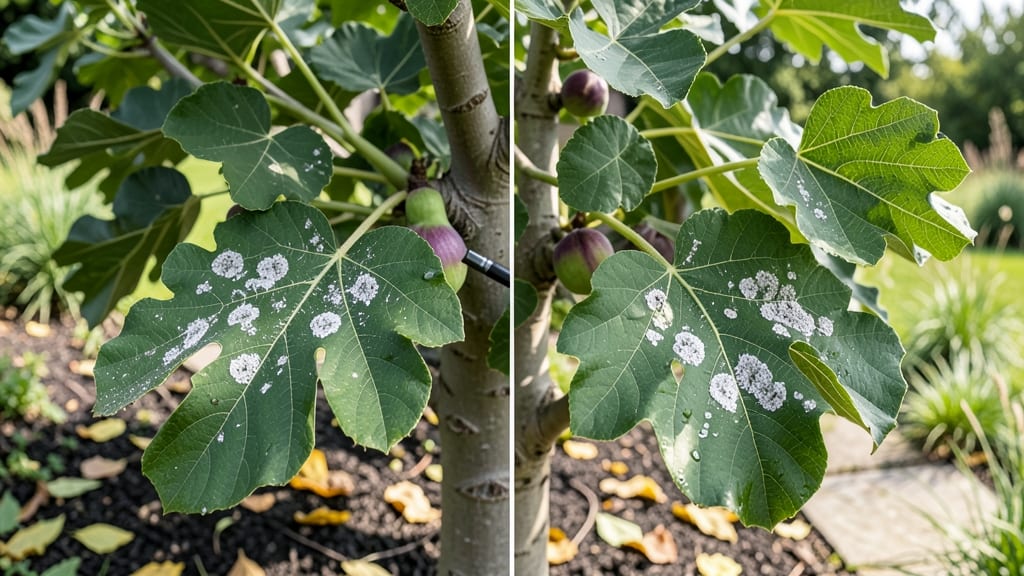
White spots creeping across your fig tree leaves?
That powdery white film isn’t just unsightly—it’s a fungal blight stealing your tree’s energy. 🌿 I’ve battled this exact issue three summers running, and I’ll show you how to diagnose whether it’s powdery mildew, spider mites, or mineral buildup—and how to stop it before your harvest suffers.
The culprit is usually powdery mildew, a fungus that thrives in warm, humid conditions and leaves behind those telltale white spots. But it could also be spider mites (check the undersides of leaves for tiny webs) or even mineral deposits from hard water.
The key is acting fast—once the spots spread, your tree’s ability to photosynthesize weakens, leading to stunted growth and fewer fruits.
You’ll learn how to treat it organically with neem oil or baking soda sprays, or when to use fungicides for severe cases. I’ll walk you through prevention too—simple tricks like spacing plants properly and watering at the base (not overhead) to keep those spores from getting a foothold.
By the end, your fig tree will be back to its lush, productive self.
Whether you’re dealing with a small patch or full-blown infestation, this guide covers every step—from quick fixes to long-term care. No more guessing what’s wrong or how to stop it. Let’s get your fig tree healthy again.
Root Causes Behind Leaf Spots
White spots on your fig tree’s leaves aren’t just a cosmetic issue—they’re often a clear sign of stress or infection. Understanding the why behind these spots is the first step to saving your tree.
Below, we break down the most common culprits, their triggers, and how they attack your fig tree’s foliage.
Fungi are the #1 cause of white spots on fig leaves, thriving in moist, warm conditions. These microscopic organisms release spores that land on leaves, germinate, and form visible patches—often starting as powdery white or grayish blemishes before turning brown or black.
Key Fungal Culprits & Their Behaviors
| Fungal Disease | How It Spreads | Leaf Symptoms |
|---|---|---|
| Powdery Mildew (Oidium spp.) |
|
|
| Fig Rust (Cerotelium fici) |
|
|
| Leaf Spot Fungi (Phoma, Septoria) |
|
|
💡 Pro Tip: Fungal spores love stagnant water. Avoid wetting leaves when watering—use drip irrigation or water at the base of the tree in the early morning so foliage dries quickly.
Not all white spots are fungal—sometimes, your fig tree’s leaves react to environmental stressors like extreme heat, poor air circulation, or nutrient deficiencies. These spots are usually superficial (no fungal growth) and may appear as:
- Chlorotic (white/yellow) patches from nutrient imbalances (e.g., magnesium or zinc deficiency).
- Sun scald (white/brown patches) when leaves are exposed to sudden intense sunlight after shade.
- Water stress spots from over- or under-watering, causing necrotic (dead) tissue.
🔥 Key Triggers:
- Poor air circulation (e.g., crowded planting, dense foliage) traps humidity and encourages fungal growth.
- Soil pH imbalance (figs prefer 6.0–7.0 pH; extremes lock out nutrients).
- Temperature swings (below 50°F or above 95°F stress leaves).
✨ Quick Fix: If spots appear after a heatwave or heavy rain, prune for better airflow and mulch to stabilize soil temps.
Some white spots aren’t from fungi or stress—they’re pest droppings, eggs, or feeding marks. Here’s how insects contribute:
- 🐛 Whitefly adults & nymphs: Leave sticky white residue (honeydew) that molds into black sooty mold (a secondary fungal issue).
- 🐞 Scale insects: Cover leaves in white, waxy shells while sucking sap, causing yellowing.
- 🦋 Spider mites: Create fine webbing and tiny white specks from silvering leaf surfaces.
🎯 How to Tell: Check the underside of leaves for:
- Tiny white flies when disturbed.
- Cottony or shell-like clusters (scale).
- Sticky residue on lower leaves (honeydew).
💡 Pro Tip: A magnifying glass helps spot pests early. Blast them off with a hose (not hot water) or use neem oil for organic control.
Quick Fixes for Fig Tree Leaf Spots
White spots on your fig tree’s leaves can feel like a mystery, but don’t worry—most causes have straightforward fixes. Below, we’ll map the most common culprits to their solutions, so you can restore your tree’s health without stress. Remember: early action is key! Let’s tackle this step by step.
If the white spots look fuzzy, powdery, or have yellow halos, fungi are likely the culprit. These thrive in humid, shaded conditions and can spread fast if ignored.
🔥 Step 1: Prune for Better Airflow
Fungi love crowded, damp spaces. Thin out dense branches to improve airflow around the leaves.
- 👨🍳 How: Remove 20-30% of the thickest growth, focusing on the center of the tree.
- ⏰ When: Do this on a dry, sunny morning to reduce humidity.
🍳 Step 2: Apply Fungicide
Use a copper-based fungicide or a neem oil solution (1 tbsp neem oil + 1 tsp mild soap per quart of water). These disrupt fungal spores without harming the tree.
- 🔪 How: Spray the top and bottom of leaves thoroughly. Reapply every 7-10 days until spots disappear.
- 🌡️ Pro Tip: Add a drop of dish soap to help the solution stick to leaves.
🎯 Step 3: Prevent Future Outbreaks
Fungi return if conditions stay favorable. Break the cycle with these habits:
- ✨ Water wisely: Water at the base (not overhead) in the early morning.
- 💡 Space plants: Keep fig trees at least 6 feet apart from other plants.
- 🌿 Clean up: Remove and dispose of (not compost) fallen leaves.
If the white spots are tiny, moving, or accompanied by webbing, pests are likely sucking sap and leaving behind waste. Spider mites and whiteflies are common offenders.
🔥 Step 1: Blast Off Pests with Water
Start with a strong spray from your hose to knock off pests and eggs. Do this in the early morning or evening.
- 👨🍳 How: Use a nozzle to create a gentle but firm stream.
- ⏰ When: Repeat every 3-4 days for 2 weeks.
🍳 Step 2: Introduce Natural Predators
Ladybugs, lacewings, and parasitic wasps eat spider mites and whiteflies. Buy them online or attract them with dill or fennel plants nearby.
- 🔪 How: Release predators at dusk when they’re most active.
- 🌡️ Pro Tip: Avoid pesticides—they’ll kill the good guys too!
🎯 Step 3: Use Insecticidal Soap
For stubborn infestations, mix 1 tbsp insecticidal soap per quart of water and spray directly on pests. Reapply every 5-7 days.
- ✨ Bonus: Add 1% horticultural oil to smother eggs.
If the white spots appear only on upper leaves or near the edges, your fig tree might be struggling with too much sun, salt, or mineral buildup from tap water.
🔥 Step 1: Adjust Watering Practices
Overhead watering or hard water can leave mineral deposits that look like white spots.
- 👨🍳 How: Switch to rainwater or filtered water if your tap water is hard.
- ⏰ When: Water deeply but infrequently—fig trees hate soggy roots.
🍳 Step 2: Provide Light Shade
If spots are on sun-exposed leaves, your tree might be getting too much direct afternoon sun.
- 🔪 How: Use a light shade cloth (30-50%) during peak sun hours (11 AM–3 PM).
- 🌡️ Pro Tip: Mulch with straw or wood chips to keep roots cool.
🎯 Step 3: Flush the Soil
If mineral buildup is the issue, flush the soil with 6 inches of water to leach out excess salts.
- ✨ Extra Help: Add compost or peat moss to improve drainage.
If the spots are large, spreading rapidly, or the leaves are dropping heavily, your fig tree may need stronger intervention.
🔥 Step 1: Consult a Local Extension Office
Contact your county agricultural extension service for a soil test or disease diagnosis. They can recommend targeted treatments.
🍳 Step 2: Remove Heavily Infected Leaves
Prune away more than 50% of affected foliage to stop the spread. Sterilize pruners with rubbing alcohol between cuts.
🎯 Step 3: Consider Systemic Fungicide
For stubborn fungal issues, use a systemic fungicide like Myclobutanil (follow label instructions carefully).
- ⚠️ Warning: Avoid overusing chemicals—focus on long-term prevention.
With these solutions, your fig tree should bounce back in 4-8 weeks. Stay vigilant, and soon you’ll be enjoying healthy, spot-free leaves—and maybe even a bountiful harvest! 🌿🍈
Frequently asked questions
Why do white spots appear on fig tree leaves in hot weather?
Hot, humid conditions create the perfect environment for powdery mildew, the most common fungal cause of white spots. The fungus thrives when temperatures stay between 60-80°F and humidity is high, especially in shaded or crowded areas. If your fig tree is in a container or planted too closely to other plants, poor airflow worsens the problem.
How can I tell if white spots are from fungus or mineral deposits?
Fungal spots usually appear powdery or fuzzy and spread across leaf surfaces, while mineral deposits from hard water tend to be crusty or chalky and concentrated near leaf edges. Test by wiping a spot with a damp cloth—if it smears white residue, it’s likely minerals; if it leaves a powdery film, it’s probably fungus.
Will pruning help if my fig tree already has white spots?
Yes! Pruning 20-30% of affected branches improves airflow and removes infected foliage. Focus on inner growth where humidity builds up. Always sterilize pruners with rubbing alcohol between cuts to prevent spreading spores. Combine pruning with fungicide sprays for best results.
Is neem oil safe to use on fig trees during fruit production?
Neem oil is generally safe for fig trees, but avoid spraying directly on ripening fruit as it may leave a bitter taste. Apply to leaves only, and harvest figs 3-5 days after treatment to allow residue to break down. For organic control, use a 1% solution (1 tbsp neem oil + 1 tsp soap per quart of water) every 7-10 days.
When should I call a professional for white spots on my fig tree?
Consult an arborist or extension service if: 50%+ of leaves are affected, spots spread rapidly despite treatment, or you see blackened stems or wilting branches. Severe cases may require systemic fungicides or soil testing for nutrient deficiencies. Early intervention prevents permanent damage to your tree’s health.