
Companion Plants
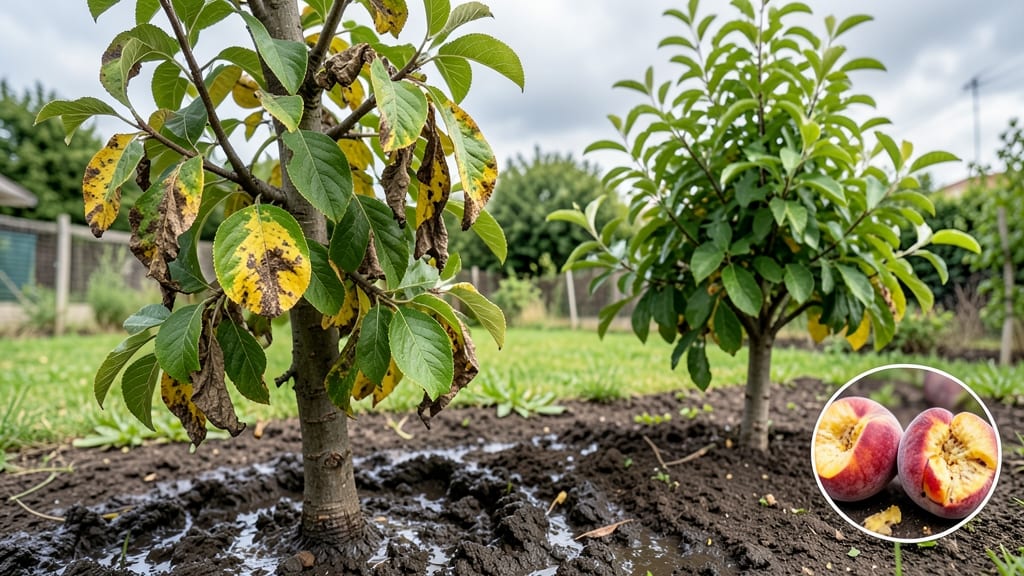
An overwatered peach tree looks like a sad, soggy mess—yellow leaves that droop like wet laundry, bark that stays damp to the touch, and roots that smell like a swamp instead of soil. 🌱 I’ve seen it too many times: what should be a sturdy, fruit-bearing tree instead becomes a wilted, struggling shadow of its potential.
The first sign is usually those telltale yellow patches on the lower leaves, followed by wilting that doesn’t improve even after watering stops.
Peach trees thrive on balance, but too much water drowns their roots, cutting off oxygen and inviting root rot. You’ll spot the problem when the bark stays slick for days, or when leaves turn brown at the edges—almost like they’re rotting from the inside out.
Even the soil around the base might look crusty or pull away from the trunk, a sure sign it’s staying too wet too long.
The good news? Fixing it is simpler than you’d think. Start by cutting back on water—peach trees need about 1-1.5 inches per week in most climates, and they hate soggy soil.
Amend the soil with compost to improve drainage, and if the roots smell foul, that’s a red flag for rot that needs immediate attention.
Within weeks, you’ll see the tree perk up—new green growth, firmer leaves, and a bark that’s dry to the touch. The key is consistency: let the top 2-3 inches of soil dry out between waterings, and your peach tree will bounce back stronger than ever.
Root Causes Of Overwatering
Overwatering a peach tree isn’t just about giving it too much love—it’s a scientific imbalance that disrupts the tree’s natural processes. When water overwhelms the root zone, it triggers a cascade of stress signals that manifest in the leaves, trunk, and soil.
Understanding these root causes (pun intended) helps you spot the warning signs early and adjust care before the tree suffers irreversible damage.
Peach trees thrive in well-draining soil, but if your soil is heavy with clay, compacted, or lacks organic matter, water pools around the roots instead of draining away. This creates an anaerobic (oxygen-deprived) environment, where roots suffocate and beneficial microbes struggle to thrive.
- Why it happens:
- Clay soil holds water like a sponge, preventing excess moisture from escaping.
- Compacted soil (from foot traffic or machinery) crushes pore spaces, blocking drainage.
- Over-fertilization with nitrogen-heavy amendments can waterlog the soil by encouraging rapid root growth in a confined space.
- Actionable fix:
- Test your soil’s drainage by digging a 12-inch hole, filling it with water, and timing how long it takes to drain. If it’s slower than 6 hours, amend with compost, sand, or perlite.
- For clay-heavy soil, mix in gypsum (calcium sulfate) to improve structure over time.
- Avoid tilling—it disrupts root systems. Instead, use a broadfork to loosen soil gently.
Automatic sprinklers, drip systems, or even well-meaning gardeners can drown peach trees without realizing it. Peach trees need consistent moisture but hate soggy feet. Overwatering often stems from misaligned irrigation practices.
- Why it happens:
- Frequency over depth: Light, daily watering keeps the topsoil wet but doesn’t encourage deep root growth. Roots stay shallow and vulnerable to rot.
- Wrong timing: Watering late in the day leaves foliage damp overnight, inviting fungal diseases like brown rot (a common peach tree nemesis).
- Improper system setup: Drip emitters too close to the trunk or sprinklers with poor coverage can create wet zones where water pools.
- Actionable fix:
- Water deeply but infrequently: Aim for 1–1.5 inches of water per week (including rainfall), delivered in 2–3 sessions to encourage deep roots.
- Use a soaker hose or drip irrigation placed 12–18 inches from the trunk (not touching it).
- Water early morning (6–10 AM) to allow foliage to dry before evening.
- Check for runoff—if water pools around the base, adjust your irrigation or mound soil slightly to create a berm.
Even with perfect soil and irrigation, weather patterns can turn your peach tree’s care routine upside down. Heavy rains, high humidity, or poor airflow can amplify overwatering effects.
- Why it happens:
- Prolonged rain: Peach trees in low-lying areas or with poor drainage become waterlogged during storms. Roots can’t “breathe,” leading to root rot within days.
- High humidity: In tropical or coastal climates, moisture lingers in the air and soil longer, slowing evaporation and keeping roots damp for extended periods.
- Windbreaks or dense planting: If your peach tree is sheltered by buildings, fences, or other trees, airflow is restricted. Stagnant air traps humidity around the foliage, increasing transpiration stress.
- Actionable fix:
- After heavy rain, check soil moisture 2–3 inches down with your finger. If it’s soggy, hold off on watering for 3–5 days.
- In humid climates, prune for airflow: Remove dense branches and thin out nearby vegetation to improve circulation.
- Plant peach trees in slightly elevated spots or on mounds to prevent water pooling.
- Use mulch wisely: Apply a 2–3 inch layer of wood chips or straw (not plastic or thick layers), keeping it 6 inches away from the trunk to prevent moisture buildup.
Young peach trees (under 3–5 years old) have delicate, shallow root systems that can’t handle excess water like mature trees. Their roots are still establishing, making them highly susceptible to overwatering stress.
- Why it happens:
- New roots lack mycorrhizal fungi (beneficial soil partners) to help absorb water efficiently.
- Transpiration (water loss through leaves) isn’t balanced with root uptake, leading to waterlogging.
- Container-grown peach trees often have root-bound systems that struggle to adapt to garden soil, making them prone to shock when overwatered.
- Actionable fix:
- For young trees, water lightly but frequently (every 2–3 days) until roots establish (usually 6–12 months). Then transition to deep, infrequent watering.
- When transplanting, prune 1/3 of the roots (if root-bound) to encourage outward growth and reduce shock.
- Apply a mycorrhizal inoculant at planting to boost root health and water absorption.
Pro Tip: 💡 Always dig a small hole near the tree’s drip line to check soil moisture before watering. If it’s damp, wait—your peach tree is likely getting more water than it needs!
Revive Your Peach Tree Today
Overwatering can turn your thriving peach tree into a sad, soggy mess—but the good news is, it’s fixable! 🌱 The key is acting fast and adjusting your care routine. Below, we’ll match common overwatering symptoms to targeted fixes, plus prevention tips to keep your tree healthy long-term.
Cause: Excess moisture suffocates roots, starving leaves of nutrients. Fix:
- Stop watering immediately—let the soil dry out 2–3 inches deep before adding more water.
- Improve drainage by mixing compost or perlite into the top 6 inches of soil to aerate roots.
- Raise the tree’s base (if in a container) by adding a layer of gravel or broken pottery at the drainage holes.
Prevention Tip: 💡 Use a moisture meter to check soil levels—water only when the top 1–2 inches feel dry.
Cause: Waterlogged soil cuts off oxygen, causing stress. Fix:
- Loosen compacted soil around the base with a garden fork to help roots breathe.
- Apply mulch (2–3 inches of wood chips or straw) to retain even moisture without drowning roots.
- Prune damaged branches (brown, mushy stems) with sterilized shears to redirect energy to healthy growth.
Pro Tip: ✨ Avoid watering at night—wet foliage invites fungal diseases like peach leaf curl.
Cause: Anaerobic (oxygen-free) soil breeds root rot and bacteria. Fix:
- Repot or transplant (if in a container) into fresh, well-draining soil mixed with sand or coconut coir.
- Add beneficial microbes like mycorrhizal fungi (available at garden centers) to boost root health.
- Disinfect tools with rubbing alcohol before pruning to prevent spreading rot.
Warning: ⚠️ If roots are black, mushy, or smell like rot, trim them back to firm white tissue and treat with hydrogen peroxide (3%) to kill pathogens.
Cause: Overwatering flushes out nutrients, leaving trees weak. Fix:
- Fertilize lightly with a balanced 10-10-10 formula (follow package rates) to replenish nutrients.
- Water deeply but infrequently—peach trees prefer 1–1.5 inches per week (adjust for rain).
- Test soil pH (ideal: 6.0–7.0)—overwatering can acidify soil, locking out nutrients.
Growth Hack: 🌱 Drip irrigation delivers water slowly at the roots, reducing waste and runoff.
- Group plants with similar needs (peach trees + lavender or rosemary) to streamline care.
- Monitor weather—skip watering during heavy rain or high humidity.
- Elevate containers on stands to prevent water pooling at the base.
Final Check: 🔍 Inspect roots annually—healthy roots should be white or tan, not slimy or hollow.
Remember: Peach trees are resilient! With these fixes, your tree can bounce back in 4–6 weeks. Stay consistent, and you’ll be enjoying sweet peaches (not sad leaves) in no time. 🍑💚
Frequently asked questions
How can I tell if my peach tree is overwatered vs. underwatered?
Overwatered trees show yellowing leaves (starting at the bottom), wilting despite damp soil, and mushy, foul-smelling roots. Underwatered trees have crispy brown edges, dry soil pulling away from the trunk, and leaves that curl upward. Check soil moisture 2-3 inches down—if it's soggy, you're overwatering; if bone-dry, you're underwatering.
Will my peach tree recover from overwatering if I stop watering immediately?
Yes, but recovery depends on how severe the damage is. If roots haven't rotted completely, your tree can bounce back in 4-6 weeks with proper care. Stop watering, improve drainage, and prune any mushy stems. For advanced root rot, you may need to repot or transplant to fresh soil. Monitor closely—new growth should appear within 2-3 weeks if the roots are salvageable.
Can overwatering cause my peach tree to lose fruit?
Overwatering stresses the tree, diverting energy away from fruit production. You'll notice small, misshapen fruit or premature drop. The tree may also develop brown rot (a fungal disease) from excess moisture on leaves. To save your harvest, reduce watering immediately and ensure good airflow around the tree. Healthy trees produce 1-2 times more fruit than stressed ones.
How often should I water my peach tree to prevent overwatering?
Peach trees need 1-1.5 inches of water per week (including rainfall), delivered deeply 2-3 times per week rather than daily light watering. Let the top 2-3 inches of soil dry out between waterings. In containers, check soil moisture daily—small pots dry out faster. Always water in the early morning to prevent fungal diseases.