
Flowers
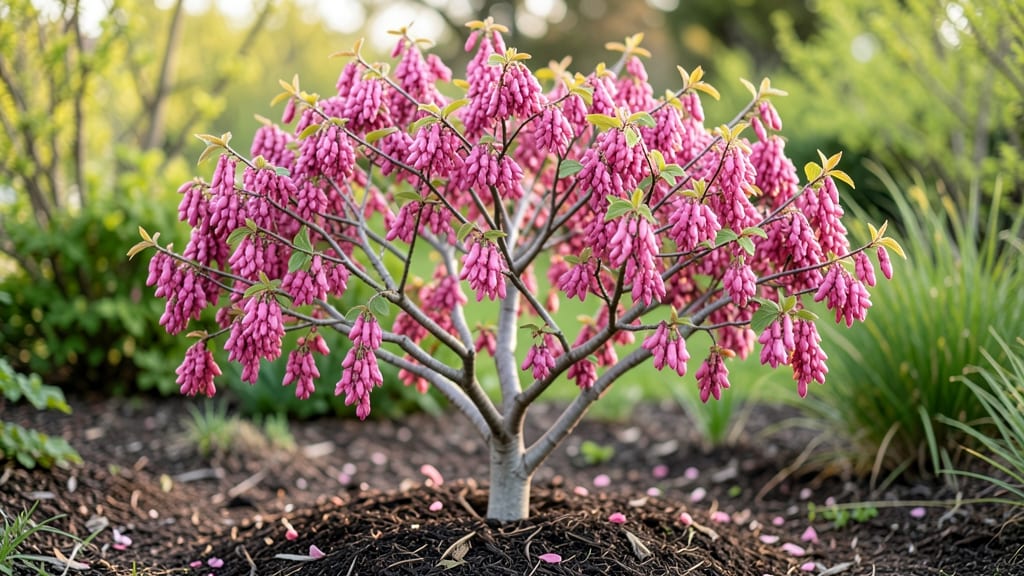
Tiny pink flowers that smell like springtime magic—those are the ones that transform any garden into a pollinator paradise. 🌸 The tree with little pink flowers I’m obsessed with is the Eastern Redbud (Cercis canadensis), whose delicate blossoms cover branches in early spring before the leaves even appear.
It’s the perfect focal point for small gardens, borders, or even as a standalone statement tree in a sunny spot.
What makes this tree so special? Beyond its stunning pink blooms, it’s low-maintenance, drought-tolerant once established, and thrives in well-drained soil. Plant it near a patio or walkway to enjoy the fragrance up close, or pair it with white daffodils or purple clematis for a high-contrast, seasonal show.
The heart-shaped leaves add lush green interest once summer arrives, keeping the garden lively all season long.
Imagine bees buzzing around in early spring, the air filled with that sweet, fresh scent—this tree turns heads and feeds pollinators before most other plants even wake up. It’s foolproof for beginners but still stunning enough to impress even seasoned gardeners.
The best part? It grows to a manageable 20-30 feet, making it ideal for urban yards or smaller landscapes.
For extra visual impact, try pairing it with blue spring bulbs like grape hyacinths or silver foliage plants like lamb’s ear. The contrast creates a dreamy, cottage-core vibe that lasts from late winter through early summer. Once you plant one, you’ll wonder why you didn’t add it sooner!
What Triggers Those Pink Blooms
The delicate pink flowers adorning certain trees aren’t just a random burst of color—they’re the result of a carefully timed biological dance between genetics, environment, and survival strategy. Understanding why these blossoms appear helps you appreciate their fleeting beauty and even encourage more of them in your garden.
Here’s why your tree might be putting on this fragrant spring show.
Most trees with little pink flowers—like the Cercis canadensis (eastern redbud) or Prunus serrulata (Japanese cherry)—follow a genetic schedule tied to photoperiodism and vernalization. Here’s how it works:
- Day length cues: As daylight increases in late winter/early spring, trees detect longer photoperiods (sunlight exposure) via phytochrome pigments in their leaves and buds. This triggers floral meristem activation—the process that converts dormant buds into flower structures. 🌅
- Chill hours requirement: Many flowering trees need 600–1,200 hours below 45°F (7°C) during winter to "break dormancy." Without enough cold exposure, buds may fail to bloom or produce sparse flowers. ❄️
- Species-specific triggers: Some trees (e.g., Magnolia stellata) bloom before leaves emerge, relying on stored energy from the previous season. Others, like Lagerstroemia (crape myrtle), bloom later in summer when temperatures stabilize.
Actionable tip: If your tree isn’t flowering reliably, check its winter chill hours. Planting in a microclimate with adequate cold exposure (e.g., slightly elevated areas) can help. 🌡️
While some stress can stimulate flowering (like drought stress in certain species), extreme or chronic stress often suppresses blooms. Here’s how environmental factors play a role:
| Factor | How It Affects Blooms | Fix It |
|---|---|---|
| Water stress | Drought or overwatering disrupts nutrient uptake, weakening floral buds. Trees like Cornus florida (dogwood) may drop buds if soil is too dry or waterlogged. | Mulch with 2–3 inches of organic matter (wood chips, compost) and water deeply 1–2x/week during bloom season. 💦 |
| Nutrient imbalance | Excess nitrogen (from fertilizer) promotes leafy growth at the expense of flowers. Phosphorus deficiency (_P_ in NPK) can also stunt bloom development. | Test soil and amend with bone meal (3-4-0) or rock phosphate in early spring. Avoid high-nitrogen fertilizers like lawn feed. 🌱 |
| Temperature extremes | Late frosts (<32°F/0°C) after buds swell can kill emerging flowers. Heatwaves (>90°F/32°C) during bloom may cause buds to abort. | Plant heat-tolerant varieties (e.g., Prunus 'Kanzan') or use frost cloth for early bloomers. 🌡️ |
| Light competition | Shade from taller trees or buildings reduces photosynthesis, limiting energy for flower production. | Prune nearby overgrowth or choose a sunnier spot (6+ hours of direct light for most flowering trees). ☀️ |
Some pink-flowering trees bloom before leaves appear to attract early pollinators like bees and butterflies. But if pollinators are scarce, the tree may skip flowering or produce fewer blooms. Here’s the science:
- Pheromone signals: Trees release volatile organic compounds (VOCs) to lure pollinators. For example, Cercis flowers emit benzoic acid, which mimics the scent of nectar. 🐝
- Energy trade-off: If pollinators are absent, the tree may abort flower development to conserve energy for seed production instead.
- Human impact: Pesticide use (even residual chemicals) can reduce pollinator populations, indirectly affecting bloom quantity.
Pro tip: Plant companion species like Diervilla lonicera (bush honeysuckle) or Syringa vulgaris (lilac) nearby to boost pollinator activity. Avoid neonicotinoid pesticides, which are toxic to bees. ✨
Young trees (under 3–5 years old) often skip flowering because they’re prioritizing root and trunk growth. Even mature trees may struggle if they’re compromised:
- Root damage: Construction, compacted soil, or girdling roots limit nutrient/water uptake, reducing bloom potential.
- Disease/pests: Fungal infections (e.g., Anthracnose in dogwoods) or borers can divert energy away from flowers.
- Pruning mistakes: Cutting back flowering wood (last year’s growth) in late winter removes next season’s buds.
Solution: For young trees, be patient—flowering often peaks at ages 5–15. For older trees, inspect for cankers, sawdust-like frass (sign of borers), or target-spotted leaves (fungus). Treat issues early to restore vigor. 🔍
Reviving your pink-blossomed tree
Revitalizing a tree adorned with delicate pink flowers—whether it’s struggling with pests, disease, or environmental stress—can feel overwhelming, but with the right approach, you can nurse it back to health.
Below, we’ll tackle common issues with practical, step-by-step solutions, so your tree can thrive again and continue attracting pollinators with its fragrant blooms.
If your tree’s leaves are pale, sparse, or dropping prematurely, it’s likely starving for essential nutrients. Pink-flowering trees like cherry, dogwood, or flowering almond often suffer from imbalances in nitrogen, phosphorus, or micronutrients.
🔥 Step 1: Test the Soil
Before adding fertilizers, know what your tree actually needs.
- 👨🍳 Grab a soil test kit (available at garden centers or online) or send a sample to a local extension office.
- 🌡️ Test for pH levels—most flowering trees prefer slightly acidic to neutral soil (6.0–7.0).
Adjust with lime (to raise pH) or sulfur (to lower it) if needed.
🍳 Step 2: Feed the Right Way
- 🌿 For nitrogen (green growth): Use a balanced fertilizer (10-10-10) in early spring before buds swell.
- 🌸 For phosphorus (blooms): Switch to a high-phosphorus formula (5-10-5) in late winter to encourage flowering.
- ✨ For micronutrients: Add chelated iron or magnesium if yellowing between leaf veins appears (a classic sign of deficiency).
💡 Pro Tip:
- 🌱 Water deeply after fertilizing to help nutrients absorb into the soil.
- ⏰ Avoid fertilizing in fall or winter—roots slow down, and excess nutrients can harm the tree.
Pink-flowering trees are magnets for aphids, borers, fungal infections (like powdery mildew), and bacterial leaf spot. Early action prevents permanent damage.
🔪 Step 1: Identify the Invader
| Symptom | Likely Culprit | What It Looks Like |
|---|---|---|
| Sticky residue on leaves | Aphids | Tiny green/black bugs clustering on new growth |
| Sawdust-like frass | Borers | Holes in bark, wilting branches |
| White powdery coating | Powdery Mildew | Fuzzy white spots on leaves |
| Brown, crinkled leaves | Bacterial Leaf Spot | Dark spots with yellow halos |
🍎 Step 2: Natural & Chemical Remedies
- 🐜 For aphids/mites:
- 💦 Spray with soapy water (1 tsp mild soap + 1 quart water) or neem oil (1 tbsp + 1 quart water).
- 🐞 Introduce ladybugs—they love eating aphids!
- 🪓 For borers:
- 🔪 Prune and burn infested branches to stop spread.
- 💧 Inject systemic insecticide (like Bayer Advanced Tree & Shrub) into the trunk.
- 🌡️ For fungal diseases:
- 🍄 Apply copper fungicide (like Bonide Copper Fungicide) every 7–10 days until new growth appears.
- 🌿 Improve airflow by thinning dense branches.
🎯 Prevention Tips:
- 🌧️ Water at the base (not overhead) to reduce fungal spores splashing onto leaves.
- 🪴 Mulch around the trunk (2–3 inches of wood chips) to deter pests and retain moisture.
Drought, compacted soil, or extreme weather can shock a tree into dormancy or decline. Here’s how to revive it:
💧 Step 1: Deep Watering Routine
- 🌊 Water slowly but deeply (1–2 inches per week) using a soaker hose or drip irrigation.
- ⏰ Best times: Early morning or late evening to reduce evaporation.
- 🌱 For newly planted trees: Water 2–3 times per week for the first year.
🔥 Step 2: Aerate & Amend Soil
- 🕳️ Loosen compacted soil with a garden fork or aeration tool (especially if the area is heavily trafficked).
- 🌿 Mix in compost (2–3 inches) to improve drainage and nutrient retention.
🏡 Step 3: Protect from Elements
- ☀️ Shield from scorching sun with light shade cloth if transplanting in summer.
- ❄️ Mulch heavily in winter (4–6 inches) to insulate roots from freeze-thaw cycles.
Once your tree is back on track, consistent care keeps it flourishing:
- 📅 Prune in late winter/early spring (just after flowering) to shape and remove dead wood.
- 🌸 Avoid heavy pruning during bloom season—this reduces next year’s flowers!
- 🐝 Support pollinators by planting native companion flowers (like lavender or bee balm) nearby.
Final Thought: A little TLC goes a long way! Whether it’s a nutrient boost, pest patrol, or soil rescue, your pink-blossomed tree will reward you with vibrant blooms and happy pollinators for years to come. 🌸✨
Frequently asked questions
Which tree with little pink flowers blooms earliest in spring?
The Eastern Redbud (Cercis canadensis) is the champion for early blooms, often bursting into pink flowers 4-6 weeks before leaves appear in late winter or early spring. Its delicate blossoms create a stunning contrast against bare branches, making it perfect for adding color to winter gardens.
Are these pink-flowering trees good for small gardens?
Many varieties stay compact, like the Dwarf Korean Lilac (Syringa meyeri 'Palibin') which grows just 4-6 feet tall, or the Japanese Flowering Cherry 'Kanzan' that reaches 25-30 feet but can be pruned smaller. Choose varieties labeled 'compact' or 'dwarf' for tight spaces.
Do pink-flowering trees attract bees and butterflies?
Yes! Trees like Fringe Tree (Chionanthus virginicus) and Eastern Redbud are pollinator magnets. Their tiny pink flowers produce nectar that supports early-season bees and butterflies when other food sources are scarce. Planting these helps sustain local ecosystems while adding beauty to your garden.
How long do pink flowers last on these trees?
Most pink-flowering trees bloom for 2-4 weeks, with some like Crape Myrtle offering 6-8 weeks of color in summer. Early bloomers (like Redbud) have the shortest displays, while late-season varieties provide extended interest. The key is choosing varieties that bloom at different times for continuous color.
Can I grow these trees in containers?
Smaller varieties like Dwarf Lilac or Japanese Flowering Quince (Chaenomeles speciosa) thrive in containers for 3-5 years before needing repotting. Use well-draining soil and a pot 12-18 inches deep with drainage holes. Container-grown trees need regular watering and winter protection in cold climates.