
Container Gardens
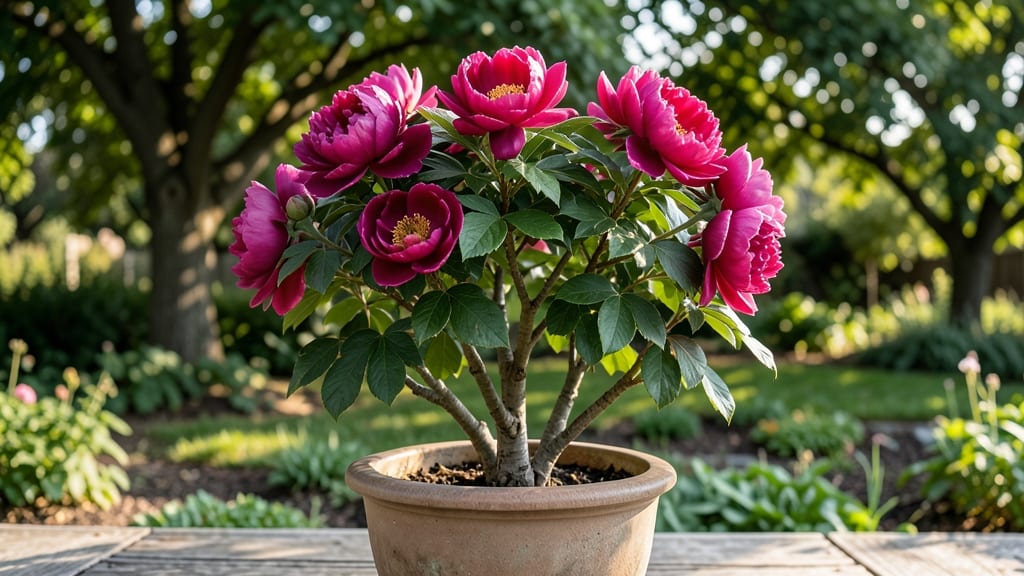
Growing tree peonies in pots lets you enjoy their lush blooms without the space of a yard. 🌸 I’ve watched mine thrive in containers for years, and the secret is matching their roots to the right pot—15-20 gallons for mature plants—while keeping soil loose and drainage perfect.
Most gardeners overlook how root-bound peonies struggle, but with the right setup, they reward you with bold flowers for decades.
The key is well-draining soil mixed with compost and a touch of sand, plus a sunny spot with 6+ hours of light daily. Overwatering is the biggest mistake—I’ve killed peonies by drowning them, so I check soil moisture before watering.
Fertilize lightly in spring with balanced 10-10-10, and skip heavy feeding after blooms fade. Winter protection is critical: wrap pots in burlap or move them to a sheltered spot before frost hits.
What you’ll love is how these peonies bounce back year after year, even in containers. The blooms are larger and more dramatic than herbaceous peonies, and the dark green foliage stays lush until frost.
Prune only to remove dead stems in early spring—no heavy cutting needed. With the right care, your potted tree peony will become the showstopper of your patio or balcony.
Works for small spaces, urban balconies, or even as a striking container centerpiece. The only challenge is winter prep, but the payoff—vibrant blooms in late spring—makes it worth the effort. Let’s get yours growing!
📚 In This Guide
- What you need
- Instructions
- Tips and common mistakes
- Wrapping up and next steps
What you need
- ○ Pot: A large container (18–24 inches wide) with drainage holes. Terracotta or ceramic works best for breathability. (Optional: Self-watering pots for convenience!)
- ● Tree Peony Plant: A healthy, dormant root (bare-root or potted) from a nursery. Choose a variety like ‘Koi No Ue’ or ‘Shin-Shu’ for vibrant blooms!
- ● Well-Draining Soil: A mix of 60% high-quality potting soil, 30% perlite or coarse sand, and 10% compost for aeration.
- ● Mulch: 2–3 inches of organic mulch (e.g., bark chips or straw) to retain moisture and regulate temperature.
- ● Fertilizer: A balanced, slow-release fertilizer (10-10-10) or organic options like fish emulsion for nutrients.
- ● Pruning Tools: Clean, sharp pruners or shears for minimal trimming (tree peonies need very little pruning!).
- ● Watering Can: A spray nozzle attachment helps avoid overwatering.
- ● Drip Irrigation Kit: For consistent moisture without fuss.
- ● Plant Support: A small stake or trellis if your tree peony grows tall.
- ● Slow-Release Fertilizer Pellets: Mix into soil for season-long nourishment.
- ● Pot Feet or Casters: To move your peony pot for optimal sunlight.
Step-by-Step guide to growing tree peonies in containers
Here's how I keep these stunning shrubs thriving in pots year after year with minimal fuss.
🪴 Step 1: Select the Right Container and Drainage System
Choose a container that's at least 18 inches in diameter with drainage holes—tree peonies need room to establish strong roots. I prefer glazed ceramic or plastic pots because they retain moisture better than terra cotta, which dries out too quickly. If your pot lacks drainage, drill ¼-inch holes in the bottom and line the base with ½-inch gravel to prevent soil compaction.
Tree peonies hate soggy roots, so add a 2-inch layer of coarse perlite or pumice above the gravel. This creates an air pocket that prevents rot while still allowing excess water to escape. The perlite also helps prevent the heavy peony roots from becoming waterlogged during winter rains.
🌱 Step 2: Prepare a Well-Draining, Fertile Soil Mix
Fill the pot with a custom mix of 50% premium potting soil, 30% compost, and 20% coarse sand or perlite. Tree peonies demand excellent drainage but also need nutrients to support their lush foliage and dramatic blooms. I avoid garden soil—it compacts easily in containers and can introduce pests.
Before planting, mix in 1 cup of bone meal (for phosphorus) and ½ cup of slow-release fertilizer (like 10-10-10) into the bottom 6 inches of soil. This gives roots an immediate nutrient boost while preventing fertilizer burn. Tap the pot gently to settle the mix, leaving 2 inches of space at the top for watering.
☀️ Step 3: Plant the Bare-Root Tree Peony Correctly
Place the tree peony root system in the pot so the bud union (the swollen area where stems emerge) sits just below the soil surface—never deeper than 1 inch. Spread the roots outward evenly, ensuring they don’t curl or overlap. If your peony came with multiple stems, space them 4-6 inches apart at the base.
Backfill with soil, pressing lightly to eliminate air pockets but avoiding compaction. Water deeply until it drains from the holes, then let the pot sit for 15 minutes before adding a 2-inch layer of mulch (like bark chips) on top. This keeps roots cool in summer and insulated in winter.
💧 Step 4: Water and Fertilize for Consistent Blooms
Water your potted tree peony deeply every 5-7 days, checking that the top 2 inches of soil feel dry before watering again. Overwatering is the fastest way to kill these plants—yellowing leaves or mushy stems are red flags. In summer, I reduce watering slightly to encourage dormancy, which triggers better blooming the following spring.
Feed with a balanced liquid fertilizer (like 10-10-10) every 4 weeks from spring through early summer. Stop fertilizing after July 1st—this mimics the plant’s natural cycle and prevents late-season growth that won’t harden off before winter. A monthly dose of Epsom salt (1 tablespoon per gallon of water) also boosts magnesium for stronger blooms.
✂️ Step 5: Prune and Winter-Protect for Year-Round Health
Prune only dead or crossing branches in late winter (before buds swell). Never cut back healthy stems—tree peonies bloom on old wood, and aggressive pruning removes next year’s flowers. I trim just above a leaf node using clean, sharp shears to avoid tearing the bark.
For winter, move pots to a garage or unheated shed where temperatures stay above 20°F but below 40°F. Wrap the pot in burlap and cover the top with straw to protect against freezing. In spring, uncover gradually—sudden warmth after dormancy stresses the plant. By mid-March, it’s ready to return to its sunny spot.
Tips & tricks for perfect tree peony container culture
These pro strategies will help you avoid common pitfalls and maximize your potted tree peonies' stunning potential.
Drainage System: When creating your 2-inch perlite layer in Step 1, use a combination of coarse perlite and pumice for optimal aeration. I've found that adding a ½-inch layer of horticultural charcoal (optional) beneath the perlite further prevents bacterial buildup in the drainage layer. This creates a three-layer defense against root rot while maintaining excellent drainage—critical for container-grown peonies.
Soil Mix: For Step 2's soil preparation, consider adding ½ cup of worm castings to your 50-30-20 mix for enhanced microbial activity. The castings improve nutrient availability while maintaining the perfect drainage-to-retention balance. I also recommend sifting your potting soil and compost through a ¼-inch mesh screen to eliminate large clumps that could create air pockets.
Planting Depth: In Step 3, pay special attention to the bud union placement. The 1-inch maximum depth is critical—any deeper and you risk suffocating the plant's growth points. Use a small wooden stake to mark the ideal planting depth before positioning the root system. This visual guide helps maintain consistency, especially when planting multiple peonies.
Winter Protection: For Step 5's winter care, I've found that adding a 1-inch layer of foam insulation board around the pot's exterior (before wrapping in burlap) provides an extra barrier against temperature fluctuations. This simple addition helps maintain the 20-40°F range more effectively, particularly in windy conditions. Remember to leave the drainage holes uncovered to prevent moisture buildup.
Pro Tips for Tree Peony In Pots
- These pro strategies will help you avoid common pitfalls and maximize your potted tree peonies' stunning potential.
- Drainage System: When creating your 2-inch perlite layer in Step 1, use a combination of coarse perlite and pumice for optimal aeration.
- Soil Mix: For Step 2's soil preparation, consider adding ½ cup of worm castings to your 50-30-20 mix for enhanced microbial activity.
Frequently asked questions
Got questions about growing tree peonies in pots? You’re not alone! Here are some of the most common concerns—and their answers—to help you keep your container peonies thriving with minimal fuss.
Can tree peonies really bloom year-round in pots?
While tree peonies aren’t technically year-round bloomers (they need winter dormancy), with the right care—like winter protection in cold climates and consistent sunlight—you can enjoy multiple bloom cycles per year (spring and fall). In warmer zones (USDA 7+), they may even rebloom lightly in summer with proper watering and fertilizer.
How do I protect potted tree peonies in winter?
Move pots to a sheltered spot (like a garage or under eaves) before temps drop below 20°F (-7°C). Wrap the pot in bubble wrap or burlap and mulch the soil with straw or leaves to insulate roots. Avoid watering heavily before winter—let the soil dry slightly to prevent rot. Pro tip: Use containers with drainage holes to avoid soggy roots!
What’s the best potting mix for tree peonies in containers?
Tree peonies need well-draining, slightly acidic soil (pH 6.0–7.0). Mix 50% high-quality potting soil with 30% perlite or coarse sand and 20% compost for aeration and nutrients. Avoid heavy garden soil—it compacts and causes root rot. Bonus: Add a handful of orchid bark to improve drainage!
How often should I repot my tree peony?
Repot every 2–3 years or when roots circle the pot (check by gently removing the plant). Spring is the best time! Choose a container 2–3 inches larger in diameter with fresh potting mix. Warning: Overly large pots can lead to waterlogging, so size up gradually.
Why aren’t my potted tree peonies blooming?
Common culprits: too much shade (they need 6+ hours of sunlightover-fertilizing (use a balanced 10-10-10 fertilizer sparingly), or poor drainage. Also, young plants (under 3 years) may not bloom—be patient! Fix it: Trim dead blooms promptly and ensure winter chilling (even in pots) for next year’s flowers.
Can I grow tree peonies in pots indoors?
Not long-term! Tree peonies require outdoor conditions for blooming, but you can temporarily move them indoors during harsh weather (like a frost warning). Place them near a sunny window or under grow lights for 12+ hours/day. Note: They’ll need to return outdoors for spring/summer growth and winter dormancy.
Wrapping up and next steps
Growing tree peonies in pots is a rewarding way to enjoy stunning blooms with minimal fuss—perfect for gardeners of all levels! 🌸 With the right container, soil, and a little seasonal care, you’ll create a showstopping focal point that thrives year after year.
Whether you’re a busy urban dweller or a weekend gardener, this low-maintenance beauty proves that even pruning can be effortless.
Ready to dive in? Start small—pick a pot, gather your supplies, and plant your tree peony today! Watch as it transforms your space with vibrant flowers and lush foliage, proving that container gardening can be just as magical as traditional beds. Happy planting! 🌱✨