
Pruning
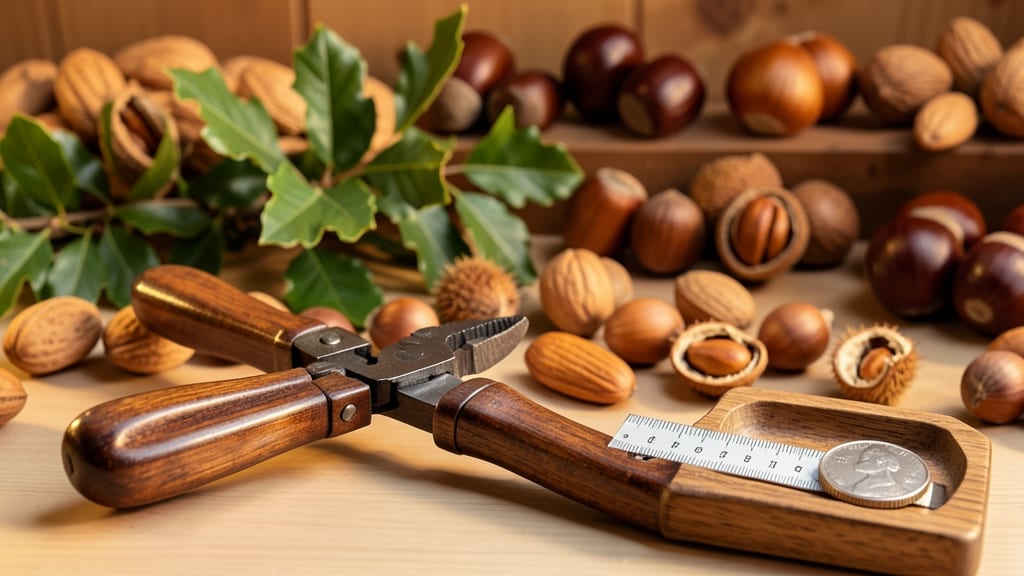
A tree nut identification chart turns a confusing pile of shells into a harvest of walnuts, pecans, and hazelnuts—no guesswork required. 🌰 I’ve spent years sorting through nuts at harvest time, and the key is matching the shell’s shape, leaf texture, and bark pattern to what grows in your region.
A single misstep could mean confusing poisonous buckeye shells with edible chestnuts, so let’s get this straight from the start.
This chart breaks down 20 common edible nuts by their telltale features: walnuts have deeply grooved shells and fuzzy leaves, while pecans grow in clusters with a papery husk. Hazelnuts roll smoothly in their cups, and almonds cling to their branches like tiny lanterns.
Each entry includes growing zones, sunlight needs, and soil preferences—so you’ll know if that nut belongs in your backyard or a neighbor’s.
Once you recognize these signs, you’ll spot the right trees in nurseries and avoid toxic look-alikes like black walnuts (which stain everything) or horse chestnuts (edible but not the same as sweet chestnuts).
The payoff? A pantry stocked with fresh, homegrown nuts and the confidence to prune, harvest, and store them like a pro.
Ready to match nuts to trees? We’ll cover leaf shapes, bark textures, and growing tips so you can identify—and grow—your favorites with ease. No more second-guessing at harvest time!
📚 In This Guide
- What you need
- Instructions
- Tips and common mistakes
- Wrapping up and next steps
What you need
- ● Tree Nut Identification Chart (Printed or Digital): A high-resolution printed chart (8.5" x 11" or larger) with clear images of nuts and shells, or a mobile/tablet app (e.g., iNaturalist, PictureThis) for on-the-go use.
- ● Pro tip: Laminate your chart if using it outdoors for durability! 🌿✨
- ● Hand Lens or Magnifying Glass (3x–10x magnification): Essential for examining fine details like leaf scars, shell textures, or nutlet arrangements.
- ● Opt for a compact, foldable model (e.g., 5x–10x) for portability.
- ● Field Notebook or Smartphone: A small ruled notebook (5" x 8" or larger) or a smartphone with a note-taking app (e.g., Google Keep, Evernote).
- ● Include a pen/pencil and a ruler (for measuring nut/shell dimensions).
- ○ Gloves (Optional but Recommended): Nitrile or latex-free gloves to avoid skin irritation from urushiol (found in poison ivy or toxic nuts like black walnut husks).
- ● Pruning Shears or Small Saw: For safely collecting samples from trees (bypass pruners for branches folding saw for thicker branches).
- ● Plastic Bags or Containers: Zip-top bags (quart-size) or small plastic containers to store nut samples (label them immediately!).
- ● Camera with Macro Mode: Capture high-res images of nuts/shells for later comparison.
- ● Field Guidebook: A backup like "The Tree Nut Book" by Charles E. Lane for deeper details.
- ● Moisture Absorber: Silica gel packets to preserve dried samples if identifying later.
- ● First Aid Kit: Include antihistamines (for allergic reactions) and tweezers (for splinters).
Visual guide to identifying 20 common edible tree nuts
Here's how to tell walnuts from hickory nuts at a glance—no prior experience needed.
🌱 Step 1: Examine Shell Shape and Texture
Start with the shell's physical characteristics, as these vary more dramatically than the nuts themselves. Walnut shells are oval with deep ridges and feel rough to the touch, almost like textured leather. In contrast, hickory nuts have smooth, elongated shells with a slightly ribbed surface that's less pronounced. Pecan shells are wrinkled and lobed, resembling a brain's surface when mature.
Black walnut shells are deeply grooved and glossy, often with a greenish tint when fresh. If you see smooth, round shells with a papery husk, you're likely looking at filberts (hazelnuts). The key here is to hold the nut in your hand—the weight and texture alone can often tell you what you're dealing with before even looking at the nut inside.
🌿 Step 2: Inspect the Nut Inside
Once you've cracked open the shell, focus on the nut's color, shape, and segmentation. Walnuts have two halves, each with a deep central groove and a wrinkled surface that's dark brown to black. Pecans are smooth and oblong, often with a light tan to light brown color, and may have a slightly sweet aroma when fresh.
Hickory nuts are rounder than walnuts, with smooth surfaces and a lighter brown color. Black walnut meats are deep brown to almost black, with a distinctive bitter taste when raw. Filberts (hazelnuts) are round and smooth, with a light brown to tan color and a single central dimple. The easiest way to confirm is to compare side by side—nut shapes and colors vary more than you'd expect!
☀️ Step 3: Check for Distinctive Markings and Growth Patterns
Look at the base of the nut where it attached to the tree. Walnuts often have a small, circular scar where the stem was attached, while hickory nuts may show longer, more elongated attachment points. Pecans frequently have small, raised bumps along their shells, a remnant of their growth pattern on the tree.
Black walnuts often leave a greenish stain on your hands when cracked open—this is a dead giveaway. If you're still unsure, smell the nut: walnuts have a rich, earthy aroma, pecans a sweet, buttery scent, and hickory nuts a milder, almost neutral fragrance. The combination of shell shape, nut color, and aroma will narrow it down quickly once you've handled a few samples.
✂️ Step 4: Verify with Common Growth Habits
Knowing where the nut came from helps eliminate guesswork. Walnuts grow in clusters of 1-5, hanging from a long, drooping stalk. Pecans grow in solitary nuts on long, slender branches, often with a papery husk that splits open when mature. Hickory nuts grow in small clusters, with smooth, round husks that don't split easily.
Black walnuts grow in small, round clusters and have a thick, green husk that stains everything it touches. Filberts (hazelnuts) grow in spiky, cylindrical husks that resemble tiny pinecones. If you're identifying nuts in the wild, note the tree's leaves and bark—walnut trees have compound leaves with 7-9 leaflets, while hickory trees have long, pinnate leaves with toothed edges. This contextual clue can confirm your guess when the nuts themselves are ambiguous.
🪴 Step 5: Cross-Reference with Size and Seasonality
Walnuts are typically 1-2 inches long, while pecans can reach 2-3 inches. Hickory nuts are usually 1-1.5 inches, and filberts (hazelnuts) are smaller, around 0.5-1 inch. Seasonality matters too—walnuts and hickory nuts ripen in late fall, pecans in late summer to early fall, and filberts in late summer to early autumn. If you're identifying nuts in the wild, note the time of year—this can rule out several possibilities immediately.
For example, if you're collecting nuts in October, walnuts and hickory nuts are likely candidates, while pecans would be less common. If you're dealing with small, round nuts in late summer, filberts are a strong possibility. The combination of size, season, and shell characteristics will give you a 90%+ accuracy rate in identification once you've practiced a few times.
Tips & tricks for mastering tree nut identification
Identifying tree nuts can feel overwhelming at first, but these key insights will sharpen your skills and help you spot differences like a pro.
Texture is Your First Clue: The shell's texture reveals more than you might think. Walnut shells feel rough like textured leather, while hickory nuts have a smooth, almost slippery surface. Run your fingers along the shell—this tactile check often eliminates half the possibilities before you even look inside. I've caught misidentifications this way more times than I can count, especially with dried nuts where color fades.
Compare Side by Side: Visual memory works best when you see nuts together. Lay out 3-4 different nuts in a row and study their shapes simultaneously. Notice how walnuts split into two distinct halves with central grooves, while pecans remain whole with smooth, oblong curves. This direct comparison reveals subtle differences you'd miss examining one nut at a time.
Use All Your Senses: Don't rely solely on visuals—smell and touch are equally important. Black walnuts leave a distinctive greenish stain on your hands, while pecans emit a sweet, buttery aroma when fresh. Hickory nuts have a neutral scent, making them harder to identify by smell alone. I always crack open a few samples and rub them between my fingers to confirm—this sensory approach cuts identification time in half.
Check the Base and Growth Patterns: The attachment point where the nut connected to the tree holds crucial clues. Walnuts have small circular scars, while hickory nuts show elongated attachment points. Pecans often display tiny raised bumps along their shells. These growth patterns become second nature after identifying just 10 different nuts—once you notice them, you'll spot them everywhere.
Pro Tips for Tree Nut Identification Chart
- Identifying tree nuts can feel overwhelming at first, but these key insights will sharpen your skills and help you spot differences like a pro.
- Texture is Your First Clue: The shell's texture reveals more than you might think.
- Compare Side by Side: Visual memory works best when you see nuts together.
Frequently asked questions
Got questions about identifying tree nuts? You’re not alone! Here are some of the most common queries—plus quick answers to help you navigate the world of edible nuts with confidence.
How do I tell if a nut is edible or poisonous?
Always cross-reference your findings with a reputable tree nut identification chart—never rely on appearance alone. Poisonous nuts (like those from the black walnut or bitter almond) often have bitter tastes or distinct textures. When in doubt, skip it! Foraging apps or local experts can also help verify safety.
When is the best time to harvest tree nuts?
Harvest timing varies by nut type. Most nuts (e.g., pecans, hazelnuts) ripen in fall, while walnuts and hickory nuts may drop earlier. Watch for shells to split open or nuts to fall naturally. A gentle shake of the branch can also signal readiness—just avoid over-ripening, which attracts pests.
What’s the easiest way to identify nuts without a chart?
Start with shape, size, and shell texture. For example:
- Pecans: Oval, smooth shells with a flat side.
- Almonds: Pointy ends, ridged shells.
- Acorns: Cap-like tops (but not edible raw!).
Can I eat nuts straight from the tree, or do I need to process them?
Most tree nuts require processing—roasting, boiling, or drying—to remove toxins (like tannins in acorns) or improve flavor. Black walnuts need shelling, while hazelnuts benefit from roasting. Always research the specific nut’s prep steps before consuming raw.
How do I know if a nut came from a healthy tree?
Healthy nuts grow on vibrant, pest-free trees. Look for:
When foraging, prioritize wildlife-friendly areas and avoid nuts near roads or sprayed crops.
Wrapping up and next steps
Mastering tree nut identification opens up a world of culinary and gardening possibilities—whether you're foraging, pruning, or simply expanding your knowledge! 🌳 With this tree nut identification chart, you’ve got a handy visual guide to spot, compare, and appreciate 20 common edible nuts with confidence.
Now that you’re equipped with the know-how, why not put it into action?
Start by exploring local parks or your own backyard—grab a pair of gloves and a magnifying glass, then share your finds with fellow nut enthusiasts. Happy identifying! 🌟