
Trees
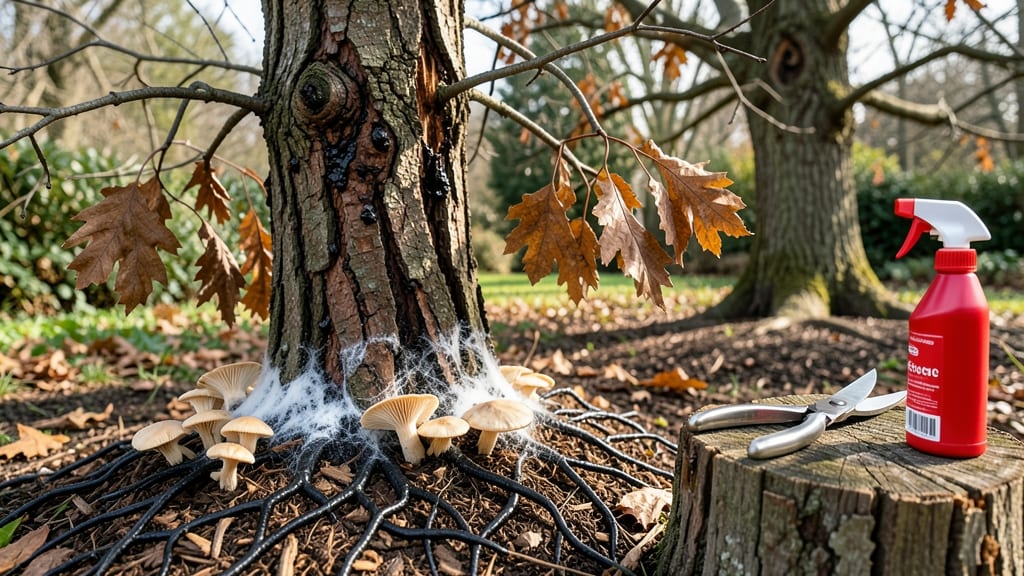
Tree infection fungus can turn your healthy oak into a sad, leaf-shedding skeleton in months if you don’t catch it early. 🌳 I’ve seen anthracnose turn lush maples into brown skeletons and powdery mildew coat roses like dust—both fixable with the right moves.
The key? Spotting the warning signs before the fungus spreads beyond saving.
Fungal infections thrive when trees are stressed—think poor drainage, overwatering, or crowded branches. You’ll spot them through discolored leaves, strange growths on bark, or mushrooms popping up at the base. My neighbor’s cedar nearly died from root rot until he noticed the foul-smelling soil and acted fast.
Prevention is easier than cleanup: space trees properly, water at the base (not overhead), and remove fallen leaves where spores hide.
Once you see signs, prune infected branches 6 inches below the damage and sterilize your tools with rubbing alcohol. For organic fixes, try a mix of baking soda (1 tbsp), neem oil (1 tsp), and water (1 quart)—spray it on leaves weekly.
The goal isn’t just to stop the fungus but to give your tree a fighting chance to recover.
Early action saves trees. Even if your oak looks hopeless now, catching fungus on a young maple or fruit tree means you could still enjoy its shade—or apples—for decades. Start with a close inspection this weekend; you might be surprised what you’ll find.
How Fungal Pathogens Take Root
Tree infection fungus doesn’t just appear out of nowhere—it thrives due to a mix of environmental stress, weak defenses, and the right conditions. Understanding the root causes (pun intended) helps you spot vulnerabilities before they become full-blown crises.
Below, we break down the science behind why fungi attack trees, from microscopic invaders to seasonal triggers.
Trees, like all living organisms, rely on a complex immune system to fend off pathogens. When this system falters, fungi exploit the opening. Here’s what compromises a tree’s defenses:
- Nutrient Deficiencies: Trees starved of essential nutrients (like nitrogen, phosphorus, or potassium) produce weaker bark and sap, making them easier targets. Think of it like a human with a vitamin D deficiency—every cold feels like a full-blown infection.
- Physical Damage: Cracks, wounds from storms, or improper pruning create entry points. Fungal spores, often floating in the air, land on these openings and colonize within hours.
- Stress from Drought or Flooding: Extreme moisture or dry spells shock trees, forcing them to divert energy away from defense mechanisms. Fungi like Armillaria (root rot) and Phytophthora (oak wilt) thrive in stressed trees.
- Competing Roots or Soil Compaction: Overcrowded roots or compacted soil restrict a tree’s ability to absorb water and nutrients, weakening its resilience. Fungi exploit this by outcompeting the tree for resources.
💡 Pro Tip: Regularly inspect your trees for signs of stress—yellowing leaves, stunted growth, or peeling bark—and address nutrient gaps with organic fertilizers or mulch.
Fungal spores are everywhere—soil, air, even on healthy trees. But they only become aggressive under specific conditions:
- High Humidity and Warmth: Spores germinate best in 60–85°F (15–30°C) with moisture levels above 70%. That’s why fungal infections spike after heavy rains or in shaded, damp areas.
- Poor Air Circulation: Dense foliage or mulch piled against the trunk traps moisture, creating a fungal paradise. Example: Canker diseases (like Nectria) love these conditions.
- Seasonal Triggers:
Season Common Fungal Threats Why It Happens Spring Anthracnose, Powdery Mildew New growth is tender, and rain splashes spores onto leaves. Summer Root Rot, Bark Cankers Heat stress weakens trees, and irrigation overwatering creates soggy soil. Fall Honey Fungus (Armillaria) Deciduous trees shed leaves, dropping organic matter that fuels fungal growth. Winter Snow Mold, Bark Scorch Cold snaps followed by thawing create ideal moisture conditions under snow.
⚠️ Warning: If your tree is near a recently infected one, spores can hitchhike via wind, animals, or even your gardening tools. Disinfect pruners with 70% alcohol after each use!
Fungi don’t act alone—they’re opportunists that exploit ecological imbalances. Here’s how your landscape might be unknowingly inviting them:
- Improper Mulching: Mulch piled too high against the trunk (a practice called volcano mulching) traps moisture and blocks oxygen, inviting root rot and cankers. Keep mulch 3–4 inches deep and 6 inches away from the trunk.
- Overwatering or Poor Drainage: Waterlogged soil suffocates roots, creating anaerobic conditions where Phytophthora (a water mold) thrives. Test your soil’s drainage—if water pools after 6 hours, amend with compost or sand.
- Lack of Beneficial Microbes: Healthy soil teems with bacteria and fungi that compete with pathogens. Chemical fertilizers or pesticides can disrupt this balance, leaving trees defenseless.
- Invasive Species: Some fungi, like Sudden Oak Death (Phytophthora ramorum), are spread by invasive plants or even nursery stock. Quarantine new trees for 30 days and monitor for symptoms.
🌡️ Science Check: Studies show trees in urban areas are 3x more likely to contract fungal diseases due to pollution, compacted soil, and limited microbial diversity. Boost soil health with mycorrhizal fungi or compost teas to restore balance.
Now that you know why fungi strike, the next step is early detection—because catching these invaders early means organic cures (not stump removal) are still on the table. Stay tuned for our deep dive into spotting signs before they spread.
How to Fix Tree Fungus Naturally
Fungal infections in trees can feel overwhelming, but with the right approach, you can restore your tree’s health—without harsh chemicals. The key is acting fast, identifying the root cause, and applying targeted, organic solutions.
Below, we break down practical fixes for common fungal issues, from early-stage prevention to advanced remedies.
Cause: Small lesions, powdery mildew, or early rust spots. Fix:
- Remove infected branches 🔪 with sterilized pruners (dip in rubbing alcohol or 10% bleach solution).
- Space out branches to improve airflow—fungi thrive in damp, crowded canopies.
- Apply neem oil spray (1 tsp neem oil + 1 tsp mild soap per quart of water) to prevent spread.
Prevention Tip: 💡 Water trees at the base (not overhead) to keep foliage dry.
Cause: Large cankers, root rot, or extensive leaf drop. Fix:
- Scrape off infected bark 🧹 with a knife (wear gloves!) to expose healthy wood.
- Apply copper fungicide (organic option: Bordeaux mixture) to wounds.
- Boost soil health with mycorrhizal fungi (available as powder) to strengthen roots.
Pro Tip: 🌡️ For root rot, mix compost with sand to improve drainage.
Cause: Recurring infections or weak tree immunity. Fix:
- Mulch properly (3–4 inches of wood chips, not touching the trunk).
- Plant companion trees (like oak or pine) to disrupt fungal spores.
- Use beneficial microbes (e.g., Trichoderma fungus) to outcompete pathogens.
Prevention Table:
| Problem | Solution | Frequency |
|---|---|---|
| Powdery Mildew | Baking soda spray (1 tbsp/gal water) | Every 2 weeks |
| Canker Disease | Prune + copper fungicide | Once per season |
| Root Rot | Improve drainage + mycorrhizal fungi | Annual check-up |
Final Reminder: 🎯 Act at the first sign of fungus—early action saves trees! For severe cases, consult an arborist to assess structural damage. With patience and organic care, your tree can bounce back stronger than ever.
Frequently asked questions about tree fungal infections
How can I tell if my tree has a fungal infection?
Look for these red flags: discolored leaves (yellow/brown spots), strange growths on bark, mushrooms at the base, or powdery white coatings. Check for wilting branches or premature leaf drop too—these often signal root rot or canker diseases. Act fast if you see these signs!
What’s the difference between powdery mildew and leaf spot fungus?
Powdery mildew appears as a white, dusty coating on leaves, while leaf spot fungus creates dark, irregular patches with yellow halos. The mildew spreads faster in humid conditions, while leaf spots often appear after rain. Both need pruning infected areas and improved airflow.
Can I use vinegar to treat tree fungus?
Neat white vinegar (5% acidity) is too harsh for trees—it can burn leaves. Instead, use a 1:10 vinegar-water spray (1 part vinegar to 10 parts water) as a fungicide alternative. Add 1 tsp baking soda to help prevent regrowth. Always test on a small branch first!
How do I know if my tree is beyond saving?
If 50%+ of the canopy is dead, the trunk shows deep cankers, or mushrooms appear at the base, the tree may be terminal. Check for structural weakness too—if large branches are hollow or cracked, it’s unsafe. For borderline cases, consult an arborist before deciding.
Will pruning alone stop a fungal infection?
Pruning removes infected tissue but won’t cure the problem alone. Always pair it with sterilized tools and fungicide treatment. For best results, prune in dry weather and dispose of infected branches away from your yard to prevent spore spread.