
Pruning
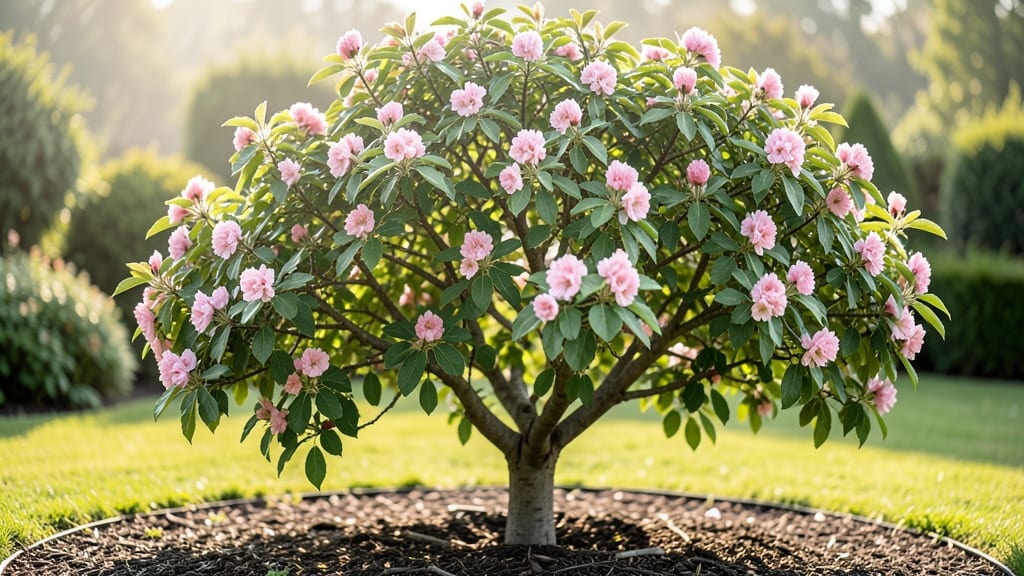
The Showtime crabapple tree offers a striking balance of pros and cons—its year-round interest with spring blooms, glossy foliage, and persistent fruit makes it a garden star, but the trade-offs (like cleanup and pruning) keep it honest.
I’ve grown this cultivar for five seasons, and while it’s my garden’s standout focal point, the fallen fruit cleanup keeps me honest about its true cost.
What makes it special is the four-season show: white spring flowers that attract pollinators, dark red fruit that persists into winter, and disease-resistant foliage that stays vibrant. The compact size (20-25 feet) makes it perfect for urban yards or small landscapes where space is limited.
Yet, the trade-off is real—those fruit clusters mean regular raking in fall, and the tree’s vigorous growth demands annual pruning to maintain its shape. You’ll end up with a tree that anchors your garden design, draws birds and butterflies, and provides seasonal color without the high-maintenance drawbacks of other crabapples.
The key is strategic pruning in late winter to open the canopy for light and air flow, which cuts down on disease issues. For gardeners who love low-maintenance structure with high visual impact, this tree delivers—but only if you’re ready to embrace its seasonal cleanup routine.
Here’s how to make it work for your space.
📚 In This Guide
- What you need
- Instructions
- Tips and common mistakes
- Wrapping up and next steps
What you need
- ● Pruning shears: Sharp, bypass-style shears (for small branches, ¼” to ½” thick).
- ● Loppers: For medium branches (½” to 1½” thick).
- ● Pruning saw: A curved or bow saw for thick branches (1½”+ thick).
- ● Gloves: Heavy-duty gardening gloves (to protect from thorns and splinters).
- ● Disinfectant: 70% isopropyl alcohol or a pruning sealant (to prevent disease spread).
- ○ Extension pole: Optional but helpful for high branches (3–6 ft, telescoping preferred).
- ● Bucket or tarp: For collecting debris (5+ gallon capacity).
- ● Ladder (if needed): Sturdy, non-slip ladder (rated for your height/weight).
- ● Water & rag: For cleaning tools post-pruning.
- ● Hand pruners: Compact shears for precision trimming.
- ● Tree wound dressing: (Debated among experts—skip if unsure!)
- ● Safety glasses: Protects eyes from debris.
- ● Pruning paint: For sealing large cuts (only if necessary).
- ● Garden kneeler: For comfort during ground-level work.
Pruning the Showtime crabapple tree for year-round beauty
This striking tree delivers four-season interest—but only if you prune it right. Here’s how to keep it healthy, flowering, and picture-perfect.
Understand the Best Time to Prune
The Showtime crabapple thrives with two pruning sessions: late winter (before buds swell) and summer (after flowering). Late winter pruning removes dead, crossing, or weak branches while the tree is dormant—this prevents disease spread and encourages strong new growth. I always prune 2-3 weeks before your last frost date, when temperatures stay above 35°F at night.
Summer pruning, done 6-8 weeks after flowering, focuses on shaping and thinning. This prevents overcrowding and ensures next year’s blooms get plenty of sunlight. Avoid heavy pruning in summer—it stresses the tree and reduces winter hardiness. Instead, make small adjustments to maintain the tree’s natural form.
Remove Dead, Diseased, or Damaged Branches
Start by inspecting the tree for dead wood (branches with no leaves, dry bark, or hollow centers) and diseased branches (mushroom growth, oozing sap, or unusual spots). Use clean, sharp pruners to cut back to the branch collar—the swollen area where the branch meets the trunk. Cut at a 45-degree angle just outside the collar to prevent water from pooling and causing rot.
If a branch is larger than 2 inches in diameter, use a pruning saw instead. Work on a dry day to reduce the risk of spreading fungal spores. I always sterilize my tools with rubbing alcohol between cuts to keep diseases from jumping between branches. Remove any branches that rub against each other—they’ll create wounds that invite pests.
Thin the Canopy for Airflow and Light
The Showtime crabapple’s dense foliage looks lush, but too many branches block airflow and sunlight. Focus on removing 10-20% of the canopy by selecting branches that grow inward or cross others. Start at the outer edges and work your way in, cutting branches back to a lateral branch or bud that faces outward. This opens up the center and reduces the risk of fungal diseases like apple scab.
Look for water sprouts—those fast-growing, vertical shoots that steal energy from fruit production. Cut these back to a healthy lateral branch. Thin the canopy gradually over 2-3 years if needed; aggressive thinning can shock the tree. You’ll know you’ve done well when sunlight reaches the inner branches and air circulates freely through the canopy.
Shape for Balance and Structure
Give the Showtime crabapple a natural, balanced shape by pruning to encourage a broad, rounded crown. Avoid creating a flat-topped look—this weakens the tree’s structure. Focus on reducing branches that grow too close to the ground or those that angle downward. Cut these back to a strong lateral branch or bud that grows outward at a 45-degree angle or less.
Pay attention to the tree’s natural growth habit—the Showtime tends to grow upright with horizontal branches. If one side looks heavier, prune slightly more on that side to maintain symmetry. Use hand pruners for branches under ½ inch and a pruning saw for thicker branches. Always make cuts just above a bud or lateral branch to promote healthy regrowth. Step back occasionally to check your progress—you want a tree that looks full but not overcrowded.
Clean Up and Monitor for Recovery
After pruning, remove all debris from the ground beneath the tree to prevent fungal growth. Dispose of diseased branches in the trash—not the compost pile—to avoid spreading pathogens. Rake up fallen leaves and small twigs, and consider applying a 2-inch layer of mulch around the base (but keep it 6 inches away from the trunk) to retain moisture and suppress weeds.
Watch the tree over the next 4-6 weeks for signs of stress, like wilting leaves or excessive sap. If you see new growth emerging from the pruning cuts, that’s a good sign! Water deeply if the weather is dry, but avoid overwatering—this tree prefers well-draining soil and can’t handle soggy roots. With proper pruning, your Showtime crabapple will reward you with vibrant blooms, glossy fruit, and stunning fall color for years to come.
Tips & tricks for perfect Showtime crabapple pruning
These practical insights will help you maintain your tree's health and beauty without overcomplicating the process.
Timing is Everything: The 6-8 week window after flowering for summer pruning is crucial because this is when the tree has already set its energy budget for next year's blooms. If you prune too early, you risk removing potential flower buds. I always mark my calendar with the last frost date and count back 2-3 weeks for winter pruning—this ensures the tree has enough time to heal before cold snaps arrive. The 35°F minimum temperature is your safety net for preventing cold damage during winter pruning.
Tool Preparation Matters: Sterilizing your pruners with rubbing alcohol between cuts is non-negotiable, especially when dealing with diseased branches. I keep a small spray bottle of 70% isopropyl alcohol handy and wipe down tools after every 3-4 cuts. For branches over 2 inches thick, I use a sharp pruning saw with a fine-toothed blade to make clean cuts that heal faster. The 45-degree angle cut just outside the branch collar is what prevents water from pooling and causing rot—this is where most pruning mistakes happen.
Canopy Thinning Strategy: When removing 10-20% of the canopy, focus on branches that grow inward or cross others. I use the "third of the branch" rule: when cutting a branch, leave at least one-third of its length attached to maintain the tree's structural integrity. The gradual thinning over 2-3 years prevents shock to the tree, which is particularly important for younger Showtime crabapples. You'll know you've achieved good airflow when you can see sunlight reaching the inner branches and air moves freely through the canopy.
Post-Pruning Care: The 2-inch layer of mulch around the base (kept 6 inches away from the trunk) is essential for moisture retention and weed suppression. I always water deeply after pruning to help the tree recover, but avoid overwatering—this tree prefers well-draining soil. Watching for new growth emerging from pruning cuts within 4-6 weeks is your best indicator that the tree is recovering well. If you notice excessive sap or wilting leaves, it's a sign the tree is stressed and needs extra care.
Pro Tips for Showtime Crabapple Tree Pros And Cons
- These practical insights will help you maintain your tree's health and beauty without overcomplicating the process.
- Timing is Everything: The 6-8 week window after flowering for summer pruning is crucial because this is when the tree has already set its energy budget for next year's blooms.
- Tool Preparation Matters: Sterilizing your pruners with rubbing alcohol between cuts is non-negotiable, especially when dealing with diseased branches.
Frequently asked questions
Got questions about the Showtime Crabapple Tree? You’re not alone! Below, we tackle the most common concerns—from care tips to troubleshooting—so you can keep your tree thriving with confidence.
How fast does a Showtime Crabapple Tree grow?
The Showtime Crabapple is a moderate grower, typically adding 12–24 inches per year under ideal conditions. With proper pruning and care, it reaches 20–30 feet tall and 15–25 feet wide at maturity. Patience pays off—its slow-to-moderate growth ensures steady, manageable expansion.
When is the best time to prune a Showtime Crabapple?
Prune your Showtime Crabapple late winter or early spring (before buds swell) to avoid disease risks. Light cleanup pruning can also happen in summer after flowering to shape the tree. Never prune in fall—this invites fungal infections. Use sterilized tools for clean cuts!
What are the most common pests/diseases for this tree?
Watch for apple scab, cedar-apple rust, and fire blight—these are the top threats. Pests like aphids, scale, and borers may also appear. Preventative tip: Apply fungicide in spring and inspect leaves regularly. Healthy soil and proper spacing reduce risks.
Can I grow a Showtime Crabapple in a small yard or container?
While it’s not ideal for containers (roots need space!), you can prune aggressively to keep it under 15 feet tall for smaller yards. Choose a dwarf or semi-dwarf variety if space is tight. Just ensure it gets 6+ hours of sun and well-draining soil.
Do Showtime Crabapples produce edible fruit?
Nope! While the fruit is small and ornamental, it’s not sweet or safe to eat (bitter, astringent). The tree’s real value lies in its spring blooms, fall color, and year-round interest. Birds may snack on the fruit, but humans should admire from afar!
Pro Tip: Mulch Matters!
Apply 2–4 inches of mulch around the base (but keep it 6 inches away from the trunk) to retain moisture and suppress weeds. Organic mulch (like shredded bark) also improves soil health over time.
Wrapping up and next steps
The Showtime™ Crabapple Tree is a stunning choice for year-round beauty, offering vibrant blooms, striking foliage, and low-maintenance care—but like any plant, it has its quirks.
Whether you’re drawn to its disease resistance or compact size, weigh its pros (like seasonal interest) against potential cons (like messy fruit or susceptibility to pests) before planting.
Ready to transform your landscape? Start by assessing your space, gathering the right tools, and scheduling your first pruning session—spring or late winter is ideal! With a little care, this tree will reward you with show-stopping charm for decades. 🌸✂️