
Pruning
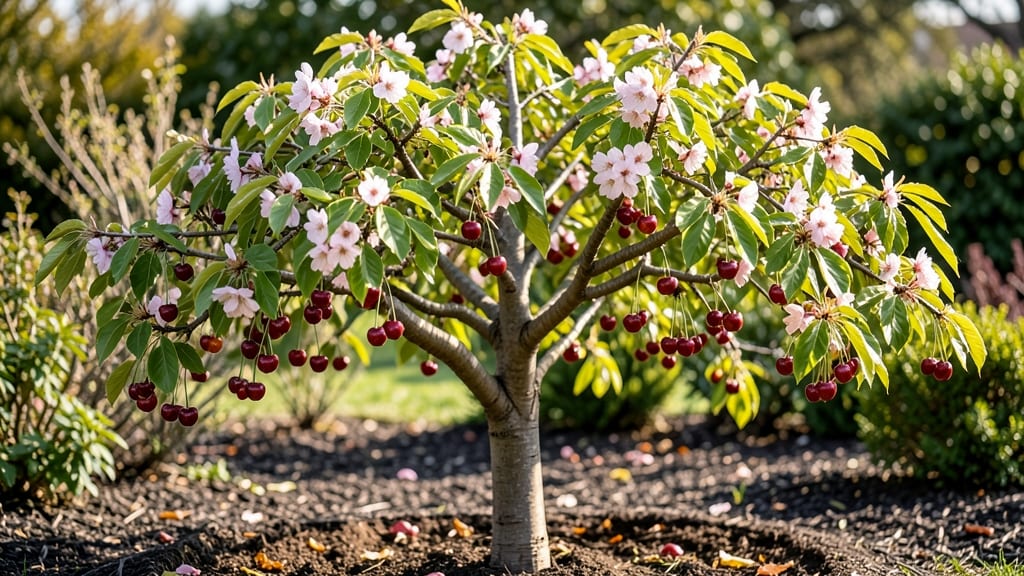
Rainier cherry trees are self-pollinating, meaning they produce fruit without needing a second tree for cross-pollination. Their unique genetic traits allow efficient self-fertilization, though environmental factors like wind and bees still enhance yield.
Self-pollination in Rainier cherries happens because their flowers contain both male and female reproductive parts, allowing fertilization within the same blossom. 🌸 Unlike many fruit trees, Rainiers don't rely on external pollinators for basic fruit set, though bees and wind can still improve fruit quality by increasing cross-pollination opportunities.
This genetic advantage makes them ideal for small gardens or urban spaces where planting multiple trees isn't practical.
What sets Rainier cherries apart is their consistent fruit production even in isolated settings. While they'll still benefit from occasional cross-pollination, their natural self-fertilization mechanism ensures reliable harvests. This characteristic also means you can enjoy their distinctive pink-and-red striped fruit without worrying about pollination failures.
💡 In This Article
- How Rainier Cherries Self-Pollinate Naturally
- Maximizing Rainier Cherry Tree Fruit Production
How Rainier cherries self-pollinate naturally
Rainier cherry trees achieve self-pollination through a specialized flower structure called perfect flowers, meaning each blossom contains both male (stamens) and female (pistil) reproductive organs.
Unlike many fruit trees that require separate male and female flowers, Rainiers can fertilize themselves when pollen from the stamens reaches the pistil within the same flower. This process relies on self-compatibility, a genetic trait that prevents self-incompatibility reactions common in other cherry varieties.
The timing of blooming plays a crucial role in this mechanism. Rainier cherries typically bloom in late spring, around April to early May, when temperatures reach 55-65°F. During this period, flowers remain open for about 5-7 days, allowing ample time for pollen transfer.
The tree's genetic makeup ensures that pollen grains can germinate on the stigma (the receptive tip of the pistil) without triggering rejection responses, which often occur in cross-pollinated species.
What makes this process even more efficient is the pollen dispersal mechanism. Rainier cherry flowers produce sticky pollen that adheres easily to the pistil, even when transferred by light breezes or insects.
While bees and other pollinators can still enhance fruit set by carrying pollen between flowers, the tree’s self-pollinating nature ensures that some fertilization occurs even in the absence of external pollinators. This dual capability explains why Rainiers thrive in isolated environments where other cherry varieties might struggle.
Another fascinating aspect is the fruit quality consistency. Because the tree can self-fertilize, it maintains a stable production of the signature pink-and-red striped cherries, a trait that distinguishes Rainiers from other varieties.
The genetic stability also means fewer instances of poor fruit development, which can occur when pollination is unreliable. For gardeners, this translates to fewer surprises and more predictable harvests each season.
However, there’s a nuance worth noting: while Rainiers are self-pollinating, cross-pollination still improves fruit quality. When bees or wind transfer pollen between flowers on different trees or even different branches of the same tree, the resulting fruit often has better size, shape, and flavor.
This is why many growers still encourage pollinator activity, even if it’s not strictly necessary for fruit set. The interplay between self-pollination and cross-pollination creates a robust system that maximizes both quantity and quality.
To visualize this process, imagine a single Rainier cherry blossom: its stamens release pollen that lands on the stigma of the same flower or nearby flowers. The pistil then grows a pollen tube down to the ovary, where fertilization occurs.
This internal mechanism is what allows Rainiers to produce fruit even in the absence of other cherry trees within a 1-mile radius, a critical advantage for urban or small-scale growers.
In summary, the Rainier cherry tree’s self-pollinating superpower stems from its perfect flowers, self-compatible genetics, and efficient pollen transfer system. This combination ensures reliable fruit production while still benefiting from the natural enhancements that pollinators provide. 🌿