
Pruning
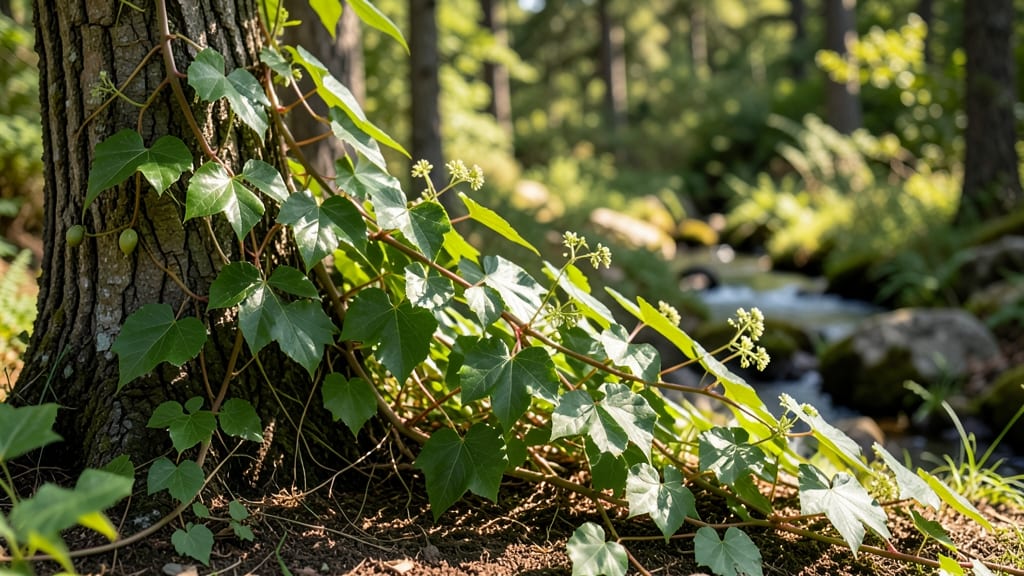
That itchy vine clinging to your tree isn’t just an eyesore—it’s poison ivy, and left unchecked, it’ll take over both the tree and your peace of mind. 🌿 I’ve wrestled with this stubborn climber, and the key to victory is knowing exactly where, when, and how to strike.
The moment you spot those telltale three-leaf clusters, act fast—before it smothers your tree’s bark or sends you scratching for weeks.
First, gear up like you’re handling a wild animal: long sleeves, gloves, and a face mask to avoid that infamous rash. Then, attack the vine at its base with pruners or a saw, cutting cleanly to prevent regrowth.
Bag the clippings immediately—burning them is safest, but if that’s not an option, seal them in a trash bag for weeks to suffocate any lingering roots. The tree itself won’t get sick, but the poison ivy will try to bounce back if you leave even a sliver behind.
For stubborn patches, a vine killer like horticultural vinegar (20% acetic acid) works wonders—just spray it directly on the cut stems and watch the vine wither in days.
Mulching the base with thick cardboard or landscape fabric blocks new sprouts, and keeping your yard clear of debris gives poison ivy nowhere to hide. The goal? A tree that stays yours—no itchy surprises, no climbing invaders.
Here’s the hard truth: poison ivy’s not going anywhere unless you’re relentless. Check the tree every few weeks for new growth, and if you see even a single leaf, cut it out before it becomes a full-blown battle. Your tree—and your skin—will thank you.
How Vines Climb Trees
Poison ivy’s knack for turning trees into its personal ladder isn’t random—it’s a survival strategy. This sneaky plant thrives by leveraging trees for support, sunlight, and nutrients, but its presence often signals deeper ecological or environmental factors.
Understanding why it happens helps you tackle it effectively. Here’s the science behind its tree-climbing habits:
Poison ivy (Toxicodendron radicans) is a woody vine with three distinct growth forms: shrub-like, vine-like, and ground-covering. When it clings to trees, it’s typically in its vine phase, where it uses specialized structures called aerial rootlets (or haustoria) to latch onto bark.
These rootlets aren’t just for grip—they can sometimes penetrate the tree’s outer layer to absorb moisture and nutrients, though they rarely kill healthy trees. Instead, they compete for resources, weakening the host over time.
Why does it climb? Sunlight. Poison ivy is a heliophyte, meaning it craves light. By scaling trees, it escapes shading from dense underbrush or forest floors, giving it the energy to produce more leaves, flowers, and—eventually—berries that spread its seeds. Without intervention, a single vine can smother an entire tree’s canopy within a few years.
Not all trees are equally vulnerable. Poison ivy targets trees with specific traits, often exploiting weaknesses or environmental cues:
| Tree Factor | Why Poison Ivy Targets It |
|---|---|
| Thin or damaged bark | Smooth-barked trees (like maples or birches) offer fewer grip points, but cracks or wounds provide perfect anchor spots for rootlets. Poison ivy exploits these like a burglar finding an open window. |
| High moisture retention | Trees near water sources (streams, swampy areas) or with dense foliage create humid microclimates. Poison ivy thrives in 60–80% humidity and uses the tree’s bark moisture to grow faster. |
| Partial sunlight exposure | Trees with dappled shade (e.g., oak or hickory canopies) create the ideal "Goldilocks zone" for poison ivy—not too dark, not too harsh. It avoids full sun (which can scorch its leaves) but seeks refuge where other plants can’t compete. |
| Dead or dying trees | Stressed or deadwood trees are magnets for poison ivy. The vine senses decaying wood (via volatile organic compounds) and colonizes it quickly, using the tree as a scaffold until it collapses—or until it’s outcompeted by healthier growth. |
Pro Tip: 🔍 Inspect trees annually for early signs of poison ivy, especially in spring (when new vines emerge) or fall (when berries ripen). Catching it early means less work later.
Poison ivy isn’t just a natural pest—it’s often accidentally introduced or spread by human behavior. Here’s how:
- 🌳 Landscaping mishaps: Nurseries sometimes sell poison ivy mislabeled as "Virginia creeper" or "five-leaf akebia." Even well-meaning gardeners unknowingly plant it near trees.
- 🚜 Construction and clearing: Bulldozers, stump grinders, and logging operations can toss infected soil or root fragments onto nearby trees, giving poison ivy a fresh foothold.
- 🐾 Wildlife dispersal: Birds eat the berries and spread seeds via droppings. Squirrels and deer can also drag vines across landscapes, planting new colonies.
- 👨🌾 Firewood and mulch: Firewood cut from infested trees or mulch made from poison ivy-contaminated wood can unleash spores when disturbed, creating airborne urushiol (the allergenic oil).
Key Insight: Poison ivy spreads 10–15 feet per year if unchecked. A single vine in your yard could become a 20-foot monster in two seasons—so containment is critical.
Poison ivy isn’t picky about soil, but it prefers disturbed or nutrient-rich ground. Here’s how climate and soil type play a role:
- 🌡️ Temperature: It thrives in USDA zones 3–9, meaning it’s happy from Canada to the Deep South. Freezes slow it down, but it regrows from roots in spring.
- 💧 Water availability: While it tolerates drought, poison ivy grows most aggressively in well-drained but moist soil. Irrigation systems or leaky sprinklers near trees can create a poison ivy paradise.
- 🌱 Soil pH: It adapts to acidic to alkaline soils (pH 5.0–8.0), but sandy loam (like that found in many suburban yards) is ideal for root penetration.
- 🔥 Sunlight cycles: In shady forests, poison ivy grows as a ground cover. Near sunny edges (like yard perimeters), it climbs trees to reach light.
Actionable Tip: ✨ If your yard has recently disturbed soil (from digging, construction, or erosion), poison ivy will seize the opportunity. Apply mulch or ground covers to block its access to sunlight and roots.
Eliminate and Prevent Creeping Vines
Dealing with poison ivy climbing your trees isn’t just about aesthetics—it’s about safety and plant health. The good news? With the right approach, you can remove it completely and stop it from returning. Below are targeted solutions based on the root cause, from manual removal to long-term prevention.
Best for: Early-stage infestations or isolated vines under 3 feet.
- 🧤 Protect Yourself First
- Wear long sleeves, gloves, and goggles (poison ivy oil can linger on tools).
- Use a vine-removal tool (like a pruner with a long handle) to avoid skin contact.
- 🔪 Cut at the Base
- Sever the vine as close to the ground as possible—this starves the plant by cutting its connection to roots.
- Bag the clippings immediately (don’t compost!) and dispose of them in sealed trash.
- 🌱 Monitor for Regrowth
- New shoots may sprout from remaining roots. Re-cut any regrowth for 2–3 weeks.
✨ Pro Tip: Spray the cut stump with vinegar or a 1% copper sulfate solution to kill lingering roots.
Best for: Vines wrapped around tree trunks or high branches.
- 🪓 Prune Strategically
- Use loppers or a pole saw to cut vines 3–6 inches above the tree trunk (this prevents regrowth from the tree’s bark).
- For thick vines, slice through the center to weaken them before pulling.
- 🌿 Smother the Base
- Cover the soil around the tree with cardboard or landscape fabric to block sunlight (poison ivy can’t grow without it).
- Mulch heavily (3–4 inches) with wood chips or gravel to suppress new sprouts.
- 💧 Water Deeply After Pruning
- Helps the tree recover while starving the ivy of moisture it might use to regenerate.
💡 Prevention Hack: Install metal tree guards (available at garden centers) to physically block vines from climbing.
Best for: Large infestations or when manual methods fail.
- 🌿 Choose the Right Herbicide
- Glyphosate (Roundup) – Effective but non-selective (kills nearby plants too).
- Triclopyr (Ortho Poison Ivy Killer) – Selective for poison ivy; safer for other plants.
- Horticultural vinegar (20–30% acetic acid) – Organic option (best for small patches).
- 🎯 Apply Correctly
- Spray on a dry, wind-free day (early morning is best).
- Cover all leaves and stems—missed spots will regrow.
- Reapply in 7–10 days for stubborn vines.
- 🚫 Avoid These Mistakes
- Don’t spray in direct sunlight (can burn plants).
- Never mix herbicides (can create toxic fumes).
🔥 Warning: Herbicides can harm pets and children—keep them away until dry.
Even after removal, poison ivy can return. Break the cycle with these habits:
- 🌳 Inspect Trees Regularly – Check for new vines twice a year (spring and fall).
- 🪓 Prune Competitive Vines – Remove ivy, Virginia creeper, or honeysuckle that give poison ivy a foothold.
- 🌿 Improve Sunlight – Poison ivy thrives in shade. Thin dense foliage to let sunlight reach the ground.
- 🌱 Plant Competitors – Fast-growing ground covers like clover or creeping thyme can outcompete ivy.
- 🧹 Clean Tools & Clothes – Wash gloves, pruners, and clothing with soapy water to remove oils.
Final Reminder: "Leaves of three, let it be!" If you’re unsure about a plant, don’t touch it—when in doubt, spray or call a pro. With persistence, your trees (and skin) will thank you!
Frequently asked questions
How can I tell if the vine on my tree is actually poison ivy?
Look for the classic three shiny leaves arranged alternately along the stem—remember the rhyme: "Leaves of three, let it be!" The leaves are typically 3–7 inches long with pointed tips. In fall, the leaves turn yellow or orange, and small white berries may appear. Never touch if you're unsure—use a camera to zoom in for confirmation.
Will removing poison ivy from my tree harm the tree itself?
No, properly removing poison ivy won't hurt healthy trees. The vine uses the tree for support but doesn't feed on it like a parasite. Just avoid damaging the tree's bark with pruning tools. If the tree is already stressed, focus on removing the ivy to reduce competition for sunlight and nutrients.
How long does it take for poison ivy to regrow after cutting?
New shoots can appear within 2–4 weeks if you don't cut the vine at its base or kill the roots. For stubborn regrowth, reapply herbicide or smother the area with mulch. Consistent monitoring is key—check the tree every 7–10 days during growing seasons (spring and summer).
Can I use regular vinegar from the grocery store to kill poison ivy?
No, regular vinegar (5% acetic acid) is too weak—you need 20–30% horticultural vinegar (available at garden centers). The higher concentration is needed to penetrate the plant's system. Always test on a small area first and apply on a dry, windless day to avoid burning nearby plants.
What's the best time of year to remove poison ivy from trees?
Early spring (March–April) or late fall (October–November) are ideal. In spring, the plant is actively growing but hasn't yet produced berries. In fall, the vine is preparing for winter dormancy, making it more vulnerable. Avoid removing it in summer heat when the rash risk is highest.