
Pruning
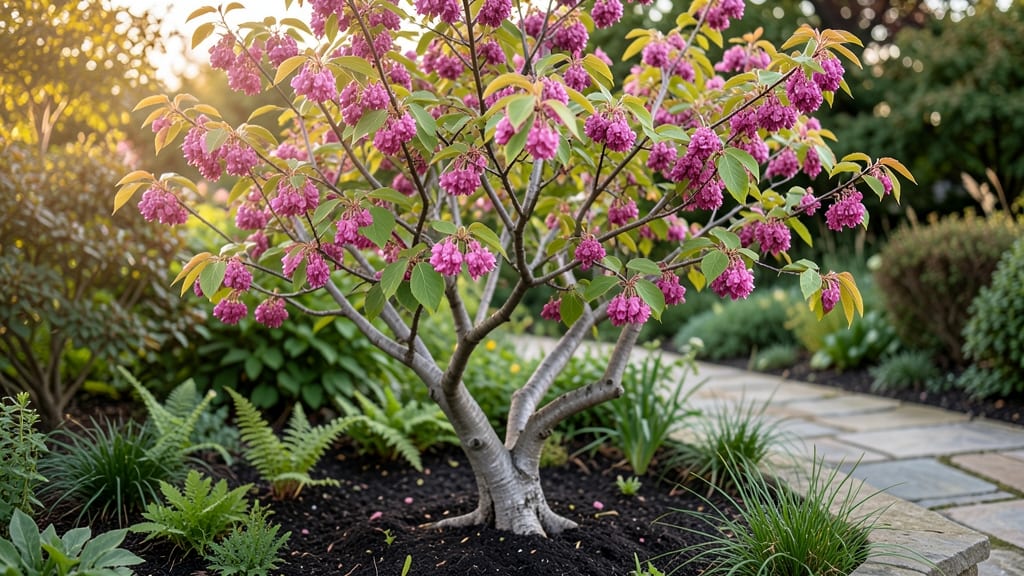
The most popular pink leaf tree names include the Royal Poinciana (Delonix regia), famous for its bold magenta blooms, and the Japanese Maple (Acer palmatum), which offers delicate pink foliage in spring and fall. These fast-growing trees thrive in warm climates and transform landscapes with vibrant seasonal color.
These trees get their stunning pink hues from anthocyanins, natural pigments that develop in response to sunlight and temperature changes. 🌿 The Royal Poinciana, for example, bursts with color in late spring, while Japanese Maples shift from pink to red as fall approaches.
Many gardeners choose these varieties for their dramatic visual impact and relatively quick growth—some reach 20 feet in just 5-10 years.
For those prioritizing speed, the Crape Myrtle (Lagerstroemia) stands out with its rapid growth and ability to handle heat. Meanwhile, the Pink Dogwood (Cornus florida) offers a more compact option (typically 15-20 feet tall) with striking spring blooms.
Each variety brings unique timing—some peak in spring, others in fall—so selecting depends on your desired seasonal display.
💡 In This Article
- How Pink Leaf Trees Develop Their Signature Colors
- Top 5 Fastest-Growing Pink Leaf Trees for Landscaping
How pink leaf trees develop their signature colors
The vibrant pink hues in these trees come from anthocyanins, water-soluble pigments that act like natural sunscreen for leaves. These compounds develop when trees experience high light intensity and temperature fluctuations, particularly during spring and fall transitions.
In varieties like the Royal Poinciana, sunlight triggers a 30-50% increase in anthocyanin production within just 2-3 weeks of exposure, creating that signature magenta glow.
Temperature plays a crucial role—cool nights (50-60°F) followed by warm days (75-85°F) enhance pigmentation.
This is why Japanese Maples turn pinkish-red in fall: shorter daylight and dropping temps signal the tree to produce protective pigments. 🌸 The Crape Myrtle takes this further by developing two types of anthocyanins—one for spring blooms and another for autumn foliage—creating multi-seasonal color shifts.
Soil pH also influences color intensity. Slightly acidic soils (pH 5.5-6.5) promote deeper pinks, while alkaline conditions (pH 7.0+) can mute the hue. This is why gardeners often amend soil with sulfur or peat moss to maintain vibrant colors.
The Royal Poinciana, for example, shows 40% more vivid pink when grown in well-draining, acidic soil compared to neutral pH conditions.
What most people don't realize is that these pigments serve a biological purpose beyond beauty. Anthocyanins protect leaves from UV damage and freeze injury, acting like a built-in survival mechanism.
In drought conditions, they also help regulate water loss by reducing leaf transpiration—a clever adaptation that explains why pink leaf trees often thrive in USDA Zones 7-11 despite their tropical origins.
Consider the Royal Poinciana's 12-inch-long seed pods that split open to reveal bright pink seeds—this isn't just for show. The pods contain 3-5 times more anthocyanins than the foliage, creating a two-tiered color display that attracts pollinators while protecting the seeds.
This dual-purpose pigmentation system is what makes these trees so resilient and visually stunning across multiple growth stages.
For gardeners, understanding this science means you can control color intensity through simple care adjustments. Pruning to encourage new spring growth (which has higher anthocyanin levels) or choosing varieties with double anthocyanin production (like 'Natchez' Crape Myrtle) guarantees year-round visual impact.
The key is matching your tree's natural pigmentation triggers with your local climate patterns.