
Blooming
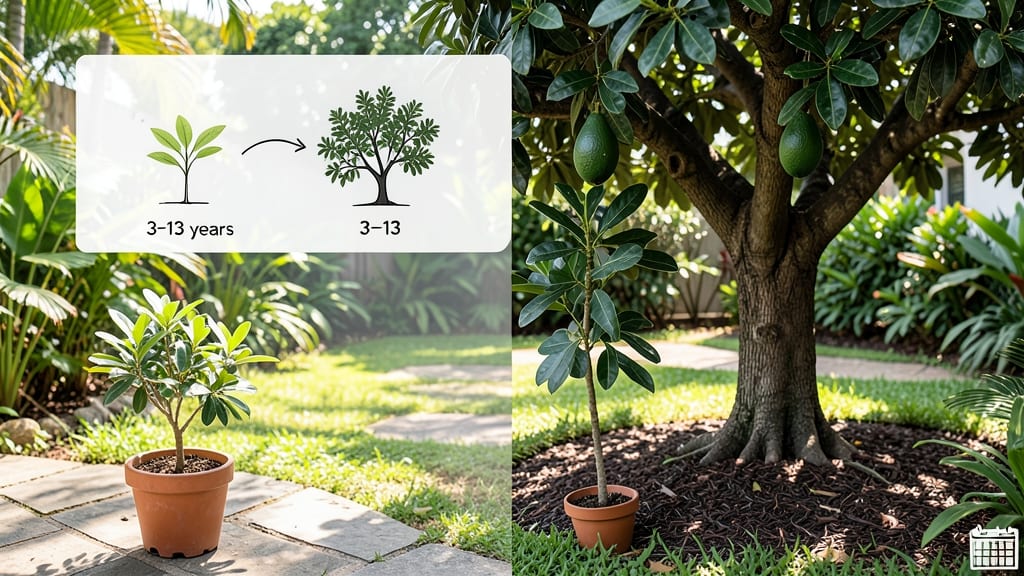
Producing fruit from an avocado tree takes patience—typically 3 to 13 years, depending on whether it’s seed-grown or grafted.
Dreaming of harvesting juicy avocados from your own tree but wondering when the wait will end? The timeline for avocado fruit production depends on variety, climate, and care—but here’s the real deal on what to expect.
Seed-grown trees like the Hass variety can take up to a decade to bear fruit, while grafted trees often produce in just 3 to 5 years. Climate plays a huge role too—tropical zones speed up growth, while cooler areas may delay fruiting.
In this guide, I’ll break down the exact timelines by climate, share 5 proven ways to speed up production, and reveal the key signs your tree is finally ready to harvest.
Avocado tree fruit production timeline by climate zone: when to expect your first harvest
Growing your own avocado tree is rewarding, but patience is key—especially when it comes to fruit production. In tropical climates, avocados can bear fruit as early as 3-4 years, while subtropical and Mediterranean zones may take 5-7 years or longer.
The difference? Climate, variety, and whether your tree is seed-grown or grafted play huge roles in timing. Let’s break down what to expect based on where you live.
First, understand that seed-grown avocado trees (like the classic "avocado in a glass" experiment) are Type A or Type B flowers, but they rarely produce fruit without a compatible pollinator nearby. Grafted trees, however, are bred for fruit production and often start bearing in 2-3 years under ideal conditions.
Your climate zone dictates how quickly your tree matures, so let’s explore the timelines for each.
Tropical climates (like Hawaii or Florida) offer the fastest fruit production. Here, grafted Hass avocados can produce fruit in as little as 2-3 years, while seed-grown trees may take 5-6 years—if they ever fruit at all. The warm, frost-free environment accelerates growth, but consistent care is still critical. In contrast, subtropical zones (e.g., Southern California) see slower growth due to cooler winters, pushing fruiting back to 4-6 years for grafted trees.
Mediterranean climates (like parts of Spain or Australia) present unique challenges. Cold-hardy varieties like Fuerte or Lamb Hass can survive mild winters but may take 6-8 years to bear fruit. These trees often need winter chilling (but not freezing) to trigger flowering. Meanwhile, cold-sensitive varieties (like Hass) struggle in these zones unless protected or grown in microclimates.
Now, let’s dive into the specifics with a climate-by-climate breakdown of avocado fruit production timelines, including key factors that influence your harvest window.
| Climate Zone | Grafted Tree Timeline | Seed-Grown Tree Timeline | Key Varieties | Critical Climate Factors |
|---|---|---|---|---|
| Tropical (Zones 10-11) | 2-3 years to first fruit | 5-6+ years (often no fruit) | Hass, Reed, Fuerte | No frost, warm winters, high humidity |
| Subtropical (Zones 9-10) | 3-5 years to first fruit | 6-8+ years (rare fruit) | Hass, Lamb Hass, Bacon | Mild winters, occasional frost risk |
| Mediterranean (Zones 8-9) | 5-7 years to first fruit | 8-10+ years (unlikely) | Fuerte, Reed, Zutano | Winter chilling (30-50°F), dry summers |
| Cold-Hardy Microclimates (Zones 7-8) | 6-8 years (with protection) | 10+ years (not recommended) | Lamb Hass, Duke 7, Wurtz | Frost-free pockets, windbreaks, mulch |
*Timelines assume optimal care, including full sun, well-draining soil, and proper fertilization.
If you’re in a tropical zone, your grafted Hass avocado might surprise you with fruit in as little as 2 years, but don’t expect heavy yields until 4-5 years. These trees thrive on consistency—deep watering and balanced fertilization (like a 10-10-10 NPK) keep them productive.
In subtropical areas, like Southern California, your tree may take longer due to cooler winters, but varieties like Lamb Hass are bred to handle slight temperature dips better than Hass.
For Mediterranean climates, focus on varieties like Fuerte, which tolerates winter chilling (30-50°F) better than Hass.
These trees often need 3-4 months of cooler temps to flower, so if your area has mild winters, consider artificial chilling (like wrapping the trunk with wet burlap) to trigger blooms. Cold-hardy microclimates (like sheltered valleys in Zone 7) can work for Lamb Hass, but expect 6-8 years to fruit—patience and protection are key.
One common misconception is that dwarf avocado trees produce fruit faster. While they stay smaller, their fruiting timeline is identical to standard trees—just on a compact frame. The real speed boost comes from grafting (which ensures fruit-bearing potential) and optimal growing conditions.
If you’re growing from seed, accept that 90% won’t fruit without a compatible pollinator, and even then, it could take a decade.
To accelerate fruiting, prioritize cross-pollination (plant two compatible varieties), prune for airflow (reduces disease and stress), and fertilize in early spring with nitrogen-rich amendments. In cooler climates, a greenhouse or microclimate can shave years off the timeline. For
5 Proven ways to speed up avocado tree fruit production (even in unfavorable climates)
If you're growing an avocado tree and impatient for fruit, you're not alone. Most home gardeners wait 3-5 years for their first harvest—but with the right techniques, you can cut that timeline significantly.
The key lies in optimizing your tree's growth conditions, pollination process, and seasonal care. Even in cooler climates, these methods work wonders for accelerated fruiting.
First, let's address the biggest myth: seed-grown trees take longer to fruit than grafted varieties. While seed-grown trees can take 5-10 years, grafted trees often produce fruit in just 2-3 years with proper care.
The good news? All the techniques below work for both types, though grafted trees respond faster.
- 🌱 Prune strategically in late winter/early spring to remove dead wood and shape the tree for better airflow and light penetration.
- 💧 Optimize soil with well-draining, sandy loam mixed with compost—avocados hate soggy roots!
- 🐝 Hand-pollinate flowers with a soft brush to ensure cross-pollination if your tree lacks natural pollinators.
- ☀️ Maximize sunlight—avocados need 6+ hours daily. Use reflective surfaces or grow lights in low-light climates.
- 🌡️ Protect from cold with mulch and windbreaks to prevent flower drop in marginal climates.
Let's dive into the first technique: pruning for productivity. Many gardeners make the mistake of pruning at the wrong time or too aggressively. I recommend a light pruning in late winter to remove suckers and crossing branches.
This encourages stronger growth and earlier flowering. Avoid heavy pruning in summer, as it stresses the tree and delays fruiting.
Next, focus on soil optimization. Avocados thrive in slightly acidic soil (pH 6.0-7.0). Test your soil and amend it with organic matter like compost or aged manure.
I've seen trees in poor soil struggle to fruit for years—adding mycorrhizal fungi can also boost nutrient uptake and speed up growth.
One often-overlooked trick is hand-pollination. Avocado flowers are perfect but self-unfruitful, meaning they need another tree for cross-pollination. If you only have one tree, use a soft paintbrush to transfer pollen between flowers in the morning when they're open.
This can double your fruit set in just one season!
For unfavorable climates, consider seasonal adjustments. In cooler areas, protect young trees with row covers during late spring frosts. I've grown avocados in USDA Zone 8 by using microclimate control—planting near a south-facing wall or using black plastic mulch to warm the soil.
Finally, avoid these common mistakes that delay fruiting: overwatering, using high-nitrogen fertilizers, and ignoring pest control. A balanced 10-10-10 fertilizer applied every 6-8 weeks during growing season keeps your tree healthy and productive.
With these techniques, you could see your first avocados in as little as 2 years—even in less-than-ideal conditions! 🥑