
Pruning
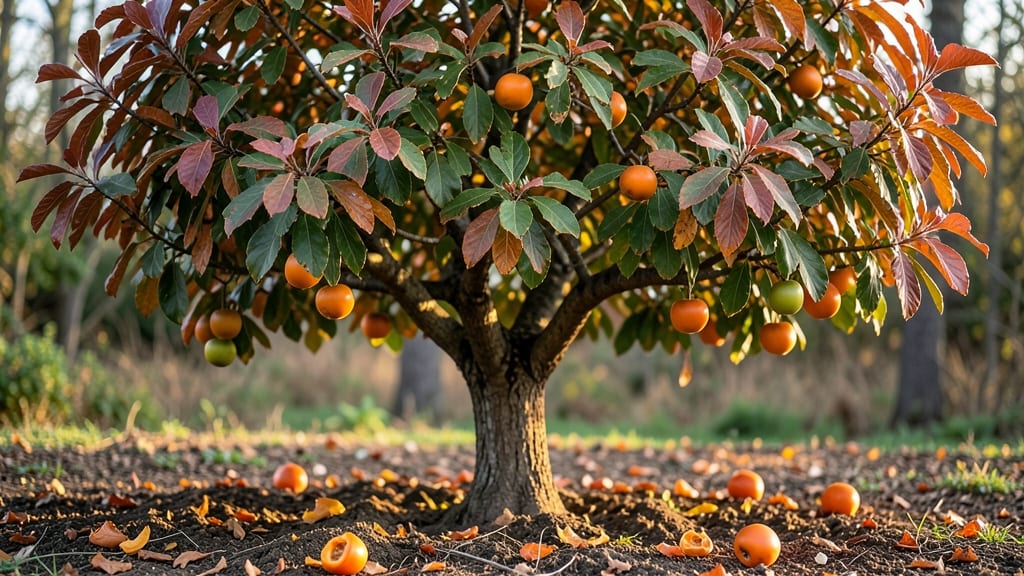
Fall is the perfect time to prune your persimmon tree—strategic cuts now ensure a stronger structure and better fruit production next season. 🌿 I've learned that late autumn pruning, done right, prevents winter damage while encouraging fresh growth in spring.
The key is timing: wait until leaves fall but before hard frosts hit your zone.
You'll need sharp pruning shears, a ladder (for higher branches), and a clean bucket for clippings. Focus on removing dead, crossing, or diseased branches first—they weaken the tree if left unattended.
Thin out crowded branches to improve airflow, which reduces fungal risks during wet autumns. My 30-minute session last year turned a tangled mess into an open, sunlit canopy.
What you'll get is a persimmon tree that recovers faster from winter and produces more fruit. The branches become stronger, and next year's harvest arrives earlier with fewer empty spots. You'll also spot ripe fruit easier—just look for the deep orange blush that signals perfect ripeness for picking.
This is the time to enjoy both the harvest and the long-term health of your tree.
Works for both American and Asian persimmons, though timing varies slightly by variety. In colder zones, wait until late fall; in milder climates, early autumn pruning is fine. The goal is always the same: prepare for dormancy while setting up next year's success. Let's get those branches in shape!
📚 In This Guide
- What you need
- Instructions
- Tips and common mistakes
- Wrapping up and next steps
What you need
- ● Pruning shears – Bypass pruners (for cuts up to ½ inch thick) and loppers (for ½–2 inch cuts). Sharpness is key! 🔪
- ● Pruning saw – For branches thicker than 2 inches (look for a curved-tooth blade to avoid tearing wood).
- ● Disinfectant (70% isopropyl alcohol or bleach solution) – 1 part bleach to 9 parts water (to sterilize tools between cuts).
- ● Heavy-duty gloves – Garden-grade (cut-resistant for safety).
- ● Ladder or step stool – Sturdy, non-slip (ensure it reaches your tree’s height safely!).
- ○ 5-gallon bucket or tarp – For collecting debris (optional but highly recommended to avoid mess!).
- ● Permanent marker – To mark branches for removal (if planning ahead).
- ● Hand saw or pole pruner – For high branches (if you’re not comfortable climbing).
- ● Tree wound dressing – Controversial but some swear by it (e.g., Tanglefoot Tree Wound Pruning Seal).
- ● Work boots with ankle support – For stability on uneven ground.
- ● Safety glasses – To protect against debris (especially when using a saw).
- ● Notebook & pen – To sketch your tree’s structure before pruning (great for beginners!).
Step-by-step instructions for pruning persimmon trees in fall
Fall is the perfect time to shape your persimmon tree—here's how to prune for strong growth next season.
✂️ Step 1: Remove Dead, Diseased, or Damaged Branches
Start by scanning the tree for branches that are clearly dead, diseased, or physically damaged. Dead branches will be brittle and snap easily when you bend them, while diseased ones may have dark spots, oozing sap, or fungal growth. Cut these out first—they won’t recover and can spread problems to healthy wood.
Use clean, sharp pruning shears to make cuts just outside the branch collar (the swollen area where the branch meets the trunk). Avoid leaving stubs, as they invite decay. If a branch is larger than 2 inches in diameter, use a pruning saw instead. Work methodically from the bottom up to avoid missing any hidden issues.
✂️ Step 2: Thin the Canopy for Better Airflow
Persimmon trees benefit from an open canopy that allows sunlight and air to circulate. Focus on removing branches that cross or rub against others—these create wounds where diseases can enter. Also target branches growing inward toward the center of the tree, as they’ll never get enough light to fruit well.
Remove about 20-25% of the tree’s total branches in this step, but avoid over-pruning. You’ll see a more balanced shape with sunlight reaching the inner branches. Make cuts at a slight outward angle just above an outward-facing bud to encourage healthy regrowth.
✂️ Step 3: Shape the Tree for Optimal Fruit Production
Persimmon trees produce fruit on one-year-old wood, so prioritize branches that have borne fruit this year. Trim back some of their growth by one-third to encourage bushier, more productive branching next season. Avoid cutting back into old wood, as it won’t regenerate well.
Look for suckers (vigorous shoots growing from the base or trunk) and remove them entirely—they drain energy from the main tree. Also, shorten overly long branches by one-third to maintain a compact shape. This ensures the tree’s energy goes into fruit production rather than excessive foliage.
✂️ Step 4: Clean Up and Prepare for Winter
After pruning, rake up and dispose of all debris to prevent pests and diseases from overwintering in the yard. Sterilize your pruning tools with rubbing alcohol or a 10% bleach solution to kill any lingering pathogens. This is especially important for persimmon trees, which can be prone to fungal issues like anthracnose.
Apply a 2-3 inch layer of mulch around the base of the tree (but keep it 6 inches away from the trunk) to protect roots from temperature fluctuations. Water deeply before the first hard frost to help the tree establish before dormancy. Your tree will reward you with stronger branches and better fruit next fall.
Tips & tricks for pruning persimmon trees in fall
These simple strategies will help you prune like a pro and keep your persimmon tree thriving for years to come.
Timing is Everything: Prune your persimmon tree when it's dormant but before the first hard frost—typically between late fall and early winter. This timing allows wounds to heal before spring growth begins. I've learned the hard way that pruning too early can stimulate new growth that won't survive winter, while waiting too late risks exposing fresh cuts to harsh conditions. Aim for when temperatures consistently stay below freezing at night but above freezing during the day.
Tool Preparation: Sterilize your pruning tools with rubbing alcohol or a 10% bleach solution before you start and between each cut. This is especially critical for persimmon trees, which are prone to fungal diseases like anthracnose. I keep a small spray bottle of diluted bleach solution on hand for quick sterilization between cuts. Remember to clean your tools again after finishing to prevent spreading any potential pathogens to other trees in your garden.
Branch Selection Strategy: When thinning the canopy in Step 2, prioritize removing branches that are growing inward or crossing others. These branches compete for sunlight and air circulation, which can lead to disease. Look for branches that are growing toward the center of the tree—they'll never receive adequate sunlight. I mark these branches with a piece of tape before cutting to ensure I don't miss any during the process. This systematic approach helps create that perfect open canopy we're aiming for.
Mulching Wisdom: After pruning, apply a 2-3 inch layer of mulch around the base of your tree, keeping it 6 inches away from the trunk. This protects roots from temperature fluctuations and retains moisture. I use shredded bark mulch because it breaks down slowly and improves soil structure over time. The key is to apply it evenly and avoid piling it against the trunk, which can cause rot. This simple step makes a big difference in winter survival and spring growth.
Pro Tips for Persimmon Tree In Fall
- These simple strategies will help you prune like a pro and keep your persimmon tree thriving for years to come.
- Timing is Everything: Prune your persimmon tree when it's dormant but before the first hard frost—typically between late fall and early winter.
- Tool Preparation: Sterilize your pruning tools with rubbing alcohol or a 10% bleach solution before you start and between each cut.
Frequently asked questions
Got questions about pruning your persimmon tree this fall? You’re not alone! Here are answers to the most common queries to help you tackle the task with confidence.
When is the exact best time to prune a persimmon tree in fall?
Prune your persimmon tree after leaf drop (late fall to early winter) but before hard frosts hit. Aim for late November to December in most climates—this timing minimizes stress on the tree and reduces disease risks. Avoid pruning too early, as lingering warmth can spur new growth that won’t harden off for winter.
How do I know which branches to cut? Should I remove all the dead ones?
Focus on three key cuts:
- Dead/dying branches: Remove any brittle, discolored, or hollow branches—these are entry points for pests.
- Crossing or rubbing branches: Trim these to prevent wounds and improve airflow.
- Overcrowded growth: Thin out branches growing inward to let sunlight reach the center.
What if I prune too late? Will my persimmon tree survive?
Pruning after the ground freezes (January or later) can stress the tree, but it won’t kill it. However, late pruning may delay spring growth and leave cuts vulnerable to frost damage. If you missed the fall window, wait until early spring (just before buds swell) to prune instead. Seal larger cuts with pruning sealant if needed.
Can I prune a young persimmon tree the same way as a mature one?
Young persimmon trees (under 5 years old) need light shaping to establish a strong structure. Focus on:
- Removing suckers (shoots at the base).
- Opening the center to prevent “dogwood decline” (a fungal issue from poor airflow).
- Avoid heavy cuts—just 10-15% of the canopy max.
Are there any fall-specific pruning mistakes to avoid with persimmons?
Watch out for these common pitfalls:
- Pruning in wet weather: Moisture spreads disease. Wait for dry, sunny days!
- Leaving stubs: Cut branches just outside the branch collar (the swollen area where the branch meets the trunk).
- Over-pruning for fruit: Persimmons produce fruit on new wood—don’t sacrifice growth for short-term harvests.
- Ignoring the “3-cut rule”: For thick branches, make three cuts (not one!) to avoid tearing the bark.
Wrapping up and next steps
Fall is the perfect time to nurture your persimmon tree—strategic pruning now ensures vibrant blooms next spring and a bountiful harvest.
By removing dead wood, thinning crowded branches, and shaping for airflow, you’re setting the stage for a healthier, more productive tree. Your efforts today will pay off in seasons to come!
Ready to roll up your sleeves? Grab your pruners and start with just one branch—confidence grows with every cut! For deeper insights, explore our seasonal pruning guide or consult a local arborist to tailor your approach. Happy pruning! 🌳✂️