
Pruning
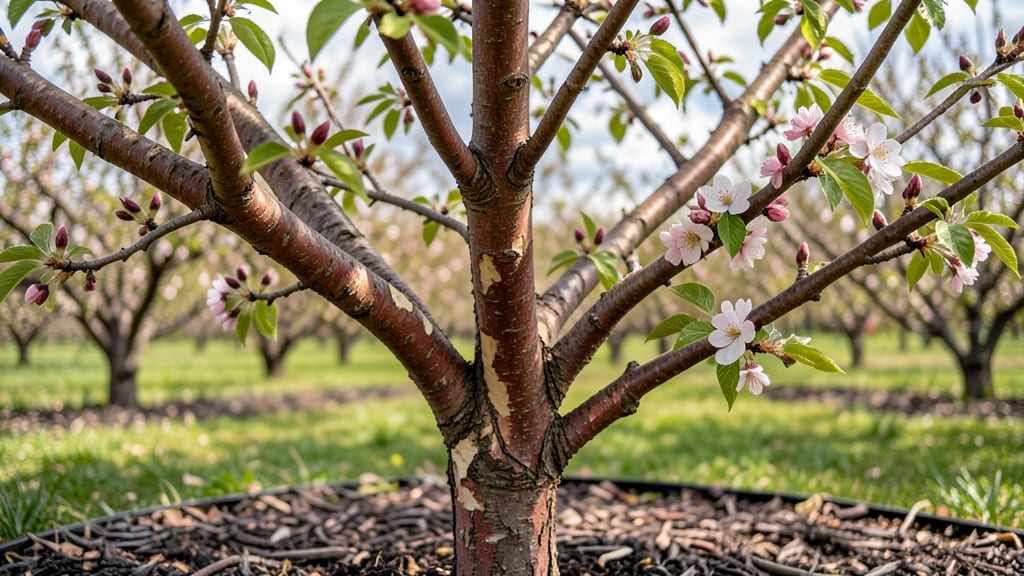
Your peach tree branches hold the key to next year's harvest—or they'll rob it. ✂️ I've watched weak limbs steal energy from fruit production, and learned how the right cuts transform a struggling tree into a productive powerhouse.
The difference between a few dozen peaches and a bushel basket often comes down to what you do with those branches now.
Start by removing dead wood first—it's the easy win that clears up 80% of problems. Then look for crossing branches (they rub and create entry points for disease) and limbs growing straight up (they rarely bear fruit).
My 3-step pruning method cuts out wasted energy while opening the canopy to sunlight, which means more peaches and fewer pests hiding in dark corners.
After pruning, your tree will reward you with larger fruit and fewer disease spots. The cuts heal within weeks, and new growth appears within 6-8 weeks of spring pruning. Even neglected trees bounce back surprisingly fast when you focus on structure first.
Works for both young trees (where you shape the framework) and mature trees (where you refresh growth). The same principles apply whether you're dealing with a backyard tree or a small orchard. Let's get those branches working for you instead of against you.
📚 In This Guide
- What you need
- Instructions
- Tips and common mistakes
- Wrapping up and next steps
What you need
- ● Pruning shears: Bypass pruners (for small branches, 5-8 inches in diameter) – 1 pair (sharp, clean, and well-oiled).
- ● Loppers: Long-handled (for medium branches, ¾–2 inches in diameter) – 1 pair (with a 20–24-inch reach).
- ● Pruning saw: Curved-tooth or folding saw (for thick branches, 2+ inches) – 1 saw (with a 12–16-inch blade).
- ● Disinfectant: 70% isopropyl alcohol or bleach solution (1 part bleach to 9 parts water) – small spray bottle (to sterilize tools between cuts).
- ● Rubbing alcohol or hand sanitizer: – 1 bottle (to clean hands and tools).
- ● Heavy-duty gloves: Leather or cut-resistant – 1 pair (to protect from thorns and sharp branches).
- ● Safety glasses: – 1 pair (to shield eyes from debris).
- ● Ladder or step stool: Sturdy and tall enough (for reaching higher branches) – 1 unit (ensure it’s rated for your weight).
- ● Tarp or drop cloth: – 1 large sheet (to collect pruned branches and debris).
- ○ Permanent marker: – 1 pen (optional, for marking branches to remove).
- ● Tree wound paint or pruning sealant: – Skip this! Research shows it’s unnecessary for peach trees and can even trap moisture. 🚫
- ● Extension pole pruners: – For very tall trees (if you don’t want to climb).
- ● Notebook or app: – To sketch your tree’s structure before and after pruning (helps track progress!).
- ● Sharpener: – For keeping blades in top condition (a small file or honing tool).
Step-by-step guide to pruning peach tree branches
Here’s how I transform a tangled peach tree into a fruit-bearing powerhouse with clean, strategic cuts.
✂️ Step 1: Remove Dead or Diseased Wood First
Start by scanning your tree for branches that are brown, brittle, or oozing sap—these are your first targets. Dead wood doesn’t produce fruit and can spread disease to healthy branches. Use sharp pruning shears to cut just outside the branch collar (the swollen area where the branch meets the trunk), making the cut at a 45-degree angle.
If a branch is larger than ½ inch thick, use a pruning saw instead. I always disinfect my tools with rubbing alcohol between cuts to prevent spreading pathogens. You’ll know you’re doing it right when the cut is smooth and the branch snaps cleanly at the collar.
✂️ Step 2: Thin Out Crowded Branches for Better Airflow
Peach trees need good airflow to prevent fungal diseases like brown rot. Look for branches that cross or rub against each other—these are prime candidates for removal. Aim to create an open center by cutting back any branches growing inward. I like to step back every few cuts to visualize the tree’s structure from all angles.
Remove about 20-30% of the tree’s total branches during this step. Focus on the smallest branches first, as they’re easier to remove without disrupting the tree’s balance. If you’re unsure whether to cut a branch, ask: Will this branch produce more fruit than the one it’s shading? If not, it’s time to go.
☀️ Step 3: Prune for Light Penetration and Fruit Production
Next, target branches that block sunlight from reaching the center of the tree. Cut back any limbs that grow straight upward or outward at a less than 45-degree angle, as these often produce fewer fruits. Instead, encourage branches that grow at a 45-60 degree angle—these are ideal for fruit production.
Shorten the remaining branches by ⅓ to ½ their length, cutting just above an outward-facing bud. This ensures new growth will angle outward, allowing sunlight to penetrate deeper into the tree. You’ll see the difference in just a few weeks—new shoots will emerge with better spacing and exposure.
✂️ Step 4: Shape the Tree for Long-Term Health
Now it’s time to refine the tree’s shape. Start by identifying the scaffold branches—the main limbs that form the tree’s framework. These should be spaced 6-12 inches apart along the trunk. Remove any competing branches that grow too close to scaffold limbs, as they’ll weaken the tree’s structure over time.
For younger trees, focus on developing a strong central leader (the main upward-growing trunk). For older trees, maintain a balanced shape by pruning evenly on all sides. Step back frequently to ensure the tree isn’t becoming top-heavy or lopsided. A well-shaped peach tree will support more fruit and resist wind damage.
⏰ Step 5: Clean Up and Monitor for New Growth
After pruning, rake up and dispose of all clippings—never leave them on the ground, as they can harbor pests and diseases. Now’s also a great time to apply a fresh layer of mulch around the base of the tree to retain moisture and suppress weeds. Water deeply to help the tree recover from the stress of pruning.
Watch for new growth in 3-4 weeks—this is your sign that the tree is responding well. If you notice any signs of stress, like yellowing leaves or wilting, reduce watering slightly and avoid pruning again for at least 6 months. A properly pruned peach tree will reward you with stronger branches, better fruit production, and fewer pests in the seasons to come.
Tips & tricks for perfect peach tree pruning
These simple strategies will help you transform your peach tree into a well-structured, fruit-bearing powerhouse—without the guesswork.
Tool Prep is Everything: Always disinfect your pruning shears and saw between cuts using rubbing alcohol. I learned this the hard way after seeing a healthy branch turn brown overnight—pathogens spread faster than you think. Also, keep your tools sharp; dull blades tear wood instead of making clean cuts, which slows healing and invites disease.
Visualizing the Tree's Future: Step back every few cuts to check your progress. In Step 2, when thinning crowded branches, imagine sunlight streaming through the center like rays. You're not just removing branches—you're sculpting airflow. Look for that open vase shape; it's the gold standard for peach trees because it maximates fruit exposure while maintaining structural integrity.
Bud Selection Matters: When making cuts in Step 3, always aim for outward-facing buds. These will grow into branches that angle away from the center, creating that perfect open structure. I used to cut randomly, and my trees ended up with tangled centers that blocked sunlight. Now I trace the bud's direction with my finger before making the cut—it takes seconds but makes all the difference.
Seasonal Timing Tip: Late winter or early spring is ideal for pruning when the tree is still dormant but buds are starting to swell. This timing gives new growth plenty of time to harden off before summer heat arrives. If you must prune later, wait until at least 6 months after your last pruning session to avoid stressing the tree.
Pro Tips for Peach Tree Branches
- These simple strategies will help you transform your peach tree into a well-structured, fruit-bearing powerhouse—without the guesswork.
- Tool Prep is Everything: Always disinfect your pruning shears and saw between cuts using rubbing alcohol.
- Visualizing the Tree's Future: Step back every few cuts to check your progress.
Frequently asked questions
Got questions about pruning peach tree branches? You’re not alone! Here are some of the most common concerns—plus expert answers to keep your tree thriving.
When is the best time to prune peach tree branches?
The ideal time is late winter or early spring (before buds swell but after severe cold passes). Avoid pruning in fall—it can invite disease. For heavy pruning, prioritize dormant season cuts to minimize stress. Pro tip: If you must prune in summer, do it after harvest to reduce pest risks.
How do I know which branches to cut on a peach tree?
Focus on:
- Dead/diseased branches (snag or ooze sap)
- Crossing or rubbing branches (creates wounds)
- Suckers (shoots from the base or roots)
- Water sprouts (fast-growing vertical shoots)
- Overcrowded growth (aim for open center, 6–8 main scaffold branches)
Cut back to a bud facing outward or a side branch for clean regrowth.
Why are my peach tree branches dying after pruning?
Common culprits:
- Over-pruning (never remove >25% of foliage at once)
- Dirty tools (sterilize with rubbing alcohol to avoid disease)
- Wrong cuts (leave stubs or tear bark—cut at a <45° angle, ¼” above a bud)
- Timing (pruning too late in spring can stress the tree)
If branches still die, check for bacterial canker (sunken, oozing lesions)—remove infected wood immediately.
Will pruning peach tree branches affect next year’s fruit?
Pruning reduces fruit in the first year but boosts quality and yield long-term by improving airflow and sunlight. Thin branches also prevent overcrowding, which leads to smaller, lower-quality peaches. Balance is key: Prune aggressively every 2–3 years for structural health.
Can I use peach tree branches for anything else besides pruning?
Here’s how to repurpose them:
- Firewood (dry branches for 6–12 months first)
- Compost (chop small branches into mulch)
- DIY tools (sand smooth branches for stakes or trellises)
- Wildlife habitat (leave some branches for birds/nesting)
Warning: Avoid burning green wood—it releases toxic gases. Always check local regulations before burning.
Wrapping up and next steps
Pruning your peach tree’s branches isn’t just about aesthetics—it’s a game-changer for fruit quality, tree health, and long-term growth. By mastering the right cuts, timing, and techniques, you’ll unlock a stronger structure, better air circulation, and a bountiful harvest year after year. 🌿✂️
Ready to transform your peach tree into a thriving powerhouse? Start by reviewing your notes—mark the branches you’ve identified for trimming, gather your tools, and schedule your first pruning session on a calm, dry day. Your future harvest will thank you!