
Pruning
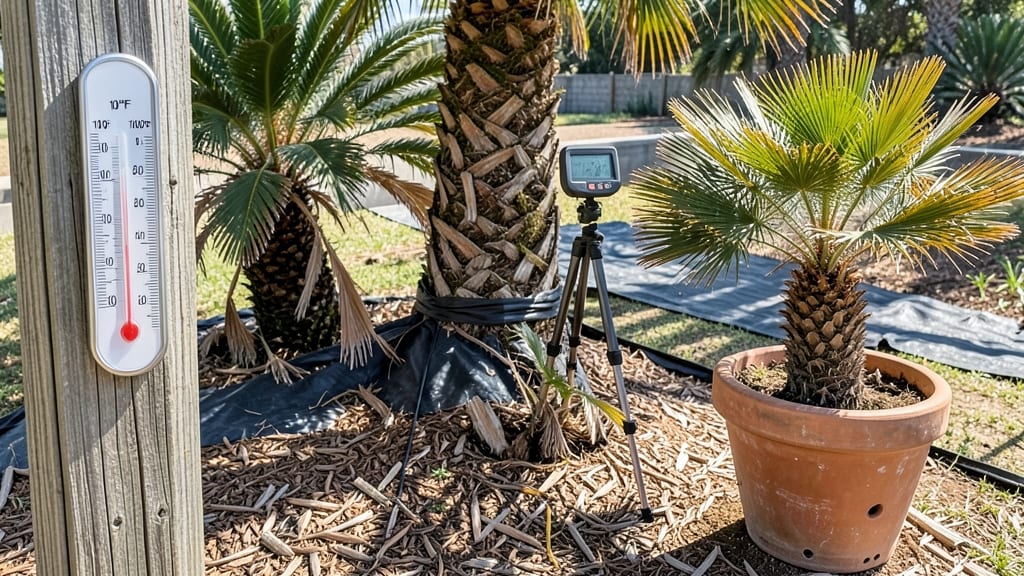
Your palm trees can survive winter if you understand their palm tree temperature tolerance—I’ve watched tropical palms freeze to death in Zone 7, but the right cold-hardy types thrive even when temps dip into the 20s.
The secret lies in understanding each species’ tolerance range and how to protect them when winter hits. Some palms, like the Needle Palm or Windmill Palm, handle 15°F without flinching, while others, like the Canary Island Date Palm, struggle below 25°F.
The key is matching your climate to the right species—no guesswork needed. I’ll show you which palms make it through harsh winters and how to give them a fighting chance. You’ll end up with a palm that stays green year-round, even in northern climates.
The trick is layering mulch, wrapping trunks, and knowing when to cover them—simple steps that make all the difference. No more sad, brown fronds come spring. Works for gardeners in Zones 5-10, whether you’re in a cold desert or a chilly coastal area.
Let’s pick the perfect palm for your yard!
📚 In This Guide
- What you need
- Instructions
- Tips and common mistakes
- Wrapping up and next steps
What you need
- ● Cold-hardy palm tree varieties: 1–3 Trachycarpus fortunei (Windmill Palm) – Zones 7–10
- ● 1–3 Sabal minor (Dwarf Palmetto) – Zones 7–10
- ● 1–3 Rhapidophyllum hystrix (Needle Palm) – Zones 6–9
- ● Thermometer: Digital outdoor thermometer (measures down to -4°F/-20°C)
- ○ Soil thermometer: For checking root-zone temps (optional but helpful)
- ● Mulch: 2–3 inches of organic mulch (straw, wood chips, or pine needles)
- ● Frost cloth: 1–2 rolls (30–50 denier for heavy frost protection)
- ● Burlap or bubble wrap: For wrapping trunks (1–2 sheets per palm)
- ● Watering can or hose: For deep-watering sessions
- ● Pruning tools: 1 pair of clean, sharp bypass pruners
- ● 1 small handsaw (for thicker fronds)
- ● Gloves & long sleeves: For protection while handling palms
- ● Heating mat or bulb (for potted palms in extreme cold)
- ● Windbreak (burlap screens or temporary fencing)
- ● Slow-release fertilizer (for post-winter recovery)
- ● pH soil test kit (to ensure optimal growing conditions)
How to select and care for cold-hardy palm trees
Not all palms freeze—here’s how to choose and protect the toughest varieties for your climate.
Identify Your Hardiness Zone
First, determine your USDA hardiness zone using the USDA Plant Hardiness Zone Map. Cold-hardy palms thrive in zones 7-10, but even within those, temperatures matter. For example, a palm rated for 15°F won’t survive a 10°F dip. Check your average winter lows—this tells you which palms will survive without extra protection.
If you’re in zone 7 or cooler, focus on varieties like the Needle Palm (Rhapidophyllum hystrix) or Windmill Palm (Trachycarpus fortunei), both of which tolerate 5-10°F. In zones 8-9, Mediterranean Fan Palm (Chamaerops humilis) and California Fan Palm (Washingtonia filifera) handle brief dips to 15-20°F. Write down your zone and minimum temps—this is your shopping list.
Choose the Right Palm for Your Climate
Not all palms are created equal when it comes to cold. Fan palms generally outperform feather palms in cold zones because their fronds fold inward, protecting the growing point. The Needle Palm, for instance, looks like a bushy shrub but is actually a palm and can survive 5°F with proper care. Feathery palms like Pindo Palm (Butia capitata) handle 15°F but may lose fronds in extreme cold.
If you’re in a marginal zone (like 7b), opt for dwarf varieties—they recover faster from cold damage. Avoid tropical palms like Coconut (Cocos nucifera) or Royal Palm (Roystonea regia), which die back at 30°F. Instead, research palms labeled "cold-hardy" or "temperate"—these are bred to withstand your winters.
Prepare for Winter Protection
Even cold-hardy palms need help when temps drop below their tolerance. Start by wrapping the trunk with burlap or frost cloth to insulate it from radiant heat loss. For young palms, mound mulch (3-4 inches) around the base to protect roots from freezing. Older palms benefit from a 4-inch layer of bark mulch spread in a wide circle.
If a hard freeze (20°F or lower) is forecast, cover the fronds with frost blankets or bubble wrap, securing them loosely so air can circulate. Avoid plastic sheets—condensation can rot leaves. Water deeply before the freeze to ensure roots are hydrated, but don’t overwater, as soggy soil freezes faster. Check your palm every few days during cold snaps for signs of stress like brown fronds.
Monitor and Recover After Cold Damage
After a freeze, wait 2-3 weeks before pruning damaged fronds. Healthy palms may regrow from the center, while severely damaged ones might need aggressive pruning to encourage new growth. If the growing point (the crown) is blackened, the palm is likely dead—remove it to prevent disease. For partially damaged palms, trim only the dead fronds, leaving healthy ones to photosynthesize and recover.
Fertilize lightly in early spring with a balanced palm fertilizer (6-6-6 or 8-2-12) to support regrowth. Avoid heavy applications until new fronds emerge—over-fertilizing stressed palms can burn roots. Watch for pests like palm weevils, which target weakened trees. If you see frass (sawdust-like debris) at the base, treat immediately with systemic insecticide.
Long-Term Care for Cold Survival
Cold-hardy palms still need consistent care to thrive year-round. Water deeply once weekly during dry spells, ensuring the soil stays moist but not waterlogged. In containers, move pots to a sheltered spot if temps drop below 25°F. Over time, palms develop thicker trunks, which naturally insulate against cold—this is why mature specimens handle winters better than young ones.
If you’re in a borderline zone, consider planting palms near a south-facing wall or under deciduous trees that lose leaves in winter. The extra warmth from the wall or sunlight filtering through bare branches can raise soil temps by 5-10°F, making a critical difference. Rotate your palm’s position annually to ensure even sun exposure, which strengthens its resilience.
Tips & tricks for cold-hardy palm tree success
Don't let winter wipe out your palms—these practical tips will help you keep them thriving through even the coldest seasons.
Zone-Specific Selection: When choosing palms for your hardiness zone, consider both the minimum temperature tolerance and your local microclimate. For example, the Needle Palm thrives in zone 7 but may need extra protection during sudden cold snaps below 5°F. I've found that planting these near south-facing walls can add that crucial 5-10°F buffer mentioned in Step 5, making all the difference in borderline zones.
Layered Protection Strategy: For young palms in zones 7 or cooler, combine the 3-4 inches of mulch with a layer of straw or leaves on top during extreme cold. This creates an insulating "blanket" that traps warmth near the roots. I've seen palms survive 10°F dips with this method when the mulch alone would have been insufficient. The key is to build this protection before the first frost, not after the freeze arrives.
Frond Care During Freezes: When covering fronds during hard freezes (20°F or lower), leave a small gap at the base to allow air circulation. I learned this the hard way—plastic wraps that seal completely trap moisture, leading to rot. Frost blankets or bubble wrap work best when secured loosely, allowing the palm to "breathe" while still protecting against frost damage.
Post-Freeze Recovery Insight: The 2-3 week waiting period before pruning damaged fronds is crucial because palms often regenerate from their centers. I've watched palms that looked completely dead after a 15°F dip sprout new fronds within weeks. Only remove completely blackened fronds—healthy green tissue at the base means there's still life in the palm.
Pro Tips for Palm Tree Temperature Tolerance
- Don't let winter wipe out your palms—these practical tips will help you keep them thriving through even the coldest seasons.
- Zone-Specific Selection: When choosing palms for your hardiness zone, consider both the minimum temperature tolerance and your local microclimate.
- Layered Protection Strategy: For young palms in zones 7 or cooler, combine the 3-4 inches of mulch with a layer of straw or leaves on top during extreme cold.
Frequently asked questions
What’s the lowest temperature palm trees can tolerate?
Most palm trees struggle below 28°F (-2°C), but cold-hardy varieties like the Needle Palm (Rhapidophyllum hystrix) or Windmill Palm (Trachycarpus fortunei) can survive brief dips to 10°F (-12°C) with proper protection. Always check your specific species’ limits!
How do I protect palm trees from frost?
Use burlap wraps, frost cloth, or even Christmas lights to gently warm the trunk. Mulch the root zone with straw or leaves, and water deeply before frost to insulate roots. Avoid overhead watering—wet fronds freeze faster! For extreme cold, cover the entire tree with a tarp secured loosely.
Can I grow palm trees in USDA Zone 7 or colder?
Yes! Windmill Palms, Dwarf Palmetto (Sabal minor), and Mediterranean Fan Palms (Chamaerops humilis) thrive in Zones 6-9. Plant them in sheltered spots (like near south-facing walls) and group with other plants for windbreaks. Container-growing also works—just move pots indoors or to a garage during freezes.
Why did my palm tree turn brown after a cold snap?
Brown fronds are often frost damage, but don’t prune them immediately—wait until new growth appears (usually spring). Severely damaged fronds can be trimmed 1-2 feet below the brown to encourage recovery. If the trunk splits or oozes sap, the tree may be beyond saving.
Are there palm alternatives for cold climates?
If palms are too risky, try cold-tolerant plants with similar tropical vibes:
- Yucca or Dracaena (survive 10°F/-12°C)
- Ornamental Grasses (e.g., Pampas Grass) (down to 0°F/-18°C)
- Bamboo (hardy varieties like Fargesia) (thrives in Zone 5)
These add texture and height without palm risks!
Wrapping up and next steps
Understanding palm tree temperature tolerance is key to keeping your tropical greens thriving—even in cooler climates! 🌳 From cold-hardy varieties like the Windmill Palm to winter prep tips, you now have the tools to protect your palms year-round.
With the right care, your palms can survive—and even flourish—beyond the usual heat zones.
Ready to give your palms the best shot at survival? Start by choosing the right variety for your climate, then follow the prep steps shared here. Your green oasis is just a few adjustments away! 🌿