
Trees
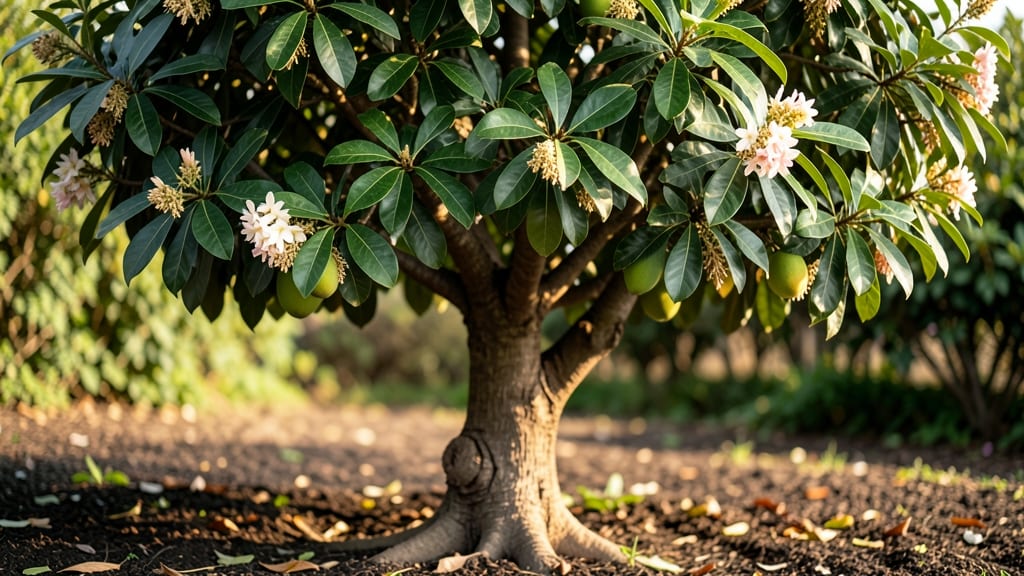
A mango tree’s growth rate can turn 3 years into 1 year for fruit—if you know the secrets behind its stages and care.
Picture this: You plant a tiny 🥭 sapling in January, dreaming of luscious mangoes by summer. But without the right soil, sun, or watering rhythm, that dream could stall for years. The truth? A mango tree’s speed isn’t just about time—it’s about the conditions you control.
From a 1-foot seedling to a 10-foot giant in just two years, or a 20-foot tower by year three, the difference comes down to 5 key factors most gardeners overlook.
Below, I’ll break down the stages by year, the fastest-growing varieties, and the game-changer pruning tricks that cut harvest time in half.
Ready to skip the 5-year wait? Let’s dive into how your mango tree grows—and how to make it grow faster.


Mango tree height growth stages by year: what to expect from seedling to fruit-bearing
Growing a mango tree from a tiny seedling to a fruit-bearing giant is one of the most rewarding gardening journeys you can take. But patience is key—these tropical beauties don’t rush.
In tropical climates (USDA zones 10-11), your mango tree will grow faster, while subtropical zones (like Florida or California) may see slightly slower progress. Understanding these stages helps you set realistic expectations and care for your tree at each life phase.
From the first 1-2 feet in year 1 to towering 20-100 feet at maturity, each year brings new challenges and milestones. The biggest excitement? Most mango varieties start flowering by year 3-5, with first fruits appearing by year 4-6.
But don’t be fooled—some dwarf varieties can fruit in as little as 2-3 years with the right care!
🌱 Key Milestones to Track:
- Year 1-2: Focus on root and trunk development
- Year 3-5: First branches and potential flowering
- Year 6+: Full fruiting potential (with proper care)
Your mango tree’s first year is all about establishing strong roots. In ideal conditions, you’ll see 1-2 feet of growth, but don’t expect much beyond that. The key here is consistent moisture—mango seedlings hate soggy soil but also dry out quickly.
I’ve found that mulching with wood chips helps retain moisture while keeping roots cool in hot climates.
By year 2, your tree will shoot up to 3-5 feet, developing its first sturdy branches. This is when you’ll notice the classic mango leaf shape—long, glossy, and slightly pointed.
In tropical zones, growth is steady year-round, while subtropical gardeners may see slower spring/summer growth with winter dormancy. Prune any weak branches now to encourage a strong structure.
Year 3 is when things get exciting! Your tree will reach 6-10 feet, and you might spot tiny flower buds forming. These first blooms often don’t produce fruit—they’re more about practice for the tree. Don’t panic if flowers drop—this is normal.
Focus on balanced fertilization (6-6-6 NPK ratio) to support this rapid growth spurt. I’ve seen trees in Florida’s subtropical climate flower as early as year 3 with proper care!
The 4-5 year mark is when most mango trees finally deliver their first edible fruits, though they’ll be small. Your tree will now stand 10-20 feet tall with a proper canopy.
This is also when you’ll need to prune for airflow—mango trees are prone to fungal issues if branches get too dense. In tropical regions, you might get two flowering seasons per year, while subtropical zones typically have one spring bloom.
After year 6, your mango tree enters its prime fruiting phase, potentially reaching 20-100 feet depending on the variety. Standard trees grow tall, while dwarf varieties like ‘Cogshall’ stay manageable at 10-15 feet.
This is when you’ll need to think about harvesting techniques—mangoes are ready when they’re deep yellow/orange and slightly soft. I always use a fruit picker pole for safety with my mature trees!
One common mistake I see is over-pruning young trees to control height. While you might want a compact tree, mangoes need their vertical growth to develop strong root systems. Instead, focus on struct
5 Factors that dramatically speed up (or slow down) mango tree growth
If you’ve ever planted a mango tree and wondered why it’s growing slower than expected—or why your neighbor’s tree is already bearing fruit while yours is still a sapling—you’re not alone. The truth is, mango tree growth rate depends on five key factors that most gardeners overlook.
From the soil pH to your pruning techniques, small adjustments can turn a sluggish tree into a thriving fruit producer in just a few seasons.
In tropical climates like Florida or Hawaii, mango trees can grow 3-5 feet per year under ideal conditions, but in cooler subtropical zones (like parts of California), growth slows to 1-2 feet annually without the right care.
The difference? These five science-backed levers. Let’s break down how to optimize each one—and what mistakes might be stalling your tree’s progress.
🌱 Top 5 Growth Accelerators (and Stoppers)
-
🌡️ Soil pH (5.0–7.0)
Mango trees thrive in slightly acidic to neutral soil. Test your soil—if it’s below 5.0 or above 7.5, growth slows dramatically. Amend with lime (to raise pH) or sulfur (to lower pH).
-
☀️ Sunlight Exposure (6+ hours daily)
Partial shade reduces growth by 40% or more. Place your tree in full sun—even in containers, ensure it gets direct morning light.
-
💧 Watering Schedule (Deep, infrequent)
Overwatering causes root rot, while underwatering stunts growth. Water deeply 2-3x per week in summer, letting soil dry 3 inches deep between waterings.
-
✂️ Pruning Techniques (Structural shaping)
Prune only in late winter to remove dead or crossing branches. Avoid heavy pruning—it stresses the tree and delays fruiting by 1-2 years.
-
🌿 Fertilizer Type (Balanced NPK + micronutrients)
Use a 6-6-6 or 8-3-9 fertilizer in early spring. Over-fertilizing with nitrogen leads to leafy growth but no fruit—always include potassium and phosphorus.
One of the biggest mistakes I see is over-pruning young trees. A mango tree’s growth relies on its root system, and aggressive trimming can weaken it for years.
Instead, focus on removing only diseased or misplaced branches and let the tree develop its natural structure. This alone can double your tree’s growth rate in the first 2 years.
Another common pitfall is ignoring micronutrients. While nitrogen, phosphorus, and potassium get all the attention, mango trees also need zinc, manganese, and boron for healthy growth. A simple soil test can reveal deficiencies—addressing them can accelerate flowering by up to 6 months.
For example, a zinc deficiency causes yellowing leaves and stunted growth, but a foliar spray can turn things around in weeks.
Finally, don’t underestimate the power of mulching. A 3-inch layer of organic mulch (like wood chips) retains moisture, regulates soil temperature, and adds nutrients as it breaks down.
This simple step can reduce watering needs by 30% and keep your tree’s roots happy year-round. Just avoid piling mulch against the trunk—it can cause rot and pests.
By mastering these five factors, you’ll not only speed up your mango tree’s growth but also ensure it bears fruit faster. Start with a soil test and sunlight audit—those two alone will give you the biggest bang for your buck. 🌿